First published in Songlines Magazine issue 206, April 2025.
Jawari
Road Rasa
Vadi Records (53 mins)
Following up an impressive 2021 solo debut Vignettes, British sitarist Tommy Khosla introduces their ensemble Jawari, together with saxophone, guitars and percussion, completed by poetry from Lagnajita Mukhopadhyay and featuring a cadre of international friends. The collective is ambitious in the number and range of its influences – Road Rasa is a journey through jazz, lo-fi hip-hop, spoken-word, Indian classical, electronica, Latin, soul, Chinese, Japanese, Arabic music… even the track titles themselves are eclectic, using at least seven writing systems across the 16 tracks, by my count. The music is enjoyable; it’s obviously crafted by a bunch of talented and enthusiastic artists, and spans a range of intensities and moods. I do think this first album suffers from the same difficulty as a lot of these ‘all the influences’ projects, in that it’s quite hard to pin down – the eclecticism sometimes obscures what they want their sound to say. This is a promising project, and a tighter focus may take Jawari’s music to the next level in the future.
This blog is a compendium of my music writing throughout the years. I try to post updates about a month after first publication, but I'm often very behind - please bear with me!
Showing posts with label UK. Show all posts
Friday, 7 March 2025
Friday, 13 December 2024
Songlines Music Awards 2024, Europe winner: Sam Lee - songdreaming
First published in Songlines Magazine issue 204, January 2025.
Sam Lee
songdreaming
Cooking Vinyl (48 mins)
Since making his debut with the Mercury-nominated album Ground of its Own in 2012, Sam Lee has become one of the country’s most renowned champions of the folksong of these isles. But his work and his sound have evolved through the years. With his fourth album, he continues his mission of connecting the issues of the land with the music of its people, exploring the themes of ecology, wilderness and wildlife that are close to his heart.
There’s no musical purism here. Lee uses folk songs as a medium with which to decorate his own canvas, leaving them recognisable but changed, moulded to his own meanings and shaped for a new era. The music itself moves further away from the traditional. It’s a vast sound, dramatic and atmospheric, informed by contemporary neoclassical movements. Sweeping strings, heavily-reverbed piano and curlew calls mingle with resonant subtleties of nyckelharpa and qanun, as well as appearances throughout by London-based trans choir Trans Voices on their recording debut. There is something mystical about it, almost, or darkly ethereal, with Lee’s elegant yet forthright voice floating through it as a spirit.
This is not a cheerful album. Through his ballads, Lee constructs a complex, sometimes contradictory, weave of emotions. songdreaming is a love letter suffused with controlled fury, but also a dignified, determined and necessary hopefulness – a passionate yearning for the survival of our home in nature. We’ve seen Sam Lee progress from wunderkind singer and song collector to a respected spokesperson of the planet, its custodians (of all species) and its sounds, while his music becomes ever more beguiling and important.
Sam Lee
songdreaming
Cooking Vinyl (48 mins)
Since making his debut with the Mercury-nominated album Ground of its Own in 2012, Sam Lee has become one of the country’s most renowned champions of the folksong of these isles. But his work and his sound have evolved through the years. With his fourth album, he continues his mission of connecting the issues of the land with the music of its people, exploring the themes of ecology, wilderness and wildlife that are close to his heart.
There’s no musical purism here. Lee uses folk songs as a medium with which to decorate his own canvas, leaving them recognisable but changed, moulded to his own meanings and shaped for a new era. The music itself moves further away from the traditional. It’s a vast sound, dramatic and atmospheric, informed by contemporary neoclassical movements. Sweeping strings, heavily-reverbed piano and curlew calls mingle with resonant subtleties of nyckelharpa and qanun, as well as appearances throughout by London-based trans choir Trans Voices on their recording debut. There is something mystical about it, almost, or darkly ethereal, with Lee’s elegant yet forthright voice floating through it as a spirit.
This is not a cheerful album. Through his ballads, Lee constructs a complex, sometimes contradictory, weave of emotions. songdreaming is a love letter suffused with controlled fury, but also a dignified, determined and necessary hopefulness – a passionate yearning for the survival of our home in nature. We’ve seen Sam Lee progress from wunderkind singer and song collector to a respected spokesperson of the planet, its custodians (of all species) and its sounds, while his music becomes ever more beguiling and important.
Various Artists - Making Tracks 2022 (Live)
First published in Songlines Magazine issue 204, January 2025.
Various Artists
Making Tracks 2022 (Live)
Making Tracks (43 mins)
When eight talented and open-minded young musicians from across the world come together to experience each other’s music and discover pathways between them, there’s always going to be some special results. That’s Making Tracks, and every year or two they empower artists through a creative residency and UK tour. This live album features the pick of Making Tracks’ 2022 concerts.
The pieces chosen for this collection tend towards the calm and deliberate, showing the intensity of listening required to succeed in these connections. In fact, it is the duos that are the best bits here, where two musicians dig deep into each other’s and their own traditions: meetings of Hindustani and Scottish voices over a shruti done; contemporary art explorations between oud and violin; Persian classical singing paired with smallpipes, or kora. Making Tracks is all about exciting and unexpected combinations, and each of these tracks represents another intercultural gem.
Various Artists
Making Tracks 2022 (Live)
Making Tracks (43 mins)
When eight talented and open-minded young musicians from across the world come together to experience each other’s music and discover pathways between them, there’s always going to be some special results. That’s Making Tracks, and every year or two they empower artists through a creative residency and UK tour. This live album features the pick of Making Tracks’ 2022 concerts.
The pieces chosen for this collection tend towards the calm and deliberate, showing the intensity of listening required to succeed in these connections. In fact, it is the duos that are the best bits here, where two musicians dig deep into each other’s and their own traditions: meetings of Hindustani and Scottish voices over a shruti done; contemporary art explorations between oud and violin; Persian classical singing paired with smallpipes, or kora. Making Tracks is all about exciting and unexpected combinations, and each of these tracks represents another intercultural gem.
Labels:
Album Review,
India,
Iran,
Mali,
Morocco,
Songlines Magazine,
Sweden,
UK
Friday, 1 November 2024
Making Tracks 2024 - Grand Junction, Paddington, London
First published in Songlines Magazine issue 203, December 2024.
Making Tracks 2024
Grand Junction, Paddington, London
3rd October 2024
Now on its fifth edition, Making Tracks is one of those not-to-be-missed occasions once autumn rolls around. Eight young artists, each from a different musical world, get together for two weeks of concerted collaboration, which continues to evolve across a two-week tour. This year featured participants from the UK, Syria/Germany, Denmark, Kenya, East Turkestan and Finland (see makingtracksmusic.org/fellows for the full list; they deserve more recognition than space allows here!).
For this tour’s penultimate concert at London’s Grand Junction, we were treated to two-and-a-half hours of unique collaborations interspersed with solo showcases from each musician. All eight remained on stage throughout, and it was always exciting to see who would stir to join in the next piece – will it be a medley of Newfoundland, Uyghur and Swedish songs? A composition for Arabic violin and tama (talking drum)? Hurdy-gurdy and Kenyan drums? It’s impressive just how accomplished these musical relationships were after such a short – albeit intense – gestation. Interspecies connections were also emphasised this year, with nature embraced as an equal participant, from transcriptions of whalesong to electronically-wrangled biosignals of sea-kale. The high, intricately decorated Victorian church ceilings of Grand Junction afforded interesting reverberations, highlighting acoustic elements that would have been lost in a less cavernous venue – a lovely marriage of sound and space.
Making Tracks has hit upon a winning formula, for the creation of both beautiful music, and lasting artistic partnerships. In his opening speech, director Merlyn Driver referred to the concert as “nourishing music” – this really is the sort of project that can achieve meaningful new musical directions.
Photo: Making Tracks 2024 at Grand Junction, by Andrea Terzuoli. L-R: Nina Harries, Anna McLuckie, Shohret Nur, Christian Mohr Levisen, Kasiva Mutua, Ossi Raippalinna, Ayman Hlal (Helen Anahita Wilson is obscured behind Hlal).
Making Tracks 2024
Grand Junction, Paddington, London
3rd October 2024
Now on its fifth edition, Making Tracks is one of those not-to-be-missed occasions once autumn rolls around. Eight young artists, each from a different musical world, get together for two weeks of concerted collaboration, which continues to evolve across a two-week tour. This year featured participants from the UK, Syria/Germany, Denmark, Kenya, East Turkestan and Finland (see makingtracksmusic.org/fellows for the full list; they deserve more recognition than space allows here!).
For this tour’s penultimate concert at London’s Grand Junction, we were treated to two-and-a-half hours of unique collaborations interspersed with solo showcases from each musician. All eight remained on stage throughout, and it was always exciting to see who would stir to join in the next piece – will it be a medley of Newfoundland, Uyghur and Swedish songs? A composition for Arabic violin and tama (talking drum)? Hurdy-gurdy and Kenyan drums? It’s impressive just how accomplished these musical relationships were after such a short – albeit intense – gestation. Interspecies connections were also emphasised this year, with nature embraced as an equal participant, from transcriptions of whalesong to electronically-wrangled biosignals of sea-kale. The high, intricately decorated Victorian church ceilings of Grand Junction afforded interesting reverberations, highlighting acoustic elements that would have been lost in a less cavernous venue – a lovely marriage of sound and space.
Making Tracks has hit upon a winning formula, for the creation of both beautiful music, and lasting artistic partnerships. In his opening speech, director Merlyn Driver referred to the concert as “nourishing music” – this really is the sort of project that can achieve meaningful new musical directions.
Photo: Making Tracks 2024 at Grand Junction, by Andrea Terzuoli. L-R: Nina Harries, Anna McLuckie, Shohret Nur, Christian Mohr Levisen, Kasiva Mutua, Ossi Raippalinna, Ayman Hlal (Helen Anahita Wilson is obscured behind Hlal).
Sunday, 27 October 2024
In Place of War - WOMEX 24 Professional Excellence Award
First published in the WOMEX – World Music Expo 2024 delegate guide.
As arts professionals, how can we make real differences for those affected by the many harmful facets of war? That has been the mission of In Place of War (IPOW) ever since in 2004, when it began as a research project at the University of Manchester. Things have grown since then.
IPOW specialises in ‘artivism’, using music, theatre and visual art to help people not only during times of war, but after war, once much of the immediate international attention has dissipated, as well as communities affected by political violence, oppression and gang violence. And their reach is genuinely impressive, touching individuals and communities across Africa, Asia, Europe and the Americas, from Kampala to Medellín, Hebron to Yangon. So far, their work has spanned thirty countries, creating a collaborative network of 130 ‘change-maker’ creative organisations along the way.
By working across five ‘pillars’ – space, engage, learn, support, create – IPOW make sure that their projects are people-first. They don’t dictate the terms of the art that people ‘should’ be making, but foster the creativity that emerges organically from the communities it serves. This anti-paternalistic approach ensures that they facilitate rather than dictate, allowing local voices to shape the narrative. It is important, then, that this knowledge is sustained and recycled – IPOW and their network share the knowledge and experience that they have gained through their work, so that it can be replicated on an even wider scale.
The achievements speak for themselves: community arts spaces are built, professional equipment and training is supplied, albums are released to critical acclaim, art in all forms flourishes where war has ravaged. And the ambitious plans continue to expand outward: in the coming years, IPOW aims to uniting scientific knowledge, indigenous heritage and artistic creativity to engage and inspire around issues of climate justice, and to turn their focus to the UK, helping disadvantaged young artists at grassroots, institutional and policy levels.
For using art to make lasting differences to people and communities affected by war all across the world; for giving arts professionals a roadmap for collaborative community engagement; and for achieving such wide-ranging results in just twenty years, we are delighted to announce In Place of War as the recipient of the WOMEX 24 Award for Professional Excellence.
As arts professionals, how can we make real differences for those affected by the many harmful facets of war? That has been the mission of In Place of War (IPOW) ever since in 2004, when it began as a research project at the University of Manchester. Things have grown since then.
IPOW specialises in ‘artivism’, using music, theatre and visual art to help people not only during times of war, but after war, once much of the immediate international attention has dissipated, as well as communities affected by political violence, oppression and gang violence. And their reach is genuinely impressive, touching individuals and communities across Africa, Asia, Europe and the Americas, from Kampala to Medellín, Hebron to Yangon. So far, their work has spanned thirty countries, creating a collaborative network of 130 ‘change-maker’ creative organisations along the way.
By working across five ‘pillars’ – space, engage, learn, support, create – IPOW make sure that their projects are people-first. They don’t dictate the terms of the art that people ‘should’ be making, but foster the creativity that emerges organically from the communities it serves. This anti-paternalistic approach ensures that they facilitate rather than dictate, allowing local voices to shape the narrative. It is important, then, that this knowledge is sustained and recycled – IPOW and their network share the knowledge and experience that they have gained through their work, so that it can be replicated on an even wider scale.
The achievements speak for themselves: community arts spaces are built, professional equipment and training is supplied, albums are released to critical acclaim, art in all forms flourishes where war has ravaged. And the ambitious plans continue to expand outward: in the coming years, IPOW aims to uniting scientific knowledge, indigenous heritage and artistic creativity to engage and inspire around issues of climate justice, and to turn their focus to the UK, helping disadvantaged young artists at grassroots, institutional and policy levels.
For using art to make lasting differences to people and communities affected by war all across the world; for giving arts professionals a roadmap for collaborative community engagement; and for achieving such wide-ranging results in just twenty years, we are delighted to announce In Place of War as the recipient of the WOMEX 24 Award for Professional Excellence.
Labels:
Article,
Music Business,
UK,
WOMEX
Friday, 4 October 2024
Thokozile Collective - Thokozile Collective
First published in Songlines Magazine issue 202, November 2024.
Thokozile Collective
Thokozile Collective (47 mins)
Bournemouth-based six-piece Thokozile Collective play instrumental jazz-funk with an African bent. Their debut album – seven covers and two originals – mostly looks towards Southern Africa, with occasional hints to West Africa and Latin America. The album starts in an upbeat, breezy fashion, with a cover of Mahlathini and the Mahotella Queens’ mbaqanga hit ‘Thokozile’ (hence the name), followed by a piece based on the sungura style from Zimbabwe. After these first two, the funk arrives. It’s all lightly cheesy and pretty inoffensive, but accomplished. The standout performance comes from saxophonist Terry Quinney, whose solos are always a delight, floating bluesy bop lines over and through the African styles with an intelligence that unites each of the band’s influences. The group aren’t entirely tight, and some of the most funk-forward tracks perhaps lack a bit of imagination, but it’s an easy listen and a fun, enjoyable album on the whole.
Thokozile Collective
Thokozile Collective (47 mins)
Bournemouth-based six-piece Thokozile Collective play instrumental jazz-funk with an African bent. Their debut album – seven covers and two originals – mostly looks towards Southern Africa, with occasional hints to West Africa and Latin America. The album starts in an upbeat, breezy fashion, with a cover of Mahlathini and the Mahotella Queens’ mbaqanga hit ‘Thokozile’ (hence the name), followed by a piece based on the sungura style from Zimbabwe. After these first two, the funk arrives. It’s all lightly cheesy and pretty inoffensive, but accomplished. The standout performance comes from saxophonist Terry Quinney, whose solos are always a delight, floating bluesy bop lines over and through the African styles with an intelligence that unites each of the band’s influences. The group aren’t entirely tight, and some of the most funk-forward tracks perhaps lack a bit of imagination, but it’s an easy listen and a fun, enjoyable album on the whole.
Sunday, 29 October 2023
On The Move - WOMEX 23 Professional Excellence Award
First published in the WOMEX – World Music Expo 2023 delegate guide.
The world music scene is built on a foundation of international cultural and artistic mobility. Our industry simply could not exist without thousands of artists and arts professionals navigating the channels of international travel and expansion, but those channels are many, complex, confusing and ever-changing. On The Move has spent the last 21 years helping artists along those channels, and opening up the artistic world in the process.
On The Move is a network and online platform that connects cultural workers of all disciplines with support, information and avenues to international mobility. This takes many forms: extensive guides to institutions and opportunities in territories across the world; global listings of open project calls; mentoring schemes; data-driven research and analysis; and events, including their annual forum. No single way of working is appropriate for all, and the key is in the recognition that mobility exists in many forms – including funding, fellowships, residencies, training and more.
Importantly, all of these resources are free to access and regularly updated to keep atop the latest developments. The heart of On The Move’s mission is the democratisation of international art: by sharing knowledge and tools, it ensures that arts do not become the sole reserve of the powerful and privileged. By giving more artists access to international mobility, the global arts community becomes fairer, more transparent and more sustainable. It also allows for specific help for artists who are disadvantaged within wider cultural spheres, such as disabled, minority ethnic or refugee artists.
For the world music scene and the wider arts ecosystem, mobility is not a luxury, but a necessity. In their commitment to providing this invaluable resource for artists and cultural professionals, On The Move opens the world to artists of all stripes. For this reason, we are delighted that On The Move is the recipient of the WOMEX 23 Award for Professional Excellence.
The world music scene is built on a foundation of international cultural and artistic mobility. Our industry simply could not exist without thousands of artists and arts professionals navigating the channels of international travel and expansion, but those channels are many, complex, confusing and ever-changing. On The Move has spent the last 21 years helping artists along those channels, and opening up the artistic world in the process.
On The Move is a network and online platform that connects cultural workers of all disciplines with support, information and avenues to international mobility. This takes many forms: extensive guides to institutions and opportunities in territories across the world; global listings of open project calls; mentoring schemes; data-driven research and analysis; and events, including their annual forum. No single way of working is appropriate for all, and the key is in the recognition that mobility exists in many forms – including funding, fellowships, residencies, training and more.
Importantly, all of these resources are free to access and regularly updated to keep atop the latest developments. The heart of On The Move’s mission is the democratisation of international art: by sharing knowledge and tools, it ensures that arts do not become the sole reserve of the powerful and privileged. By giving more artists access to international mobility, the global arts community becomes fairer, more transparent and more sustainable. It also allows for specific help for artists who are disadvantaged within wider cultural spheres, such as disabled, minority ethnic or refugee artists.
For the world music scene and the wider arts ecosystem, mobility is not a luxury, but a necessity. In their commitment to providing this invaluable resource for artists and cultural professionals, On The Move opens the world to artists of all stripes. For this reason, we are delighted that On The Move is the recipient of the WOMEX 23 Award for Professional Excellence.
Labels:
Article,
Music Business,
UK,
WOMEX
Friday, 6 October 2023
Nihiloxica - Source of Denial
First published in Songlines Magazine issue 192, November 2023.
Nihiloxica
Source of Denial
Crammed Discs (40 mins)
Nihiloxica were one of the highlights of this year’s WOMAD festival, after their scheduled appearance in 2022 was stymied by visa problems. The life of a band isn’t the simplest when half of you are based in Uganda and the other half are based in the UK. These experiences have fed directly into the overarching theme of the group’s second full-length album: it is a stinging critique of the UK’s draconian visa and immigration process.
The pounding Bugandan polyrhythms of the engalabi, namunjoloba and empuunyi drums meet the abrasive, overdriven synths of industrial trance. Extreme metal influence is heard throughout, from harsh noisescapes to doom-laden detuned bass-synth chugs. Across the whole album, computer-generated voices stand in for the monolithic state machine. It all serves to communicate the evil banality of bureaucracy, not just impersonal but anti-personal, reducing people’s rich lives and complex stories to a phone-tree, where injustices are in-baked as part of a system meticulously rigged to avoid even the merest suggestion of accountability. It sounds oppressive, because it is; it feels dystopian because it is – the reality of anyone without a powerful passport.
It’s heavy stuff, and rightly so. It is political protest, yes, but make no mistake, this is dance music. And you will dance: movement is forced from you by the sheer power of aggressive musical passion. Source of Denial is an impactful album, and its music is absolutely brilliant.
Nihiloxica
Source of Denial
Crammed Discs (40 mins)
Nihiloxica were one of the highlights of this year’s WOMAD festival, after their scheduled appearance in 2022 was stymied by visa problems. The life of a band isn’t the simplest when half of you are based in Uganda and the other half are based in the UK. These experiences have fed directly into the overarching theme of the group’s second full-length album: it is a stinging critique of the UK’s draconian visa and immigration process.
The pounding Bugandan polyrhythms of the engalabi, namunjoloba and empuunyi drums meet the abrasive, overdriven synths of industrial trance. Extreme metal influence is heard throughout, from harsh noisescapes to doom-laden detuned bass-synth chugs. Across the whole album, computer-generated voices stand in for the monolithic state machine. It all serves to communicate the evil banality of bureaucracy, not just impersonal but anti-personal, reducing people’s rich lives and complex stories to a phone-tree, where injustices are in-baked as part of a system meticulously rigged to avoid even the merest suggestion of accountability. It sounds oppressive, because it is; it feels dystopian because it is – the reality of anyone without a powerful passport.
It’s heavy stuff, and rightly so. It is political protest, yes, but make no mistake, this is dance music. And you will dance: movement is forced from you by the sheer power of aggressive musical passion. Source of Denial is an impactful album, and its music is absolutely brilliant.
Wednesday, 20 September 2023
Unlocking Our Hidden Collections: Sue Steward and Edmundo Ros
First published on the British Library Sound and Vision blog.
The Unlocking Our Hidden Collections initiative is the British Library challenging itself. With over 170 million items in the Library’s collections and an average of over 8,000 new items added every day, it is impossible to keep up – processing and cataloguing backlogs mean that there are so many treasures that are ‘hidden’ from view and unable to be searched in any of the Library’s catalogues. Unlocking Our Hidden Collections is a concerted effort to bring some of these to light, by targeting specific collections across the Library’s many curatorial areas for detailed cataloguing where previously there was none at all. Collections in this initiative include manuscripts from the medieval to contemporary periods, charters, censuses, photographs, correspondences and music manuscripts. They also include recordings from the British Library sound archive. The project that I work on within Unlocking Our Hidden Collections is entitled ‘Rare and Unpublished World and Traditional Music’, which catalogues and ultimately makes publically available collections of sound recordings that would otherwise remain obscure.
As a cataloguer in this process, I have the absolute pleasure of listening to wonderful recordings of some of the most interesting musical cultures in the world, researching their context and diving into the recordists’ own experiences through their documentation and other material. So far, I’ve worked with collections of recorded music from Thailand, Malaysia, India, Nepal and Kenya from the 1960s to the 2000s, but today I want to highlight one specific collection, the Sue Steward Collection (C1984 in our catalogues).
To read the full blog post and to read more about Sue Steward's wonderful collection and her recordings of Edmundo Ros (that him in the photo up at the top), head over to the British Library Sound and Vision blog.
Photo: Edmundo Ros in Amsterdam, 1957, by Harry Pot.
The Unlocking Our Hidden Collections initiative is the British Library challenging itself. With over 170 million items in the Library’s collections and an average of over 8,000 new items added every day, it is impossible to keep up – processing and cataloguing backlogs mean that there are so many treasures that are ‘hidden’ from view and unable to be searched in any of the Library’s catalogues. Unlocking Our Hidden Collections is a concerted effort to bring some of these to light, by targeting specific collections across the Library’s many curatorial areas for detailed cataloguing where previously there was none at all. Collections in this initiative include manuscripts from the medieval to contemporary periods, charters, censuses, photographs, correspondences and music manuscripts. They also include recordings from the British Library sound archive. The project that I work on within Unlocking Our Hidden Collections is entitled ‘Rare and Unpublished World and Traditional Music’, which catalogues and ultimately makes publically available collections of sound recordings that would otherwise remain obscure.
As a cataloguer in this process, I have the absolute pleasure of listening to wonderful recordings of some of the most interesting musical cultures in the world, researching their context and diving into the recordists’ own experiences through their documentation and other material. So far, I’ve worked with collections of recorded music from Thailand, Malaysia, India, Nepal and Kenya from the 1960s to the 2000s, but today I want to highlight one specific collection, the Sue Steward Collection (C1984 in our catalogues).
To read the full blog post and to read more about Sue Steward's wonderful collection and her recordings of Edmundo Ros (that him in the photo up at the top), head over to the British Library Sound and Vision blog.
Photo: Edmundo Ros in Amsterdam, 1957, by Harry Pot.
Labels:
Article,
British Library,
UK
Friday, 21 July 2023
Qwalia - Sound and Reason
First published in Songlines Magazine issue 190, August/September 2023.
Qwalia
Sound and Reason
Alberts Favourites (41 mins)
Four of London’s most dynamic musicians enter the studio in April 2021. Then follows a two-day voyage of non-stop, all-improvised sonic exploration, rooted in contemporary funk- and hip-hop-informed jazz, with elements of downtempo and trip-hop, an 80s synth aesthetic, hints of dub, ambient and Afrobeat and nods to Afrofuturism. They emerge with 13 hours of music on record. Two years later, and that material has been boiled down and massaged into a lovely 41-minute debut album.
The quartet is Tal Janes on guitar, Ben Reed on bass, Joseph Costi on keys and bandleader Yusuf Ahmed on drums – each member provides a vital role, and their layers of melody and atmosphere reward repeated listening: maybe this time a bassline will jump out at you, or some inspired guitar vamps, or a particularly pleasing synth pad. The most striking track is ‘Vagherah’, which is built around a sample of the great qawwali singer Nusrat Fateh Ali Khan speaking at a London concert. Placed in front of a super draggy beat, it gives an interesting effect of Khan rapping – it’s very strange but it works really well.
What a way for Qwalia to make their mark. Definitely one to keep an ear on.
Qwalia
Sound and Reason
Alberts Favourites (41 mins)
Four of London’s most dynamic musicians enter the studio in April 2021. Then follows a two-day voyage of non-stop, all-improvised sonic exploration, rooted in contemporary funk- and hip-hop-informed jazz, with elements of downtempo and trip-hop, an 80s synth aesthetic, hints of dub, ambient and Afrobeat and nods to Afrofuturism. They emerge with 13 hours of music on record. Two years later, and that material has been boiled down and massaged into a lovely 41-minute debut album.
The quartet is Tal Janes on guitar, Ben Reed on bass, Joseph Costi on keys and bandleader Yusuf Ahmed on drums – each member provides a vital role, and their layers of melody and atmosphere reward repeated listening: maybe this time a bassline will jump out at you, or some inspired guitar vamps, or a particularly pleasing synth pad. The most striking track is ‘Vagherah’, which is built around a sample of the great qawwali singer Nusrat Fateh Ali Khan speaking at a London concert. Placed in front of a super draggy beat, it gives an interesting effect of Khan rapping – it’s very strange but it works really well.
What a way for Qwalia to make their mark. Definitely one to keep an ear on.
Friday, 7 April 2023
From the Horse's Mouth: Postcard from Antrobus, Cheshire
First published in Songlines Magazine issue 187, May 2023.
Outside the front entrance of a village pub in mid-Cheshire, an autumnal drizzle just about starting, a motley gang has assembled with all manner of strange costumes and disguises. An ambassador has already run ahead to warn the bar staff and order in a round. Then, as one, the group opens their mouths and start singing: “Here come one, two, three jolly good hearty lads, and we’re all in one mind / For this night we come a-souling, good nature to find / for this night we come a-souling as it does appear / and it’s all that we are souling for is your ale and strong beer.” Inside, some unsuspecting patrons look around quizzically, wondering what the fuss is about. Once the singing has finished, there is a loud knock on the front door and all hell breaks loose.
This is a typical visit of the Antrobus Soul-Cakers, who come together every year to continue mid-Cheshire’s most iconic folk tradition. Soul-Caking is a real hodgepodge of a custom – part-play, part-visitation, part-fertility ritual of unknown ancient origin – performed on October 31 (and for a couple of weeks afterwards) at pubs throughout the region, usually four per night. Once, every village had its own Soul-Caking gang, but nowadays Antrobus is the only one with an unbroken lineage stretching back centuries.
Officially, I’m here to record the performances for the British Library sound archive, adding to the recordings of the same group from the 1950s and 1970s. We met up at the gang’s base at the Antrobus Arms to chat and listen to the old recordings, and then it’s off to delight the patrons of pubs in nearby Stretton, Rudheath, Davenham and Moulton with my recording equipment in tow. But I’m actually here for a more personal reason.
I’m from Cheshire – I grew up in a village only four miles away from Antrobus – yet I’d never even heard of Soul-Caking until after I’d left home, moved to the city and gained a belated interest in folk music and traditions in earnest. That such an important, old and well-known custom had existed just down the road from me without ever entering my consciousness left me in wonder, and with a tinge of shame. I’ve returned to finally witness a living part of my home culture for the first time.
So I find myself in a pub, surrounded by madness. The play is a whirlwind of sword-fights, madcap characters, shrieking, bellowing, poetry, jokes, braggadocio, heckling, light-hearted pint theft and a star turn by Dick the Horse, a real horse’s skull painted black, white and red, with a jaw that snaps at the command of its puppeteer hidden under a sackcloth body. After 20-or-so minutes, and with a final song and a quick drink afterwards, the gang are away to their next stop.
For the punters in the pub, it can all be a bit baffling. Some people know it’s happening and have come down especially. Others are completely bemused: pleasant family meals and girls’-nights-out are interrupted by the completely unexplained chaos. Some take it well, gazing with perplexed wonderment and getting into the spirit of things by the end; others ignore the weirdness with bored indifference, and a few – always men – seem to take its existence in their space as an insult or challenge and get a bit aggressive.
Each pub has its own distinctive atmosphere and audience, and a different performance because of it. Some pubs are electric, everyone gets into it and the Soul-Cakers adlib all over the place; in others, the crowd is dead and the play is rushed through as quickly as possible, with a bunch of material skipped and much grumbling from the players. Every performance is a new experience – it also helps that everyone becomes successively more lubricated as the night wears on. In true folk fashion, things stay the same while changing constantly.
I leave the last pub at gone midnight, knackered, tipsy and slightly stung by a few errant whips of a riding crop, but absolutely buzzing. My official duties are fulfilled, and my soul feels nourished too. Not only have I experienced an important part of my own cultural heritage for the very first time, but I’m back speaking in a broad Cheshire accent I hadn’t even noticed I’d lost. What an honour.
At the end of each play, to cheers from the pub-goers and a frying-pan passed around to collect for charity, the Antrobus Soul-Cakers strike up for a final verse: “And now our play is ended, and we can no longer stay / But with your kind permission we will come another day / But before we go, we’ll have you to know, we'll have you to understand / We’re a credit to old England, we’re the boys of the Antrobus gang!”
Photos: (top) The Antrobus Soul-Cakers in their natural habitat (the pub); (middle) Dick the Horse and his driver. Both photos by Nigel Farr.
Outside the front entrance of a village pub in mid-Cheshire, an autumnal drizzle just about starting, a motley gang has assembled with all manner of strange costumes and disguises. An ambassador has already run ahead to warn the bar staff and order in a round. Then, as one, the group opens their mouths and start singing: “Here come one, two, three jolly good hearty lads, and we’re all in one mind / For this night we come a-souling, good nature to find / for this night we come a-souling as it does appear / and it’s all that we are souling for is your ale and strong beer.” Inside, some unsuspecting patrons look around quizzically, wondering what the fuss is about. Once the singing has finished, there is a loud knock on the front door and all hell breaks loose.
This is a typical visit of the Antrobus Soul-Cakers, who come together every year to continue mid-Cheshire’s most iconic folk tradition. Soul-Caking is a real hodgepodge of a custom – part-play, part-visitation, part-fertility ritual of unknown ancient origin – performed on October 31 (and for a couple of weeks afterwards) at pubs throughout the region, usually four per night. Once, every village had its own Soul-Caking gang, but nowadays Antrobus is the only one with an unbroken lineage stretching back centuries.
Officially, I’m here to record the performances for the British Library sound archive, adding to the recordings of the same group from the 1950s and 1970s. We met up at the gang’s base at the Antrobus Arms to chat and listen to the old recordings, and then it’s off to delight the patrons of pubs in nearby Stretton, Rudheath, Davenham and Moulton with my recording equipment in tow. But I’m actually here for a more personal reason.
I’m from Cheshire – I grew up in a village only four miles away from Antrobus – yet I’d never even heard of Soul-Caking until after I’d left home, moved to the city and gained a belated interest in folk music and traditions in earnest. That such an important, old and well-known custom had existed just down the road from me without ever entering my consciousness left me in wonder, and with a tinge of shame. I’ve returned to finally witness a living part of my home culture for the first time.
So I find myself in a pub, surrounded by madness. The play is a whirlwind of sword-fights, madcap characters, shrieking, bellowing, poetry, jokes, braggadocio, heckling, light-hearted pint theft and a star turn by Dick the Horse, a real horse’s skull painted black, white and red, with a jaw that snaps at the command of its puppeteer hidden under a sackcloth body. After 20-or-so minutes, and with a final song and a quick drink afterwards, the gang are away to their next stop.
For the punters in the pub, it can all be a bit baffling. Some people know it’s happening and have come down especially. Others are completely bemused: pleasant family meals and girls’-nights-out are interrupted by the completely unexplained chaos. Some take it well, gazing with perplexed wonderment and getting into the spirit of things by the end; others ignore the weirdness with bored indifference, and a few – always men – seem to take its existence in their space as an insult or challenge and get a bit aggressive.
Each pub has its own distinctive atmosphere and audience, and a different performance because of it. Some pubs are electric, everyone gets into it and the Soul-Cakers adlib all over the place; in others, the crowd is dead and the play is rushed through as quickly as possible, with a bunch of material skipped and much grumbling from the players. Every performance is a new experience – it also helps that everyone becomes successively more lubricated as the night wears on. In true folk fashion, things stay the same while changing constantly.
I leave the last pub at gone midnight, knackered, tipsy and slightly stung by a few errant whips of a riding crop, but absolutely buzzing. My official duties are fulfilled, and my soul feels nourished too. Not only have I experienced an important part of my own cultural heritage for the very first time, but I’m back speaking in a broad Cheshire accent I hadn’t even noticed I’d lost. What an honour.
At the end of each play, to cheers from the pub-goers and a frying-pan passed around to collect for charity, the Antrobus Soul-Cakers strike up for a final verse: “And now our play is ended, and we can no longer stay / But with your kind permission we will come another day / But before we go, we’ll have you to know, we'll have you to understand / We’re a credit to old England, we’re the boys of the Antrobus gang!”
Photos: (top) The Antrobus Soul-Cakers in their natural habitat (the pub); (middle) Dick the Horse and his driver. Both photos by Nigel Farr.
Friday, 17 June 2022
Canzoniere Grecanico Salentino + Justin Adams & Mauro Durante - Jazz Cafe, Camden, London
First published in Songlines Magazine issue 179, July 2022.
Canzoniere Grecanico Salentino + Justin Adams & Mauro Durante
Jazz Cafe, Camden, London
17th May 2022
It’s a logical double bill: celebrated Italian pizzica group Canzoniere Grecanico Salentino, and CGS leader and violinist Mauro Durante’s duo with global blues guitar explorer Justin Adams – a newer but nevertheless heralded formation. Both outfits were on top form.
The duo were up first. The contrast between silky, elegant folk violin and gritty rock-inflected electric guitar (echoed in Mauro’s clear voice and Justin’s growl) creates the friction that allows the unlikely fusion to spark. The two meet in sparse, contemplative atmospheres with deep emotional resonances. Mauro’s turn on the tamburello (tambourine) called to mind the bendir of Justin’s work with Maghrebi music, and showed the profound musical intelligence and artistic respect at play.
CGS upped the ante by several levels. As the group opened with solo zampogna (bagpipes) and four booming tamburellos, the audience’s swaying quickly made way for large pockets of spontaneous Italic choreography. CGS do have beautiful and intense songs, sung with full-chested passion and bringing to mind medieval cities and pan-Mediterranean cultural connections… but the fireworks really come when all seven members of the group – tamburello, accordion, violin, voice, whistles, bouzouki and dance – thrash out frenetic, extended, heart-pounding pizzicas, whipping the crowd into a rhythm frenzy of sweat and limbs reminiscent of many a mystical ecstatic trance.
The joy and relief of the return of live music is still palpable and acts like a halo around artists and audience alike, filling souls and moving bodies. It was the warmest day of the year so far outside, and inside the Jazz Cafe, it was positively sweltering.
Photo: Canzoniere Grecanico Salentino, by Vincenzo de Pinto.
Canzoniere Grecanico Salentino + Justin Adams & Mauro Durante
Jazz Cafe, Camden, London
17th May 2022
It’s a logical double bill: celebrated Italian pizzica group Canzoniere Grecanico Salentino, and CGS leader and violinist Mauro Durante’s duo with global blues guitar explorer Justin Adams – a newer but nevertheless heralded formation. Both outfits were on top form.
The duo were up first. The contrast between silky, elegant folk violin and gritty rock-inflected electric guitar (echoed in Mauro’s clear voice and Justin’s growl) creates the friction that allows the unlikely fusion to spark. The two meet in sparse, contemplative atmospheres with deep emotional resonances. Mauro’s turn on the tamburello (tambourine) called to mind the bendir of Justin’s work with Maghrebi music, and showed the profound musical intelligence and artistic respect at play.
CGS upped the ante by several levels. As the group opened with solo zampogna (bagpipes) and four booming tamburellos, the audience’s swaying quickly made way for large pockets of spontaneous Italic choreography. CGS do have beautiful and intense songs, sung with full-chested passion and bringing to mind medieval cities and pan-Mediterranean cultural connections… but the fireworks really come when all seven members of the group – tamburello, accordion, violin, voice, whistles, bouzouki and dance – thrash out frenetic, extended, heart-pounding pizzicas, whipping the crowd into a rhythm frenzy of sweat and limbs reminiscent of many a mystical ecstatic trance.
The joy and relief of the return of live music is still palpable and acts like a halo around artists and audience alike, filling souls and moving bodies. It was the warmest day of the year so far outside, and inside the Jazz Cafe, it was positively sweltering.
Photo: Canzoniere Grecanico Salentino, by Vincenzo de Pinto.
Monday, 28 February 2022
A Personal Jazz Mystery Solved
First published on the British Library Sound and Vision blog.
I’m a jazz nut. My mental soundtrack is often filled with anonymous changes and walking bass solos. But there is one particular song that has been buzzing around my head for years and years – about a decade, in fact. That song is the version of ‘Popity Pop’, recorded by vocalese trio Lambert, Hendricks and Ross, on their album High Flying from 1961. Specifically, Jon Hendricks’ break-down at about 2 min. 16 sec.:
That break-down is so unexpected, so sweet and so touching; it’s an inspired moment and a great contrast to the frenetic energy of the rest of the song. I couldn’t help but become intrigued by it. It was obviously a quotation from another piece of music… but which one? I had no idea. I asked around, and no-one else seemed to have an idea either. Google was no help. I was certain that the answer must be out there. Where was it?
To read the full blog post and to find out the unexpected place I found my answer, head over to the British Library Sound and Vision blog.
I’m a jazz nut. My mental soundtrack is often filled with anonymous changes and walking bass solos. But there is one particular song that has been buzzing around my head for years and years – about a decade, in fact. That song is the version of ‘Popity Pop’, recorded by vocalese trio Lambert, Hendricks and Ross, on their album High Flying from 1961. Specifically, Jon Hendricks’ break-down at about 2 min. 16 sec.:
That break-down is so unexpected, so sweet and so touching; it’s an inspired moment and a great contrast to the frenetic energy of the rest of the song. I couldn’t help but become intrigued by it. It was obviously a quotation from another piece of music… but which one? I had no idea. I asked around, and no-one else seemed to have an idea either. Google was no help. I was certain that the answer must be out there. Where was it?
To read the full blog post and to find out the unexpected place I found my answer, head over to the British Library Sound and Vision blog.
Labels:
Article,
British Library,
UK,
USA
Friday, 17 December 2021
Making Tracks 2021 - The Sanctuary, Walthamstow, London
First published in Songlines Magazine issue 174, January/February 2022.
Making Tracks 2021
The Sanctuary, Walthamstow, London
11th November 2021
After the success of 2019 and a virtual version in 2020, this was the second in-person edition of Making Tracks' fellowship programme. Eight up-and-coming young European-based musicians got together for a two-week incubation residency on the west coast of Scotland, before setting off on a two-week UK tour. It all culminated in this concert in a cosy church in Walthamstow.
This year’s Making Tracks fellows were Ahmet Ozan Baysal (Turkey; bağlama, voice), Robert Bisha (Albania; piano, çifteli, voice), Iona Fyfe (Scotland; voice), Liz Hanks (England; cello); Simon Leleux (Belgium; doholla, daf), Pheobe riley Law (England; sound art), Thamires Tannous (Brazil; guitar, voice), Azin Zahedi (Iran; santur, flute). Their set alternated between solo spots highlighting each musician’s own work, and collaborations in duo, trio and quartet arrangements devised during their month-long adventure.
Mashing together intercultural ideas and distinct musical vocabularies can often end badly, but the sensitivity and relationships of these musicians – as well as their obvious musical mastery – meant that each collaboration was full of intrigue and beauty. Particularly inspired combinations included Fyfe and Bisha’s jazzy take on Hamish Henderson’s 'The Flyting of Life and Death' (with flavours of Tigran Hamasyan), and Tannous, Zahedi and Hanks performing an as-yet-untitled new composition.
Making Tracks has really special spark, making disparate artists comfortable enough to explore in ways they wouldn’t have thought possible. Keep these artists on your radar - and if you weren’t lucky enough catch it this time around, look out for the live album coming in 2022.
Photo: A bunch of Making Tracks fellows tuck in overlooking Loch Long in west Scotland, by Merlyn Driver.
Making Tracks 2021
The Sanctuary, Walthamstow, London
11th November 2021
After the success of 2019 and a virtual version in 2020, this was the second in-person edition of Making Tracks' fellowship programme. Eight up-and-coming young European-based musicians got together for a two-week incubation residency on the west coast of Scotland, before setting off on a two-week UK tour. It all culminated in this concert in a cosy church in Walthamstow.
This year’s Making Tracks fellows were Ahmet Ozan Baysal (Turkey; bağlama, voice), Robert Bisha (Albania; piano, çifteli, voice), Iona Fyfe (Scotland; voice), Liz Hanks (England; cello); Simon Leleux (Belgium; doholla, daf), Pheobe riley Law (England; sound art), Thamires Tannous (Brazil; guitar, voice), Azin Zahedi (Iran; santur, flute). Their set alternated between solo spots highlighting each musician’s own work, and collaborations in duo, trio and quartet arrangements devised during their month-long adventure.
Mashing together intercultural ideas and distinct musical vocabularies can often end badly, but the sensitivity and relationships of these musicians – as well as their obvious musical mastery – meant that each collaboration was full of intrigue and beauty. Particularly inspired combinations included Fyfe and Bisha’s jazzy take on Hamish Henderson’s 'The Flyting of Life and Death' (with flavours of Tigran Hamasyan), and Tannous, Zahedi and Hanks performing an as-yet-untitled new composition.
Making Tracks has really special spark, making disparate artists comfortable enough to explore in ways they wouldn’t have thought possible. Keep these artists on your radar - and if you weren’t lucky enough catch it this time around, look out for the live album coming in 2022.
Photo: A bunch of Making Tracks fellows tuck in overlooking Loch Long in west Scotland, by Merlyn Driver.
Labels:
Albania,
Belgium,
Brazil,
Iran,
Live Review,
Songlines Magazine,
Turkey,
UK
Friday, 8 October 2021
Tommy Khosla - Vignettes
First published in Songlines Magazine issue 172, November 2021.
Tommy Khosla
Vignettes
Vadi Records (40 mins)
Vignettes is a series a small windows into the life, history and identity of its creator, London-based sitar player and producer Tommy Khosla. It is an exploration on the themes of mixed heritage (Khosla has roots in India, France and the UK) and neurodiversity that is filled with equal parts nostalgia and curiosity.
Across a collage of 18 very short tracks, most drifting in at around the one- or two-minute mark, sitar leads the way through lo-fi hip-hop beats, synths that blur between ambient and chillwave, and cameos from instruments such as shakuhachi and cellotar, all played by Khosla themself. Melodies also drift by the way of Hindustani classical music and English folk (with echoes of Sheema Mukherjee with the Imagined Village on tracks such as ‘Flora’). The use of sitar in these contexts has the risk of coming across as very corny, but such pitfalls are avoided with Khosla’s obvious skill at their instrument and their adventurous composition.
It all feels deeply personal, inspired by Khosla’s grandparents’ slideshows of their travels in north India, and littered with frequent snippets of family reminiscences and field recordings. Vignettes has been three years in the making, and is an accomplished debut for Khosla, with an impressive vision and maturity that belies their 22 years.
Tommy Khosla
Vignettes
Vadi Records (40 mins)
Vignettes is a series a small windows into the life, history and identity of its creator, London-based sitar player and producer Tommy Khosla. It is an exploration on the themes of mixed heritage (Khosla has roots in India, France and the UK) and neurodiversity that is filled with equal parts nostalgia and curiosity.
Across a collage of 18 very short tracks, most drifting in at around the one- or two-minute mark, sitar leads the way through lo-fi hip-hop beats, synths that blur between ambient and chillwave, and cameos from instruments such as shakuhachi and cellotar, all played by Khosla themself. Melodies also drift by the way of Hindustani classical music and English folk (with echoes of Sheema Mukherjee with the Imagined Village on tracks such as ‘Flora’). The use of sitar in these contexts has the risk of coming across as very corny, but such pitfalls are avoided with Khosla’s obvious skill at their instrument and their adventurous composition.
It all feels deeply personal, inspired by Khosla’s grandparents’ slideshows of their travels in north India, and littered with frequent snippets of family reminiscences and field recordings. Vignettes has been three years in the making, and is an accomplished debut for Khosla, with an impressive vision and maturity that belies their 22 years.
Nabra & Ligeti Quartet - Sounds of Sudan
First published in Songlines Magazine issue 172, November 2021.
Nabra & Ligeti Quartet
Sounds of Sudan
Nabra (38 mins)
Bristol-based oud players Ali Elmubarak and Knud Stüwe came together as Nabra in 2015 to explore a shared love of Sudanese music. The duo’s debut album sees them teaming up with the Ligeti string quartet to give a new twist to classic Sudanese pop.
Sudanese music is always a treat – inherently African and unmistakeably Arabic, full of pentatonic groove and dancing rhythms – and this set of seven folk-leaning pop songs from Sudan’s ‘golden era’ shows it well. The Ligeti Quartet’s strings bring a lightness that complements the earthy ouds and add a distinct classical flavour while maintaining the playful nature of the songs.
The string arrangements are clearly – and admittedly – inspired by the Kronos Quartet, and are most effective during the more poetic and lyrical pieces, where their parts can swell and swirl around the melodies of Elmubarak’s voice. When the pieces skew towards the dancier side of things, however, the quartet can struggle a little to find space among the rhythm. Strings are great for subtlety and emotion but sometimes what you really need is the nice, heavy boom of the sadly absent tar (frame drum).
Sounds of Sudan is a solid debut and interesting collaboration – definitely one to keep on your radar.
Nabra & Ligeti Quartet
Sounds of Sudan
Nabra (38 mins)
Bristol-based oud players Ali Elmubarak and Knud Stüwe came together as Nabra in 2015 to explore a shared love of Sudanese music. The duo’s debut album sees them teaming up with the Ligeti string quartet to give a new twist to classic Sudanese pop.
Sudanese music is always a treat – inherently African and unmistakeably Arabic, full of pentatonic groove and dancing rhythms – and this set of seven folk-leaning pop songs from Sudan’s ‘golden era’ shows it well. The Ligeti Quartet’s strings bring a lightness that complements the earthy ouds and add a distinct classical flavour while maintaining the playful nature of the songs.
The string arrangements are clearly – and admittedly – inspired by the Kronos Quartet, and are most effective during the more poetic and lyrical pieces, where their parts can swell and swirl around the melodies of Elmubarak’s voice. When the pieces skew towards the dancier side of things, however, the quartet can struggle a little to find space among the rhythm. Strings are great for subtlety and emotion but sometimes what you really need is the nice, heavy boom of the sadly absent tar (frame drum).
Sounds of Sudan is a solid debut and interesting collaboration – definitely one to keep on your radar.
Friday, 3 September 2021
Garth Cartwright & Quintina Valero - London’s Record Shops
First published in Songlines Magazine issue 171, October 2021.
Garth Cartwright & Quintina Valero
London’s Record Shops
The History Press (176 pages)
Following on from his 2018 deep dive into the social history of the UK’s record shops, Going on a Song, author and regular Songlines contributor Garth Cartwright has teamed up with photographer Quintina Valero to document the shape of London’s record trade during one of its most uncertain periods.
Cartwright and Valero visited 36 record shops around the capital, grouped into seven distinct neighbourhoods of Soho, Camden, Ladbroke Grove, Brixton, Peckham & Camberwell, Hackney and Whitechapel. Each shop gets its own profile, varying in length from a couple of paragraphs’ description to a detailed chronology and in-depth interview with owners. On top of that, each district is explored in terms of its musical history and legendary record shops and venues sadly lost to the ages.
The lovely thing about the book is that the ‘shop’ aspect of the record shops isn’t the focus. Instead it’s a love letter to the culture of these small shrines to good music, and the passion, knowledge and enthusiasm of the characters that exist within their orbit. The shops and their people reflect all manner of musical styles, subcultures, clientele, ages and opinions, a great snapshot of the huge diversity and all-encompassing nature of London’s musical scene. It also serves as a historical document: the unmistakable shadow of the COVID-19 pandemic looms large over many of the interviews, photographs and stories, very much placing this book in this specific time.
In terms of a ‘coffee table book’, London’s Record Shops ticks all the boxes. It’s full of beautiful, interesting and informative photographs to leaf through at leisure, and the text provides an enjoyable read, even in a dip-in-and-out way. And if you ever find yourself in London with a spare afternoon, it would doubtless serve as an essential guidebook. Just remember to bring your wallet.
Garth Cartwright & Quintina Valero
London’s Record Shops
The History Press (176 pages)
Following on from his 2018 deep dive into the social history of the UK’s record shops, Going on a Song, author and regular Songlines contributor Garth Cartwright has teamed up with photographer Quintina Valero to document the shape of London’s record trade during one of its most uncertain periods.
Cartwright and Valero visited 36 record shops around the capital, grouped into seven distinct neighbourhoods of Soho, Camden, Ladbroke Grove, Brixton, Peckham & Camberwell, Hackney and Whitechapel. Each shop gets its own profile, varying in length from a couple of paragraphs’ description to a detailed chronology and in-depth interview with owners. On top of that, each district is explored in terms of its musical history and legendary record shops and venues sadly lost to the ages.
The lovely thing about the book is that the ‘shop’ aspect of the record shops isn’t the focus. Instead it’s a love letter to the culture of these small shrines to good music, and the passion, knowledge and enthusiasm of the characters that exist within their orbit. The shops and their people reflect all manner of musical styles, subcultures, clientele, ages and opinions, a great snapshot of the huge diversity and all-encompassing nature of London’s musical scene. It also serves as a historical document: the unmistakable shadow of the COVID-19 pandemic looms large over many of the interviews, photographs and stories, very much placing this book in this specific time.
In terms of a ‘coffee table book’, London’s Record Shops ticks all the boxes. It’s full of beautiful, interesting and informative photographs to leaf through at leisure, and the text provides an enjoyable read, even in a dip-in-and-out way. And if you ever find yourself in London with a spare afternoon, it would doubtless serve as an essential guidebook. Just remember to bring your wallet.
Friday, 18 June 2021
Essential 10: WOMAD 2021
First published in Songlines Magazine issue 169, July 2021.
Horace Andy
Dance Hall Style (Wackie’s, 1982)
Every festival needs a bona fide veteran on its line-up, and prolific Jamaican singer Horace Andy definitely fits that bill. He’s probably best known now for his guest spots with Massive Attack, but it’s in the dub-heavy roots reggae and proto-dancehall of Dance Hall Style – Andy’s eighth album – that his distinctive high-pitched voice shines brightest.
The Dhol Foundation
Drum-Believable (Shakti Records, 2005)
Over the years, some artists have become WOMAD mainstays, and Johnny Kalsi and his group The Dhol Foundation can certainly count themselves among that class. Blasting their giant Punjabi dhol drums through bhangra, rock and electronica, they’re a guaranteed party starter – never more so than with their certified banger ‘After the Rain’ with Irish fiddler Máiréad Nesbitt from their second album Drum-Believable.
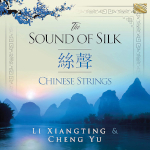
Li Xiangting & Cheng Yu
The Sound of Silk (ARC Music, 2019)
Pipa (four-stringed lute) and guqin (seven-stringed fretless zither) player Cheng Yu is one of the UK’s foremost Chinese musicians – her album of duets with her mentor Li Xiangting got a five-star review in Songlines. Her quartet Silk Breeze recorded a session of beautiful sizhu music for the WOMAD@Home series last summer, playing among the idyllic surrounds of Real World Studios; they’ll surely bring the same serene atmosphere to Charlton Park in July.
Lokkhi Terra meets Dele Sosimi
Cubafrobeat (Funkiwala Records, 2018)
Two for the price of one here: Lokkhi Terra, the London-based South Asian-flavoured Cuban big band, and Dele Sosimi, Afrobeat keys player and member of the legendary Egypt 80, are both on the line-up for WOMAD this year. Their collaborative album linked Yoruba cultures from both sides of the Atlantic to huge success. Fingers crossed for an on-stage reunion?
Mariza
Concerto em Lisboa (EMI Portugal, 2006)
Portuguese fado, with all its melodramatic flair and delicate, emotional moments, is always most powerful when experienced live, and the modern era’s biggest star is no exception. This live album shows Mariza at her best as a performer, accompanied by the Sinfonietta de Lisboa in front of 25,000 people in fado’s hometown. Granted, she’s not bringing the Sinfonietta to WOMAD, but her voice is an orchestra all on its own.
Onipa
We No Be Machine (IK7 Music, 2020)
Headed by Ghanaian-British singer and rapper K.O.G. and Nubiyan Twist guitarist and producer Tom Excell, Onipa use their hip-hop and jazz pedigree to combine vintage highlife grooves, dirty synths and layers of percussion. This is ‘savannah bass’, Onipa’s own exciting Afrofuturist style, and you couldn’t really wish for a more appropriate festival soundtrack – sound of the summer!
Gwenifer Raymond
Strange Lights Over Garth Mountain (Tomkins Square, 2020)
WOMAD has always had a knack for bringing new or lesser-known musicians to the fore, and Gwenifer Raymond may just be your discovery of 2021. Her second album showcases her mastery of the acoustic guitar with a mix of American blues and country roots, folk baroque and subtle influences from India and Wales. Engaging, entrancing and entirely solo – one to watch!
SEED Ensemble
Driftglass (jazz re:freshed, 2019)
Jazz has become a consistent element of the WOMAD line-up in recent editions, and it’s especially prevalent this year. Artists such as Nubiyan Twist, Cinematic Orchestra, The Comet is Coming, Joe Armon-Jones, Sarathy Korwar and Kefaya provide a heterogeneous overview of London’s booming jazz scene and Seed (as they are now known) are sure to be a highlight: their Caribbean and West African-informed 2019 debut earned them a Mercury nomination.
Anoushka Shankar
Reflections (Deutsche Grammophon, 2019)
Shankar’s career has taken so many different directions that you never know quite what she’s going to bring to the stage – the sitarist’s music has encompassed deeply traditional Hindustani classical music as well as Western classical styles, flamenco, jazz, electronica and, most recently, sophisticated and intimate art-pop. This recent self-curated retrospective gives some idea of what to expect from her headline slot this year.
Joseph Tawadros
Betrayal of a Secret Sunflower (JT Records, 2019)
The Egypt-born, Australia-raised and UK-based oud player and composer has graced the stage at WOMADelaide three times and – after a year’s delay – finally makes his UK WOMAD debut. His personality and dress sense are famously extravagant and exquisite, but his most recent album shows that he has no issue making his music serious, subtle, and sublime.
Horace Andy
Dance Hall Style (Wackie’s, 1982)
Every festival needs a bona fide veteran on its line-up, and prolific Jamaican singer Horace Andy definitely fits that bill. He’s probably best known now for his guest spots with Massive Attack, but it’s in the dub-heavy roots reggae and proto-dancehall of Dance Hall Style – Andy’s eighth album – that his distinctive high-pitched voice shines brightest.
The Dhol Foundation
Drum-Believable (Shakti Records, 2005)
Over the years, some artists have become WOMAD mainstays, and Johnny Kalsi and his group The Dhol Foundation can certainly count themselves among that class. Blasting their giant Punjabi dhol drums through bhangra, rock and electronica, they’re a guaranteed party starter – never more so than with their certified banger ‘After the Rain’ with Irish fiddler Máiréad Nesbitt from their second album Drum-Believable.
Li Xiangting & Cheng Yu
The Sound of Silk (ARC Music, 2019)
Pipa (four-stringed lute) and guqin (seven-stringed fretless zither) player Cheng Yu is one of the UK’s foremost Chinese musicians – her album of duets with her mentor Li Xiangting got a five-star review in Songlines. Her quartet Silk Breeze recorded a session of beautiful sizhu music for the WOMAD@Home series last summer, playing among the idyllic surrounds of Real World Studios; they’ll surely bring the same serene atmosphere to Charlton Park in July.
Lokkhi Terra meets Dele Sosimi
Cubafrobeat (Funkiwala Records, 2018)
Two for the price of one here: Lokkhi Terra, the London-based South Asian-flavoured Cuban big band, and Dele Sosimi, Afrobeat keys player and member of the legendary Egypt 80, are both on the line-up for WOMAD this year. Their collaborative album linked Yoruba cultures from both sides of the Atlantic to huge success. Fingers crossed for an on-stage reunion?
Mariza
Concerto em Lisboa (EMI Portugal, 2006)
Portuguese fado, with all its melodramatic flair and delicate, emotional moments, is always most powerful when experienced live, and the modern era’s biggest star is no exception. This live album shows Mariza at her best as a performer, accompanied by the Sinfonietta de Lisboa in front of 25,000 people in fado’s hometown. Granted, she’s not bringing the Sinfonietta to WOMAD, but her voice is an orchestra all on its own.
Onipa
We No Be Machine (IK7 Music, 2020)
Headed by Ghanaian-British singer and rapper K.O.G. and Nubiyan Twist guitarist and producer Tom Excell, Onipa use their hip-hop and jazz pedigree to combine vintage highlife grooves, dirty synths and layers of percussion. This is ‘savannah bass’, Onipa’s own exciting Afrofuturist style, and you couldn’t really wish for a more appropriate festival soundtrack – sound of the summer!
Gwenifer Raymond
Strange Lights Over Garth Mountain (Tomkins Square, 2020)
WOMAD has always had a knack for bringing new or lesser-known musicians to the fore, and Gwenifer Raymond may just be your discovery of 2021. Her second album showcases her mastery of the acoustic guitar with a mix of American blues and country roots, folk baroque and subtle influences from India and Wales. Engaging, entrancing and entirely solo – one to watch!
SEED Ensemble
Driftglass (jazz re:freshed, 2019)
Jazz has become a consistent element of the WOMAD line-up in recent editions, and it’s especially prevalent this year. Artists such as Nubiyan Twist, Cinematic Orchestra, The Comet is Coming, Joe Armon-Jones, Sarathy Korwar and Kefaya provide a heterogeneous overview of London’s booming jazz scene and Seed (as they are now known) are sure to be a highlight: their Caribbean and West African-informed 2019 debut earned them a Mercury nomination.
Anoushka Shankar
Reflections (Deutsche Grammophon, 2019)
Shankar’s career has taken so many different directions that you never know quite what she’s going to bring to the stage – the sitarist’s music has encompassed deeply traditional Hindustani classical music as well as Western classical styles, flamenco, jazz, electronica and, most recently, sophisticated and intimate art-pop. This recent self-curated retrospective gives some idea of what to expect from her headline slot this year.
Joseph Tawadros
Betrayal of a Secret Sunflower (JT Records, 2019)
The Egypt-born, Australia-raised and UK-based oud player and composer has graced the stage at WOMADelaide three times and – after a year’s delay – finally makes his UK WOMAD debut. His personality and dress sense are famously extravagant and exquisite, but his most recent album shows that he has no issue making his music serious, subtle, and sublime.
Friday, 14 May 2021
Transglobal Underground and Our European Friends - A Gathering of Strangers 2021
First published in Songlines Magazine issue 168, June 2021.
Transglobal Underground and Our European Friends
A Gathering of Strangers 2021
Mule Satellite (47 mins)
A Gathering of Strangers first saw light in 2010 when it was released by a pan-EU collective headed by dubtronic pioneers Transglobal Underground, under the moniker Urban Native Integrated Traditions of Europe – or UNITE. Now it’s been remastered, remixed and re-released as part of TGU’s ambitious one-album-a-month challenge for 2021.
The project features guests from Bulgaria, Hungary, Poland, the Czech Republic, Ireland and the UK, with stars of folk, hip-hop and electronica all getting involved. This united European front, together with a theme of longing that threads through the whole album, makes this a compelling collection of protest anthems from the resistance, created while Brexit was still the dream of a fringe lunacy.
The strange thing is that a side-by-side comparison with the original isn’t particularly kind on the 2021 edition, soundwise. The 2010 release just feels meatier, its basses more full and its tops more resonant. Add in the fact that the new version has five fewer tracks, it all makes for a rather odd remaster.
Like its source material, A Gathering of Strangers 2021 is still a very good album and a great listen on its own… but it might be best to track down a copy of the original before settling for this update.
Transglobal Underground and Our European Friends
A Gathering of Strangers 2021
Mule Satellite (47 mins)
A Gathering of Strangers first saw light in 2010 when it was released by a pan-EU collective headed by dubtronic pioneers Transglobal Underground, under the moniker Urban Native Integrated Traditions of Europe – or UNITE. Now it’s been remastered, remixed and re-released as part of TGU’s ambitious one-album-a-month challenge for 2021.
The project features guests from Bulgaria, Hungary, Poland, the Czech Republic, Ireland and the UK, with stars of folk, hip-hop and electronica all getting involved. This united European front, together with a theme of longing that threads through the whole album, makes this a compelling collection of protest anthems from the resistance, created while Brexit was still the dream of a fringe lunacy.
The strange thing is that a side-by-side comparison with the original isn’t particularly kind on the 2021 edition, soundwise. The 2010 release just feels meatier, its basses more full and its tops more resonant. Add in the fact that the new version has five fewer tracks, it all makes for a rather odd remaster.
Like its source material, A Gathering of Strangers 2021 is still a very good album and a great listen on its own… but it might be best to track down a copy of the original before settling for this update.
Friday, 5 March 2021
Various Artists - Making Tracks: 2019 Live Tour
First published in Songlines Magazine issue 166, April 2021.
Various Artists
Making Tracks: 2019 Live Tour
Making Tracks (91 mins)
In rural Powys in early autumn 2019, Making Tracks gathered eight of the most exciting young roots musicians from across Europe and beyond for two weeks of exploration, expert mentorship and collaboration. The fruits of this residency were then showcased on a UK tour, which was recorded (and now, released) for posterity.
The sheer quality of musicianship on display is immense. All eight musicians give featured solo performances as well as showing off intercultural experiments developed during the residency, and there are no stand-outs because each artist brings something special. They excel in this all-acoustic setting, and their month of living and working together shines through in the ease of musical communication: pairings such as Kenyan nyatiti (lyre) and Hindustani santoor (zither) or Turkish kemençe (spike fiddle) and Estonian parmupill (jaw harp) feel as natural as they are unexpected. Neither are the performances hampered by the live setting, as the recordings and production are equally superb.
Making Tracks is all about promoting emerging artists and providing them with everything they need to break through. 2019’s fellows – Louise Bichan, Rapasa Otieno, Arsen Petrosyan, Katariin Raska, Luna Silva, Kaviraj Singh, Melisa Yildirim, Barbora Xu – all deserve wider attention. This album is a great place to start.
Various Artists
Making Tracks: 2019 Live Tour
Making Tracks (91 mins)
In rural Powys in early autumn 2019, Making Tracks gathered eight of the most exciting young roots musicians from across Europe and beyond for two weeks of exploration, expert mentorship and collaboration. The fruits of this residency were then showcased on a UK tour, which was recorded (and now, released) for posterity.
The sheer quality of musicianship on display is immense. All eight musicians give featured solo performances as well as showing off intercultural experiments developed during the residency, and there are no stand-outs because each artist brings something special. They excel in this all-acoustic setting, and their month of living and working together shines through in the ease of musical communication: pairings such as Kenyan nyatiti (lyre) and Hindustani santoor (zither) or Turkish kemençe (spike fiddle) and Estonian parmupill (jaw harp) feel as natural as they are unexpected. Neither are the performances hampered by the live setting, as the recordings and production are equally superb.
Making Tracks is all about promoting emerging artists and providing them with everything they need to break through. 2019’s fellows – Louise Bichan, Rapasa Otieno, Arsen Petrosyan, Katariin Raska, Luna Silva, Kaviraj Singh, Melisa Yildirim, Barbora Xu – all deserve wider attention. This album is a great place to start.
Labels:
Album Review,
Armenia,
Czech Republic,
Estonia,
France,
India,
Kenya,
Songlines Magazine,
Turkey,
UK
Subscribe to:
Posts (Atom)