First published in Songlines Magazine issue 204, January 2025.
Various Artists
Making Tracks 2022 (Live)
Making Tracks (43 mins)
When eight talented and open-minded young musicians from across the world come together to experience each other’s music and discover pathways between them, there’s always going to be some special results. That’s Making Tracks, and every year or two they empower artists through a creative residency and UK tour. This live album features the pick of Making Tracks’ 2022 concerts.
The pieces chosen for this collection tend towards the calm and deliberate, showing the intensity of listening required to succeed in these connections. In fact, it is the duos that are the best bits here, where two musicians dig deep into each other’s and their own traditions: meetings of Hindustani and Scottish voices over a shruti done; contemporary art explorations between oud and violin; Persian classical singing paired with smallpipes, or kora. Making Tracks is all about exciting and unexpected combinations, and each of these tracks represents another intercultural gem.
This blog is a compendium of my music writing throughout the years. I try to post updates about a month after first publication, but I'm often very behind - please bear with me!
Showing posts with label Morocco. Show all posts
Friday, 13 December 2024
Friday, 1 November 2024
Maalem Houssam Guinia - Dead of Night
First published in Songlines Magazine issue 203, December 2024.
Maalem Houssam Guinia
Dead of Night
Hive Mind Records (43 mins)
The renowned master of Moroccan Gnawa music, Mahmoud Guinia, died in 2015; this album by his son Houssam serves as a loving tribute, recalling the songs Houssam heard and learnt at his father’s knee as a child. Aptly recorded through late night into the early morning hours in his Casablanca home, Dead of Night is personal and deeply intimate. There’s none of the customary clattering of the metal krakeb castanets or even the chorus of fellow Gnawis; instead, a relaxed Houssam sings solo, accompanying himself with the bluesy thrum of the gimbri (bass lute). It’s a different listening experience from the Gnawa’s Sufi rituals, but it allows for a closer concentration on the beauty of the melodic lines and Guinia’s soft, slightly rasping voice. While for a non-initiate, there may be little variation between each song, it’s a lovely, meditative set that captures Gnawa music in a way less often heard.
Maalem Houssam Guinia
Dead of Night
Hive Mind Records (43 mins)
The renowned master of Moroccan Gnawa music, Mahmoud Guinia, died in 2015; this album by his son Houssam serves as a loving tribute, recalling the songs Houssam heard and learnt at his father’s knee as a child. Aptly recorded through late night into the early morning hours in his Casablanca home, Dead of Night is personal and deeply intimate. There’s none of the customary clattering of the metal krakeb castanets or even the chorus of fellow Gnawis; instead, a relaxed Houssam sings solo, accompanying himself with the bluesy thrum of the gimbri (bass lute). It’s a different listening experience from the Gnawa’s Sufi rituals, but it allows for a closer concentration on the beauty of the melodic lines and Guinia’s soft, slightly rasping voice. While for a non-initiate, there may be little variation between each song, it’s a lovely, meditative set that captures Gnawa music in a way less often heard.
Friday, 1 September 2023
Maalem Mahmoud Gania - Colours of the Night
First published in Songlines Magazine issue 191, October 2023.
Maalem Mahmoud Gania
Colours of the Night
Hive Mind Records (71 mins)
The sacred Sufi trance music of the Moroccan Gnawa people is one of the great traditions of the African continent. Before his death in 2015, maalem (ceremonial master) Mahmoud Gania brought Gnawa music to new heights and new audiences, including collaborations with jazz and rock musicians. Colours of the Night was his final recording, made in 2013, and here he goes back to the roots.
The performances are, unsurprisingly, top-notch. Accompanied by the unmistakable bluesy sounds of his gimbri (bass lute) and the polyrhythmic krakeb (metal castanets) of his chorus, Gania’s aged but powerful voice reaches high to call down the spirits of the West African Fulbe, Bamana and Hausa from whom the Gnawa descend. With simple and effective production, Gania and his troupe give listeners a glimpse of the heady energy of a lila (ceremony).
Although this album represents the last hurrah of a master, it is also a herald of the new generation, featuring a then-17-year-old Asmâa Hamzaoui, who is now making waves as Gnawa’s first professional female gimbri player. Colours of the Night is, above all, a fitting swansong for Gania, a musician who did so much for the preservation and advancement of his art and his people.
Maalem Mahmoud Gania
Colours of the Night
Hive Mind Records (71 mins)
The sacred Sufi trance music of the Moroccan Gnawa people is one of the great traditions of the African continent. Before his death in 2015, maalem (ceremonial master) Mahmoud Gania brought Gnawa music to new heights and new audiences, including collaborations with jazz and rock musicians. Colours of the Night was his final recording, made in 2013, and here he goes back to the roots.
The performances are, unsurprisingly, top-notch. Accompanied by the unmistakable bluesy sounds of his gimbri (bass lute) and the polyrhythmic krakeb (metal castanets) of his chorus, Gania’s aged but powerful voice reaches high to call down the spirits of the West African Fulbe, Bamana and Hausa from whom the Gnawa descend. With simple and effective production, Gania and his troupe give listeners a glimpse of the heady energy of a lila (ceremony).
Although this album represents the last hurrah of a master, it is also a herald of the new generation, featuring a then-17-year-old Asmâa Hamzaoui, who is now making waves as Gnawa’s first professional female gimbri player. Colours of the Night is, above all, a fitting swansong for Gania, a musician who did so much for the preservation and advancement of his art and his people.
Friday, 7 April 2023
Yalla Miku - Yalla Miku
First published in Songlines Magazine issue 187, May 2023.
Yalla Miku
Yalla Miku
Bongo Joe Records (32 mins)
Bongo Joe is a Geneva-based record label, music shop, café-bar, mission statement and musical philosophy. The new project Yalla Miku is what Bongo Joe would look like if it were also a seven-piece band. With members from Switzerland, Algeria, Morocco and Eritrea, this is the sound of multicultural Geneva.
Influences from rai, Gnawa, Tuareg music and Turkish psychedelia combine inside a cocoon of hip, energetic krautrock and synth pop; Red Sea scales are topped with Maghrebi beats; synths, distorted guitars and theremin conspire with digitally-altered krar, oud, gimbri, bendir and darbuka. Through a tangle of instruments, origins and moving parts, Yalla Miku create a transcontinental sound that coheres well, finding the commonalities in each style and remaining tight in their aims and arrangements.
It’s a successful debut. It absolutely explodes out of the gates with an opening track that demands dance (‘Premier du Matin’), and ends with a gloriously intense near-chaos (‘Suiise’). At its best it is exploratory, engaging and fun. It isn’t always at its best, but it’s usually not far off, and at the end I was sad there wasn’t more – always a good sign. Bongo Joe are a force for good in Geneva and in international music, and Yalla Miku are a great poster child.
Yalla Miku
Yalla Miku
Bongo Joe Records (32 mins)
Bongo Joe is a Geneva-based record label, music shop, café-bar, mission statement and musical philosophy. The new project Yalla Miku is what Bongo Joe would look like if it were also a seven-piece band. With members from Switzerland, Algeria, Morocco and Eritrea, this is the sound of multicultural Geneva.
Influences from rai, Gnawa, Tuareg music and Turkish psychedelia combine inside a cocoon of hip, energetic krautrock and synth pop; Red Sea scales are topped with Maghrebi beats; synths, distorted guitars and theremin conspire with digitally-altered krar, oud, gimbri, bendir and darbuka. Through a tangle of instruments, origins and moving parts, Yalla Miku create a transcontinental sound that coheres well, finding the commonalities in each style and remaining tight in their aims and arrangements.
It’s a successful debut. It absolutely explodes out of the gates with an opening track that demands dance (‘Premier du Matin’), and ends with a gloriously intense near-chaos (‘Suiise’). At its best it is exploratory, engaging and fun. It isn’t always at its best, but it’s usually not far off, and at the end I was sad there wasn’t more – always a good sign. Bongo Joe are a force for good in Geneva and in international music, and Yalla Miku are a great poster child.
Friday, 2 September 2022
Rabii Harnoune & VB Kühl - Gnawa Electric Laune II
First published in Songlines Magazine issue 181, October 2022.
Rabii Harnoune & VB Kühl
Gnawa Electric Laune II
Tru Thoughts (58 mins)
As you might guess, this album is the sequel to the first collaboration between Moroccan Gnawa musician Harnoune and German producer Kühl, which came out in 2020. With two years to percolate their ideas, the approach seems to be ‘more of the same, but bigger’. Each of the 12 tracks has many layers of sound that give it a luscious atmosphere, like a jungle where different voices, synths, basses, beats, percussions, riffs and assorted beeps and bloops loom out from the denseness the closer you listen.
While Harnoune’s Gnawa roots usually provide some element of a baseline throughout with some combination of guimbri (bass lute), qaraqab (metal castanets) and singing, Kühl’s production builds from those foundations to take in all sorts of electronic dance influences. There’s a more jazzy edge this time around, whether it’s within the chilled lo-fi vibes of ‘Jilani’ or the get-up-and-dance remix-feel of ‘Aisha’. There are also calmer moments where Harnoune sings in a more classical Arabic style such as on ‘Gihaorba’, which provides a nice contrast.
As with the previous album, this project doesn’t come close to the intensity of the Gnawa lila ceremony, but it’s still plenty of fun for a light-hearted listen with a Moroccan flavour.
Rabii Harnoune & VB Kühl
Gnawa Electric Laune II
Tru Thoughts (58 mins)
As you might guess, this album is the sequel to the first collaboration between Moroccan Gnawa musician Harnoune and German producer Kühl, which came out in 2020. With two years to percolate their ideas, the approach seems to be ‘more of the same, but bigger’. Each of the 12 tracks has many layers of sound that give it a luscious atmosphere, like a jungle where different voices, synths, basses, beats, percussions, riffs and assorted beeps and bloops loom out from the denseness the closer you listen.
While Harnoune’s Gnawa roots usually provide some element of a baseline throughout with some combination of guimbri (bass lute), qaraqab (metal castanets) and singing, Kühl’s production builds from those foundations to take in all sorts of electronic dance influences. There’s a more jazzy edge this time around, whether it’s within the chilled lo-fi vibes of ‘Jilani’ or the get-up-and-dance remix-feel of ‘Aisha’. There are also calmer moments where Harnoune sings in a more classical Arabic style such as on ‘Gihaorba’, which provides a nice contrast.
As with the previous album, this project doesn’t come close to the intensity of the Gnawa lila ceremony, but it’s still plenty of fun for a light-hearted listen with a Moroccan flavour.
Friday, 9 April 2021
Essential 10: Live Albums
First published in Songlines Magazine issue 167, May 2021.
Nikhil Banerjee
Afternoon Ragas (Raga Records, 1992)
This performance by sitar great Nikhil Banerjee, recorded in a museum in Rotterdam in 1970, is simply supreme. The 10-minute alap on Raga Bhimpalasri that opens the album is surely one of the most transcendent ever put to record. Accompanied by Kanai Dutta on tabla, Banerjee guides us through the serenity and the fireworks of ragas Bhimpilasri and Multani. Forget Rotterdam, this album can take you somewhere else entirely.
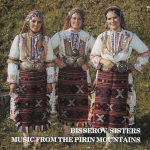
Bisserov Sisters
Music from the Pirin Mountains (PAN Records, 1990)
Recorded in concert at the Paradiso in Amsterdam, the Bisserov Sisters (together with their instrumentalists the Trio Karadzovska) give a whirlwind tour of the many folk styles of the south-western Bulgarian mountain village of Pirin, from the iconic vocal polyphony to all-instrumental dances and lots more in between. Beautifully performed, the resulting 26-track album is interesting and intriguing in equal measure.
Fatoumata Diawara & Roberto Fonseca
At Home: Live in Marciac (Jazz Village, 2015)
Of many attempted African-Latin collaborations, this is among the best. Between Diawara’s breathtaking voice and Fonseca’s nimble Cuban jazz piano, the connection feels completely natural, unforced and personal. Powerful and driving or subtle and sweet, the two masters match each other every step of the way. This recording from the Jazz in Marciac festival remains their only full-length release together.
Oum Kalthoum
Al Atlal (Sono Cairo, 1966)
Oum Kalthoum is one of the world’s bona fide megastars, revered not only in her native Egypt but across the Arab world and far beyond. She was known for her extended live performances, and Al Atlal (The Ruin) consists of a single 48-minute song of melancholy, despair and utter beauty. It is widely considered to be Kalthoum’s greatest achievement, maybe even the greatest Arabic song ever sung.
Ozomatli
Live at the Fillmore (Concord Records, 2005)
How much dancing is your body ready for? Mariachi, cumbia, salsa, norteño, hip-hop, funk, rock, samba and influences from every continent: it’s all here in one band. Ozomatli are one of the greatest of all party bands, known for their on-stage and in-crowd antics as well as their social consciousness. This sweat-soaked CD+DVD set gives a clue as to the dangerously high levels of ecstatic energy they bring.
Radio Tarifa
Fiebre (World Circuit, 2003)
The Iberian Peninsula and North Africa are only 13km apart, but Radio Tarifa’s music makes them feel even closer. Here, Spanish flamenco and Moroccan chaabi become one and the same. This retrospective-in-concert of the group’s first ten years results in a smoldering album that occasionally bursts out into full flamenco flame without ever leaving the souk.
Rachid Taha, Khaled, Faudel
1, 2, 3 Soleils (Barclay France, 1998)
This one-off supergroup show at Paris’ Bercy Stadium by the three biggest voices in rai – the king Khaled, the prince Faudel and the rebel Taha – was always going to be an extravaganza. With a 40-piece orchestra on top of the usual rai ensemble, this 2CD album is cheesy Algerian pop at its best. No wonder they sold out a stadium.
Lobi Traoré
Bamako Nights: Live at Bar Bozo 1995 (Glitterbeat, 2013)
There’s worse places to be than in a small, crowded bar in perhaps the world’s most musical city. Bamako Nights presents one of guitarist Lobi Traoré’s regular all-nighters in the Malian capital’s grungiest bar. Traoré’s electric Bamana blues is sometimes brooding, sometimes roaring, always grooving. And when he goes full-on Hendrix, it seems like Bar Bozo would be the best place on Earth.
Various Artists
Le Festival au Désert (Independent Records, 2003)
The Festival in the Desert is one of those legendary events spoken about in hushed, reverential tones: a stage set up in the village of Essakane in the Sahara desert where local Tuareg musicians rubbed shoulders with Malian giants and international stars, surrounded by camel races and fire dancers. It would sound like fantasy if we didn’t have recorded evidence that it happened.
Various Artists
Music and Rhythm: WOMAD 1982-2007 (WOMAD, 2007)
WOMAD is the standard bearer for world music festivals across the globe, and this 25th anniversary souvenir set tells its story with three CDs and a book. It features rare and wonderful live recordings from throughout the festival’s history, including the very first piece performed at the inaugural event in 1982 – ‘Raindrops Pattering on Banana Leaves’ by the Tianjin Music and Dance Ensemble.
Nikhil Banerjee
Afternoon Ragas (Raga Records, 1992)
This performance by sitar great Nikhil Banerjee, recorded in a museum in Rotterdam in 1970, is simply supreme. The 10-minute alap on Raga Bhimpalasri that opens the album is surely one of the most transcendent ever put to record. Accompanied by Kanai Dutta on tabla, Banerjee guides us through the serenity and the fireworks of ragas Bhimpilasri and Multani. Forget Rotterdam, this album can take you somewhere else entirely.
Bisserov Sisters
Music from the Pirin Mountains (PAN Records, 1990)
Recorded in concert at the Paradiso in Amsterdam, the Bisserov Sisters (together with their instrumentalists the Trio Karadzovska) give a whirlwind tour of the many folk styles of the south-western Bulgarian mountain village of Pirin, from the iconic vocal polyphony to all-instrumental dances and lots more in between. Beautifully performed, the resulting 26-track album is interesting and intriguing in equal measure.
Fatoumata Diawara & Roberto Fonseca
At Home: Live in Marciac (Jazz Village, 2015)
Of many attempted African-Latin collaborations, this is among the best. Between Diawara’s breathtaking voice and Fonseca’s nimble Cuban jazz piano, the connection feels completely natural, unforced and personal. Powerful and driving or subtle and sweet, the two masters match each other every step of the way. This recording from the Jazz in Marciac festival remains their only full-length release together.
Oum Kalthoum
Al Atlal (Sono Cairo, 1966)
Oum Kalthoum is one of the world’s bona fide megastars, revered not only in her native Egypt but across the Arab world and far beyond. She was known for her extended live performances, and Al Atlal (The Ruin) consists of a single 48-minute song of melancholy, despair and utter beauty. It is widely considered to be Kalthoum’s greatest achievement, maybe even the greatest Arabic song ever sung.
Ozomatli
Live at the Fillmore (Concord Records, 2005)
How much dancing is your body ready for? Mariachi, cumbia, salsa, norteño, hip-hop, funk, rock, samba and influences from every continent: it’s all here in one band. Ozomatli are one of the greatest of all party bands, known for their on-stage and in-crowd antics as well as their social consciousness. This sweat-soaked CD+DVD set gives a clue as to the dangerously high levels of ecstatic energy they bring.
Radio Tarifa
Fiebre (World Circuit, 2003)
The Iberian Peninsula and North Africa are only 13km apart, but Radio Tarifa’s music makes them feel even closer. Here, Spanish flamenco and Moroccan chaabi become one and the same. This retrospective-in-concert of the group’s first ten years results in a smoldering album that occasionally bursts out into full flamenco flame without ever leaving the souk.
Rachid Taha, Khaled, Faudel
1, 2, 3 Soleils (Barclay France, 1998)
This one-off supergroup show at Paris’ Bercy Stadium by the three biggest voices in rai – the king Khaled, the prince Faudel and the rebel Taha – was always going to be an extravaganza. With a 40-piece orchestra on top of the usual rai ensemble, this 2CD album is cheesy Algerian pop at its best. No wonder they sold out a stadium.
Lobi Traoré
Bamako Nights: Live at Bar Bozo 1995 (Glitterbeat, 2013)
There’s worse places to be than in a small, crowded bar in perhaps the world’s most musical city. Bamako Nights presents one of guitarist Lobi Traoré’s regular all-nighters in the Malian capital’s grungiest bar. Traoré’s electric Bamana blues is sometimes brooding, sometimes roaring, always grooving. And when he goes full-on Hendrix, it seems like Bar Bozo would be the best place on Earth.
Various Artists
Le Festival au Désert (Independent Records, 2003)
The Festival in the Desert is one of those legendary events spoken about in hushed, reverential tones: a stage set up in the village of Essakane in the Sahara desert where local Tuareg musicians rubbed shoulders with Malian giants and international stars, surrounded by camel races and fire dancers. It would sound like fantasy if we didn’t have recorded evidence that it happened.
Various Artists
Music and Rhythm: WOMAD 1982-2007 (WOMAD, 2007)
WOMAD is the standard bearer for world music festivals across the globe, and this 25th anniversary souvenir set tells its story with three CDs and a book. It features rare and wonderful live recordings from throughout the festival’s history, including the very first piece performed at the inaugural event in 1982 – ‘Raindrops Pattering on Banana Leaves’ by the Tianjin Music and Dance Ensemble.
Friday, 24 July 2020
Gnawa Youmala - Dounya
First published in Songlines Magazine issue 160, August/September 2020.
Gnawa Youmala
Dounya
Global Sonics (50 mins)
Gnawa Youmala are a multinational, multigenerational Paris-based six-piece, and with this debut album, they reshape Moroccan Gnawa music with their own refreshing twist.
Where the Sufi ceremony of the Gnawa is often loud and intense, Gnawa Youmala turn it into something light and airy, without actually changing all that much. Alongside the traditional guimbri (bass lute) and qaraqab (metal castinets), the group add violin and banjo, which fill the upper register of the music and add a uplifting element, helped along by colourful percussion and the ensemble’s all-acoustic nature. Across ten tracks, the group also bring in influences from Berber and Arabic music and further afield into reggae and jazz, but it never strays too far from the source to raise any confusion of what is most important here. For all their innovation, Gnawa Youmala lose none of the enchanting depth that makes Gnawa so powerful.
Featuring alumni from Global Gnawa and legendary Moroccan outfit Nass El Ghiwane, Gnawa Youmala have pedigree when it comes to creating feel-good, lightly poppy music from traditional sources. This is an impressive debut, respectful of the roots while being an easy, breezy listen.
Gnawa Youmala
Dounya
Global Sonics (50 mins)
Gnawa Youmala are a multinational, multigenerational Paris-based six-piece, and with this debut album, they reshape Moroccan Gnawa music with their own refreshing twist.
Where the Sufi ceremony of the Gnawa is often loud and intense, Gnawa Youmala turn it into something light and airy, without actually changing all that much. Alongside the traditional guimbri (bass lute) and qaraqab (metal castinets), the group add violin and banjo, which fill the upper register of the music and add a uplifting element, helped along by colourful percussion and the ensemble’s all-acoustic nature. Across ten tracks, the group also bring in influences from Berber and Arabic music and further afield into reggae and jazz, but it never strays too far from the source to raise any confusion of what is most important here. For all their innovation, Gnawa Youmala lose none of the enchanting depth that makes Gnawa so powerful.
Featuring alumni from Global Gnawa and legendary Moroccan outfit Nass El Ghiwane, Gnawa Youmala have pedigree when it comes to creating feel-good, lightly poppy music from traditional sources. This is an impressive debut, respectful of the roots while being an easy, breezy listen.
Friday, 15 May 2020
Rabii Harnoune & VB Kühl - Gnawa Electric Laune
First published in Songlines Magazine issue 158, June 2020.
Rabii Harnoune & VB Kühl
Gnawa Electric Laune
Tru Thoughts (67 mins)
This is an album that has me very much in two minds. It’s a fusion between Gnawa music from Morocco remixed for the European club dancefloor. Rabii Harnoune is the Gnawi responsible for the thumping guimbri and soulful wailing, and VB Kühl is the German producer who recontextualises it among all things electronic.
It’s not the most original idea out there – Gnawa x club fusions have been around for a long time and there are better examples of it than this. In accommodating the African groove, the club music seems tamped while the raw and heady energy of the Gnawa ceremony dissipates upon association with the frivolous beats’n’bleeps and cool R&B. And yet, and yet! There’s no denying that this album is really fun. It’s light-hearted and doesn’t take itself too seriously. The DIY nature of the production gives it a natural feel and the fusion flows on unforced.
Gnawa Electric Laune may not blow your mind with originality or sheer power, but as long as you approach with the right frame of mind – up for a good time without too much overthinking – it’s still an album that will be able to move your body to its own beat.
Rabii Harnoune & VB Kühl
Gnawa Electric Laune
Tru Thoughts (67 mins)
This is an album that has me very much in two minds. It’s a fusion between Gnawa music from Morocco remixed for the European club dancefloor. Rabii Harnoune is the Gnawi responsible for the thumping guimbri and soulful wailing, and VB Kühl is the German producer who recontextualises it among all things electronic.
It’s not the most original idea out there – Gnawa x club fusions have been around for a long time and there are better examples of it than this. In accommodating the African groove, the club music seems tamped while the raw and heady energy of the Gnawa ceremony dissipates upon association with the frivolous beats’n’bleeps and cool R&B. And yet, and yet! There’s no denying that this album is really fun. It’s light-hearted and doesn’t take itself too seriously. The DIY nature of the production gives it a natural feel and the fusion flows on unforced.
Gnawa Electric Laune may not blow your mind with originality or sheer power, but as long as you approach with the right frame of mind – up for a good time without too much overthinking – it’s still an album that will be able to move your body to its own beat.
Friday, 31 January 2020
Keeping Human Culture Alive for All
First published in Songlines Magazine issue 155, March 2020.
UNESCO has unveiled its 2019 inscriptions across its various lists representing the world’s most significant and unique cultural expressions. The UNESCO lists of ‘intangible cultural heritage’ recognise elements of culture whose practice is maintained through doing, and are aimed to safeguard those practices through preservation, research, transmission and education, as well as giving them increased global visibility. Intangible cultural heritage itself has a very broad definition, and can include oral traditions and expressions; social practices, rituals and festive events; knowledge and practices concerning nature and the universe; traditional craftsmanship; and performing arts – including music.
Probably the most important of the lists documents culture that is ‘in need of urgent safeguarding,’ those which UNESCO believes will become extinct without emergency measures being undertaken. This year, two musical practices have been highlighted in this way: sega tambour Chagos is a form of sega music performed in Mauritius by exiled Chagos Islanders in their own creole alongside traditional dances, food and drink; and sepuru, a ceremony made up of dance, song and sacred rituals to celebrate life cycle milestones among the Veekuhane people of Botswana. Both of these traditions have only been mastered by a handful of elderly people, and their practice is not being passed along to younger generations, leading to a loss of cultural memory as the older practitioners pass away.
The Representative List of the Intangible Cultural Heritage of Humanity is a much longer list that showcases and raises awareness of all the glorious diversity of human culture. This year, 35 traditions were added to the list, with eight relating to music from Greece, Morocco, Ireland, Uzbekistan, Cape Verde, Dominican Republic, Norway and Iran – you can read about a few of them in brief below.
The list of UNESCO Creative Cities was also expanded. These are cities that are acknowledged as being hotbeds of a particular type of culture – be it music, film, food, literature, craft or design. With 66 new inscriptions this year, the Creative Cities network now numbers 246 cities across the globe. Cities newly recognised for their contributions to music include Havana in Cuba, Port of Spain in Trinidad & Tobago and Essaouira in Morocco, as well as some slightly less obvious choices, such as Kazan in Russia and Leiria in Portugal. UNESCO director-general Audrey Azoulay praised the Creative Cities, saying “All over the world, these cities, each in its way, make culture the pillar, not an accessory, of their strategy.”
However, the various UNESCO lists have been shown this year to not necessarily represent an unchanging acceptance of the practices inscribed within. 2019 saw a tradition has been removed from the Representative List for the first time. The carnival of Aalst in Belgium was added to the list in 2010, but has long been on the receiving end of national and international criticism for its blatant displays of anti-Semitic caricature. After the inscription had been withdrawn, UNESCO released the statement saying that it remains “faithful to its founding principles of dignity, equality and mutual respect among peoples and condemns all forms of racism, anti-Semitism and xenophobia.”
Here are just some of the new inscriptions to UNESCO’s Representative List of the Intangible Cultural Heritage of Humanity for 2019:
Gnawa – Members of the Gnawa Sufi brotherhood of Morocco are descended from West Africans transported north in slavery in the 16th century. The ritual music of the Gnawa is one of the country’s most recognisable styles.
Morna – The mournful song from the islands of Cape Verde is suffused with sodade – a feeling of nostalgic longing. The queen of morna is undoubtedly the late, great Cesária Évora.
Irish harping – Ireland’s harping tradition is such an important aspect of the country’s culture that the harp is its national symbol. The instrument has been played in Ireland for over 1000 years, and the number of practitioners is growing steadily.
Dotar – The Iranian long-necked lute was inscribed not just for its musical tradition of accompanying epic poetry, but for the tradition of its manufacture. Crafting and playing the dotar usually go hand-in-hand.
Photo: Sega tambour Chagos, courtesy of National Heritage Fund with permission of UNESCO.
UNESCO has unveiled its 2019 inscriptions across its various lists representing the world’s most significant and unique cultural expressions. The UNESCO lists of ‘intangible cultural heritage’ recognise elements of culture whose practice is maintained through doing, and are aimed to safeguard those practices through preservation, research, transmission and education, as well as giving them increased global visibility. Intangible cultural heritage itself has a very broad definition, and can include oral traditions and expressions; social practices, rituals and festive events; knowledge and practices concerning nature and the universe; traditional craftsmanship; and performing arts – including music.
Probably the most important of the lists documents culture that is ‘in need of urgent safeguarding,’ those which UNESCO believes will become extinct without emergency measures being undertaken. This year, two musical practices have been highlighted in this way: sega tambour Chagos is a form of sega music performed in Mauritius by exiled Chagos Islanders in their own creole alongside traditional dances, food and drink; and sepuru, a ceremony made up of dance, song and sacred rituals to celebrate life cycle milestones among the Veekuhane people of Botswana. Both of these traditions have only been mastered by a handful of elderly people, and their practice is not being passed along to younger generations, leading to a loss of cultural memory as the older practitioners pass away.
The Representative List of the Intangible Cultural Heritage of Humanity is a much longer list that showcases and raises awareness of all the glorious diversity of human culture. This year, 35 traditions were added to the list, with eight relating to music from Greece, Morocco, Ireland, Uzbekistan, Cape Verde, Dominican Republic, Norway and Iran – you can read about a few of them in brief below.
The list of UNESCO Creative Cities was also expanded. These are cities that are acknowledged as being hotbeds of a particular type of culture – be it music, film, food, literature, craft or design. With 66 new inscriptions this year, the Creative Cities network now numbers 246 cities across the globe. Cities newly recognised for their contributions to music include Havana in Cuba, Port of Spain in Trinidad & Tobago and Essaouira in Morocco, as well as some slightly less obvious choices, such as Kazan in Russia and Leiria in Portugal. UNESCO director-general Audrey Azoulay praised the Creative Cities, saying “All over the world, these cities, each in its way, make culture the pillar, not an accessory, of their strategy.”
However, the various UNESCO lists have been shown this year to not necessarily represent an unchanging acceptance of the practices inscribed within. 2019 saw a tradition has been removed from the Representative List for the first time. The carnival of Aalst in Belgium was added to the list in 2010, but has long been on the receiving end of national and international criticism for its blatant displays of anti-Semitic caricature. After the inscription had been withdrawn, UNESCO released the statement saying that it remains “faithful to its founding principles of dignity, equality and mutual respect among peoples and condemns all forms of racism, anti-Semitism and xenophobia.”
Here are just some of the new inscriptions to UNESCO’s Representative List of the Intangible Cultural Heritage of Humanity for 2019:
Gnawa – Members of the Gnawa Sufi brotherhood of Morocco are descended from West Africans transported north in slavery in the 16th century. The ritual music of the Gnawa is one of the country’s most recognisable styles.
Morna – The mournful song from the islands of Cape Verde is suffused with sodade – a feeling of nostalgic longing. The queen of morna is undoubtedly the late, great Cesária Évora.
Irish harping – Ireland’s harping tradition is such an important aspect of the country’s culture that the harp is its national symbol. The instrument has been played in Ireland for over 1000 years, and the number of practitioners is growing steadily.
Dotar – The Iranian long-necked lute was inscribed not just for its musical tradition of accompanying epic poetry, but for the tradition of its manufacture. Crafting and playing the dotar usually go hand-in-hand.
Photo: Sega tambour Chagos, courtesy of National Heritage Fund with permission of UNESCO.
Labels:
Article,
Botswana,
Cabo Verde,
Iran,
Ireland,
Mauritius,
Morocco,
News,
Songlines Magazine
Maleem Mahmoud Ghania with Pharaoh Sanders - The Trance of Seven Colors
First published in Songlines Magazine issue 155, March 2020.
Maleem Mahmoud Ghania with Pharaoh Sanders The Trance of Seven Colors Zehra (71 mins)
The mystical Sufi music of the Moroccan Gnawa people has long been a source of fascination for jazz musicians attracted by the intense sounds of the guimbri bass lute and qaraqab metal castanets and the bluesy cries of the singers. Collaborations were never going to be far away.
This reissue of this 1994 album sees avant-garde jazz saxophonist Pharaoh Sanders jamming with legendary Gnawa master Mahmoud Ghania, overseen by producer Bill Laswell. For a meeting of three indisputable leaders in their fields, I came to this album expecting to be blown away. Instead I feel like I’ve been left hanging. Each element is wonderful in its own right: the sound of Ghania and his ensemble is powerful and intoxicating, and Sanders explores the boundaries of saxophone technique. Together, though, it feels as if there is little connection. The styles sit on top of each other without really blending. They don’t clash, but they don’t particularly complement either.
The most effective collaboration on the album is actually on the track ‘Hamdouchi’, where Sanders plays with Aissawa musicians led by Abdelkabir Addabachi. Here, Sanders’ wailing sax integrates with five-piece shawm-and-drum ensemble in the way that it doesn’t with the Gnawa musicians, giving a possible glimpse into what could have been.
Maleem Mahmoud Ghania with Pharaoh Sanders The Trance of Seven Colors Zehra (71 mins)
The mystical Sufi music of the Moroccan Gnawa people has long been a source of fascination for jazz musicians attracted by the intense sounds of the guimbri bass lute and qaraqab metal castanets and the bluesy cries of the singers. Collaborations were never going to be far away.
This reissue of this 1994 album sees avant-garde jazz saxophonist Pharaoh Sanders jamming with legendary Gnawa master Mahmoud Ghania, overseen by producer Bill Laswell. For a meeting of three indisputable leaders in their fields, I came to this album expecting to be blown away. Instead I feel like I’ve been left hanging. Each element is wonderful in its own right: the sound of Ghania and his ensemble is powerful and intoxicating, and Sanders explores the boundaries of saxophone technique. Together, though, it feels as if there is little connection. The styles sit on top of each other without really blending. They don’t clash, but they don’t particularly complement either.
The most effective collaboration on the album is actually on the track ‘Hamdouchi’, where Sanders plays with Aissawa musicians led by Abdelkabir Addabachi. Here, Sanders’ wailing sax integrates with five-piece shawm-and-drum ensemble in the way that it doesn’t with the Gnawa musicians, giving a possible glimpse into what could have been.
Friday, 23 August 2019
Attarazat Addahabia & Faradjallah - Al Hadaoui
First published in Songlines Magazine issue 151, October 2019.
Attarazat Addahabia & Faradjallah
Al Hadaoui
Habibi Funk (36 mins)
Al Hadaoui was the debut album of Attarazat Addahabia, recorded in 1972 but for some reason never released – now we get to hear it in all its glory. The group are from Casablanca, Morocco and their music is a mix of psychedelic and experimental rock and funk that wouldn’t have sounded out of place in the San Francisco or Los Angeles of the same time period. Of course, they also bring in a unique African flavour to it.
The title-track opener shows this off the best: it starts with that recognisable rhythm of the Gnawa played on the qaraqab (metal castanets) before they’re joined by bluesy-funky electric guitar (which is stunning throughout the album), Afro-Latin percussion, an all-female chorus and eventually Faradjallah’s charismatic vocals. If it weren’t for the Arabic language, you could even be forgiven for thinking this record came from Nigeria or Cameroon, such is the importance of its large and interlocking percussion section.
A great thing is that the band obviously don’t take themselves too seriously, making this record is a lot of fun – keep an ear out for the track ‘Aflana’, based on Beethoven’s ‘Für Elise’ – and that helps to bring it all to life and really drive home that 70s sound.
Attarazat Addahabia & Faradjallah
Al Hadaoui
Habibi Funk (36 mins)
Al Hadaoui was the debut album of Attarazat Addahabia, recorded in 1972 but for some reason never released – now we get to hear it in all its glory. The group are from Casablanca, Morocco and their music is a mix of psychedelic and experimental rock and funk that wouldn’t have sounded out of place in the San Francisco or Los Angeles of the same time period. Of course, they also bring in a unique African flavour to it.
The title-track opener shows this off the best: it starts with that recognisable rhythm of the Gnawa played on the qaraqab (metal castanets) before they’re joined by bluesy-funky electric guitar (which is stunning throughout the album), Afro-Latin percussion, an all-female chorus and eventually Faradjallah’s charismatic vocals. If it weren’t for the Arabic language, you could even be forgiven for thinking this record came from Nigeria or Cameroon, such is the importance of its large and interlocking percussion section.
A great thing is that the band obviously don’t take themselves too seriously, making this record is a lot of fun – keep an ear out for the track ‘Aflana’, based on Beethoven’s ‘Für Elise’ – and that helps to bring it all to life and really drive home that 70s sound.
Friday, 5 April 2019
Aziz Sahmaoui & University of Gnawa - Poetic Trance
First published in Songlines Magazine issue 147, May 2019.
Aziz Sahmaoui & University of Gnawa
Poetic Trance
Blue Line Productions (51 mins)
Aziz Sahmaoui, Moroccan co-founder of the legendary Orchestre National de Barbès, is back for a third album with his group University of Gnawa; together they explore the historic connections between the Gnawa of Morocco and the Mandé world to the south using music as their magnifying glass.
Aside from Sahmaoui himself providing lead vocals, ngoni and mandola, the core of the band are three Senegalese musicians, Alune Wade on bass, Hervé Samb on guitar and Cheikh Diallo on kora and keys. All three also sing, and so the Senegalese – and especially Wolof – sound is incredibly pervasive throughout. The Senegalese and North African elements are tumbled together with rock and reggae, making the end result rather poppy, actually.
Despite what the band name would suggest, though, there’s less Gnawa on the album than you’d expect. It’s a shame, because the strongest tracks on the album are the ones where it is brought to the fore, such as in ‘Soudani ya Yémma’ and ‘Sotanbi.’ It’s on these tracks that the album’s stated brief of ‘exposing universal truths’ of the connections between North and West Africa seems closest to being realised. Elsewhere, it just feels neither here nor there.
Aziz Sahmaoui & University of Gnawa
Poetic Trance
Blue Line Productions (51 mins)
Aziz Sahmaoui, Moroccan co-founder of the legendary Orchestre National de Barbès, is back for a third album with his group University of Gnawa; together they explore the historic connections between the Gnawa of Morocco and the Mandé world to the south using music as their magnifying glass.
Aside from Sahmaoui himself providing lead vocals, ngoni and mandola, the core of the band are three Senegalese musicians, Alune Wade on bass, Hervé Samb on guitar and Cheikh Diallo on kora and keys. All three also sing, and so the Senegalese – and especially Wolof – sound is incredibly pervasive throughout. The Senegalese and North African elements are tumbled together with rock and reggae, making the end result rather poppy, actually.
Despite what the band name would suggest, though, there’s less Gnawa on the album than you’d expect. It’s a shame, because the strongest tracks on the album are the ones where it is brought to the fore, such as in ‘Soudani ya Yémma’ and ‘Sotanbi.’ It’s on these tracks that the album’s stated brief of ‘exposing universal truths’ of the connections between North and West Africa seems closest to being realised. Elsewhere, it just feels neither here nor there.
Friday, 8 September 2017
Maalem Said Damir - Gnawa or Never
Previously unpublished.
Maalem Said Damir
Gnawa or Never
1001 Knights Production (82 mins)
The Gnawa people of Morocco can trace their ancestry to the Bambara (or Bamana) people of West Africa. Their music serves as a clear connection between the past and the present, between the North and the West of Africa, and between the cultures of the Bambara, Berber and Arabic populations.
A master of Gnawa music is given the title of Maalem, and on this album, Maalem Said Damir lives up to it, leading the Gnawa Allstars through a wonderful set of some of the tradition’s most iconic pieces. At its core, this is religious music. While it may not have been recorded as part of a full ceremony (known as a lila), the swirling rhythms of the clattering qaraqab (metal castanets) and the skyward hollers of the Maalem and his chorus invoking the saints are at once hypnotic and ecstatic.
Within and throughout it all, the Gnawa’s West African roots are easy to hear. The trademark instrument is the guimbri (bass lute). The bluesy tones of this not-so-distant decedent of the ngoni underpin the whole thing and flow with the mood of the pieces. At times, the guimbri can be mellow and surprisingly delicate, before slowly building up to a blistering pace that is positively thumping.
Gnawa or Never was recorded in Marrakesh by British-Moroccan DJ and beatmaster U-Cef together with Jason Emberton in 2011, and released as a digital-only album later that same year. Given U-Cef’s pedigree on the club scene, the production on display here is surprisingly down-to-earth. It is obvious that the aim has been to simply convey the music in its most natural way and in the highest fidelity. Everything is well-mixed and easily heard, which is somewhat of a rarity: the qaraqab often drown out all else on a record, but here they sit easily alongside the guimbri and vocals, integral without being overwhelming. Bonus points for going easy on the distracting reverb that is often heaped on similar recordings by the spadeful.
This unfortunately overlooked release is possibly one of the best presentations of the music of the Gnawa out there. If you need an introduction to this wonderful tradition, look no further!
Maalem Said Damir
Gnawa or Never
1001 Knights Production (82 mins)
The Gnawa people of Morocco can trace their ancestry to the Bambara (or Bamana) people of West Africa. Their music serves as a clear connection between the past and the present, between the North and the West of Africa, and between the cultures of the Bambara, Berber and Arabic populations.
A master of Gnawa music is given the title of Maalem, and on this album, Maalem Said Damir lives up to it, leading the Gnawa Allstars through a wonderful set of some of the tradition’s most iconic pieces. At its core, this is religious music. While it may not have been recorded as part of a full ceremony (known as a lila), the swirling rhythms of the clattering qaraqab (metal castanets) and the skyward hollers of the Maalem and his chorus invoking the saints are at once hypnotic and ecstatic.
Within and throughout it all, the Gnawa’s West African roots are easy to hear. The trademark instrument is the guimbri (bass lute). The bluesy tones of this not-so-distant decedent of the ngoni underpin the whole thing and flow with the mood of the pieces. At times, the guimbri can be mellow and surprisingly delicate, before slowly building up to a blistering pace that is positively thumping.
Gnawa or Never was recorded in Marrakesh by British-Moroccan DJ and beatmaster U-Cef together with Jason Emberton in 2011, and released as a digital-only album later that same year. Given U-Cef’s pedigree on the club scene, the production on display here is surprisingly down-to-earth. It is obvious that the aim has been to simply convey the music in its most natural way and in the highest fidelity. Everything is well-mixed and easily heard, which is somewhat of a rarity: the qaraqab often drown out all else on a record, but here they sit easily alongside the guimbri and vocals, integral without being overwhelming. Bonus points for going easy on the distracting reverb that is often heaped on similar recordings by the spadeful.
This unfortunately overlooked release is possibly one of the best presentations of the music of the Gnawa out there. If you need an introduction to this wonderful tradition, look no further!
Monday, 16 February 2015
Temenik Electric - Ouesh Hada?
First published in fRoots issue 381, March 2015
Temenik Electric
Ouesh Hada?
Nomad Café Productions (37 mins)
Marseille has long been known as a hotbed of North African culture in France, with many French-Arab subcultures having their genesis in the city. It’s not surprising, then, that a band such as Temenik Electric would flourish in such an environment.
With members from France and across North Africa, Temenik Electric create Maghrebi rock, but go much further than the sounds of pioneer Rachid Taha or more recent groups such as Speed Caravan by using elements of electronica, dub and blues together with many distinct North African styles from Algerian raï to Hassaniya music of the Western Sahara to create an intense but body-moving piece of work.
Although they’re often described as ‘Electric Gnawa’, the music of Ouesh Hada? does not contain too many obvious elements of the Afro-Moroccan style; there are no guimbri lutes, and rarely the sound of the metal castanets, the qaraqab. However, the album’s loping rhythms and extended sections of repetition that put you into a semi-trance before you fully realise what’s happened really does create the essence of gnawa that pervades each track. Despite the use of oud, nay, heavily distorted guitars, all manner of synths, and some deep percussionscapes, the gnawa infusion feels perfectly natural – a testament to the musicians who create such a nuanced style.
Ouesh Hada? is an outstanding album: perfect to rock out to, but also to lose yourself in. Play loud and fall into the groove of Temenik Electric!
Temenik Electric
Ouesh Hada?
Nomad Café Productions (37 mins)
Marseille has long been known as a hotbed of North African culture in France, with many French-Arab subcultures having their genesis in the city. It’s not surprising, then, that a band such as Temenik Electric would flourish in such an environment.
With members from France and across North Africa, Temenik Electric create Maghrebi rock, but go much further than the sounds of pioneer Rachid Taha or more recent groups such as Speed Caravan by using elements of electronica, dub and blues together with many distinct North African styles from Algerian raï to Hassaniya music of the Western Sahara to create an intense but body-moving piece of work.
Although they’re often described as ‘Electric Gnawa’, the music of Ouesh Hada? does not contain too many obvious elements of the Afro-Moroccan style; there are no guimbri lutes, and rarely the sound of the metal castanets, the qaraqab. However, the album’s loping rhythms and extended sections of repetition that put you into a semi-trance before you fully realise what’s happened really does create the essence of gnawa that pervades each track. Despite the use of oud, nay, heavily distorted guitars, all manner of synths, and some deep percussionscapes, the gnawa infusion feels perfectly natural – a testament to the musicians who create such a nuanced style.
Ouesh Hada? is an outstanding album: perfect to rock out to, but also to lose yourself in. Play loud and fall into the groove of Temenik Electric!
Labels:
Album Review,
Algeria,
France,
fRoots,
Morocco
Monday, 15 December 2014
Majid Bekkas - Al Qantara
First published in fRoots double issue 379-380, January-February 2015
Majid Bekkas
Al Qantara
Igloo Records (70 mins)
Moroccan oud player Majid Bekkas has worked his way through collaborations with many artists from many different styles, but this is the first outing of Bekkas’ Afro Oriental Jazz Trio. With Al Qantara, the group live up to their name and stay true to the influences from Bekkas’ previous collaborations.
The trio are Bekkas on oud, guimbri and vocals, Manuel Hermia on bansuri flute, saxophone and clarinet and Khalid Kouhen on tabla and percussion, and with these tools they create what is, first and foremost, a jazz album. Most of the pieces work in the jazz form, but the ‘Afro Oriental’ lens through which it is heard is what makes the album special. Both the music of the Arabic and Gnawa populations of Morocco influence the melodies here, with elements of blues and even music from the Far East seeping in. The rhythms used are largely Indian-inspired and their combination with the Moroccan jazz melodies works so well, the traditions don’t sound as if they grew thousands of miles apart.
The trio’s jazz elements echo the ‘modern’ era of experimentation, drawing especially from the Afrocentric periods of Don Cherry (whose loveletter to the Gnawa, 'Guinea', is covered here) and Randy Weston, who also provides liner notes. It’s interesting to hear Afro-Arabic jazz created by those closer to the original tradition, and refreshing that the American elements don’t sound faked either.
The last couple of tracks seem a little oddly placed – they are more introspective pieces that cause the album to ‘fade out’ rather than end with a bang. As with the rest of the album, the pieces are musically accomplished and work well on their own, but may have been more effective with a different placement on the album.
Arabic jazz has been well-covered by many artists, but Al Qantara, while not pushing many boundaries, uses the genre to good effect – there are some great tracks and the overall sound is very enjoyable. A successful album, and a promising new project.
Majid Bekkas
Al Qantara
Igloo Records (70 mins)
Moroccan oud player Majid Bekkas has worked his way through collaborations with many artists from many different styles, but this is the first outing of Bekkas’ Afro Oriental Jazz Trio. With Al Qantara, the group live up to their name and stay true to the influences from Bekkas’ previous collaborations.
The trio are Bekkas on oud, guimbri and vocals, Manuel Hermia on bansuri flute, saxophone and clarinet and Khalid Kouhen on tabla and percussion, and with these tools they create what is, first and foremost, a jazz album. Most of the pieces work in the jazz form, but the ‘Afro Oriental’ lens through which it is heard is what makes the album special. Both the music of the Arabic and Gnawa populations of Morocco influence the melodies here, with elements of blues and even music from the Far East seeping in. The rhythms used are largely Indian-inspired and their combination with the Moroccan jazz melodies works so well, the traditions don’t sound as if they grew thousands of miles apart.
The trio’s jazz elements echo the ‘modern’ era of experimentation, drawing especially from the Afrocentric periods of Don Cherry (whose loveletter to the Gnawa, 'Guinea', is covered here) and Randy Weston, who also provides liner notes. It’s interesting to hear Afro-Arabic jazz created by those closer to the original tradition, and refreshing that the American elements don’t sound faked either.
The last couple of tracks seem a little oddly placed – they are more introspective pieces that cause the album to ‘fade out’ rather than end with a bang. As with the rest of the album, the pieces are musically accomplished and work well on their own, but may have been more effective with a different placement on the album.
Arabic jazz has been well-covered by many artists, but Al Qantara, while not pushing many boundaries, uses the genre to good effect – there are some great tracks and the overall sound is very enjoyable. A successful album, and a promising new project.
Labels:
Album Review,
fRoots,
Morocco
Monday, 10 December 2012
Fanga & Maâlem Abdallah Guinéa - Fangnawa Experience
First published in Songlines Magazine issue 89, January/February 2013.
Fanga & Maâlem Abdallah Guinéa
Fangnawa Experience
Strut (59 mins)
In an era where collaboration is the key to some of the most exciting musical styles around, some fusions remain surprisingly under-represented. Such a fusion is explored in this album, in which Afrobeat collective Fanga (led by Burkinabé singer Korbo), and Mâalem (Gnawa master) Abdallah Guinéa and his band Nasse Ejadba from Morocco perform a selection from the former’s 15-year back-catalogue.
Although some similarities can be drawn between Moroccan Sufi Gnawa music and funk-laden Afrobeat such as their repetitive and insistent backing rhythms, it would seem that the two styles are too different to easily mould into one, and indeed this album seems to prove as much.
At its high points, the ensembles gel in a very pleasing manner: in ‘Kononi’, by far the most effective track on the album, qaraqab (metal castanets), drum kit and congas create a strong percussion section while Hammond organ, guitar and guimbri (bass lute) provide a hypnotic backing for melodies from Guinéa and the Fanga horns. Such highs are, however, somewhat hard to come by. Tracks such as the 14-minute opener ‘Noble Tree’ suffer from sounding more akin to medleys of Afrobeat and Gnawa songs rather than a melding of the two; the Afrobeat not getting a chance get one dancing, nor the Gnawa room to hypnotise with its loping rhythms.
The overriding feeling given is of a fusion that could yield magical fruit if treated carefully, but this album misses that mark somewhat; a sequel may well prove a more intriguing affair.
Fanga & Maâlem Abdallah Guinéa
Fangnawa Experience
Strut (59 mins)
In an era where collaboration is the key to some of the most exciting musical styles around, some fusions remain surprisingly under-represented. Such a fusion is explored in this album, in which Afrobeat collective Fanga (led by Burkinabé singer Korbo), and Mâalem (Gnawa master) Abdallah Guinéa and his band Nasse Ejadba from Morocco perform a selection from the former’s 15-year back-catalogue.
Although some similarities can be drawn between Moroccan Sufi Gnawa music and funk-laden Afrobeat such as their repetitive and insistent backing rhythms, it would seem that the two styles are too different to easily mould into one, and indeed this album seems to prove as much.
At its high points, the ensembles gel in a very pleasing manner: in ‘Kononi’, by far the most effective track on the album, qaraqab (metal castanets), drum kit and congas create a strong percussion section while Hammond organ, guitar and guimbri (bass lute) provide a hypnotic backing for melodies from Guinéa and the Fanga horns. Such highs are, however, somewhat hard to come by. Tracks such as the 14-minute opener ‘Noble Tree’ suffer from sounding more akin to medleys of Afrobeat and Gnawa songs rather than a melding of the two; the Afrobeat not getting a chance get one dancing, nor the Gnawa room to hypnotise with its loping rhythms.
The overriding feeling given is of a fusion that could yield magical fruit if treated carefully, but this album misses that mark somewhat; a sequel may well prove a more intriguing affair.
Subscribe to:
Posts (Atom)