Showing posts with label France. Show all posts

Tuesday, 25 February 2025

Press release: Ukandanz - Evil Plan

First written as a press release for the album for Ballantyne Communications.

Ukandanz
Evil Plan
Compagnie 4000 (28 mins)

This ain’t yer same old Ethiojazz. Ukandanz have pioneered the sound of Ethiopian crunch – at once soul and heavy metal, jazz and punk, and indisputably Ethiopian – and they’ve perfected it too. A Lyon-based quartet of complex rhythms, screaming saxophone and distorted bass thrums unite under the honeyed voice Asnaké Gebreyes, stalwart singer of the buzzing Addis Ababa scene that he still calls home. Asnaké’s Amharic-language vocals stir the soulful sweetness of Ethiopia’s classic pop into the band’s beefy, bold and intelligently aggressive style.

It’s a refreshingly unexpected synergy that has gained plaudits ranging from revered Éthiopiques producer Francis Falceto to comedian and music obsessive James Acaster. Channelling musical powerhouses as diverse as Ethiopian singer Tilahoun Gessesse and the legendary Black Sabbath, Ukandanz have been not-so-quietly making waves for the past 15 years – now they pay tribute to these musical heroes without imitation, only surprises.

Ukandanz were founded as a four-piece in the mid-2000s in France by bassist / guitarist Damien Cluzel and saxophonist Lionel Martin. But there was something missing, an essential spark that would transform their sound and take them to the next level. That spark was the golden tones of Addis Ababa soul singer Asnaké Gebreyes, a connection made by Falceto himself. Asnaké had been a staple on the Addis scene since he was 16 – he moved from his small home city of Kibre Mengist to earn his stripes as part of the legendary Police Orchestra alongside future stars Getatchew Mekurya and Hirut Bekele, before breaking out into stardom in his own right in the 1980s and later even contributing to Éthiopiques Vol. 15: Jump to Addis. He was a world away from the Ukandanz style, but his acrobatic, flexible voice was a perfect fit, and the connection was clear: “He didn’t know about rock music, about Sabbath, about Iron Maiden, but he has that same energy! It’s like the traditional musicians: it’s not rock, but they’re really rocking,” says Cluzel. And he’s no stranger to collaboration, having worked with Ethiopian legends Getatchew Mekurya and Mohammed Jimmy Mohammed, as well as Dutch jazz-punk collective The Ex and drum experimentalist Han Benninck. With Asnaké on the team, the four became five in 2010, and they’ve not looked back. The musicians live a continent apart, swapping artistic interrogations back-and-forth via WhatsApp, bashing rough-hewn arrangements into shape before polishing them through live tours and studio jams.


Rather than taking obvious cues from the well-known Ethiopian composer Mulatu Astatke like so many bands before them, they instead look to the country’s most beloved musicians – the soul superstars of the 1960s and 1970s. Icons such as Tilahoun Gessesse, Getatchew Kassa and Muluken Melesse are held up as the pantheon of pop music. But Ukandanz aren’t interested in faithful covers or the meaningless meanderings of Westerners trying to make Ethiopian music. “We don’t imitate and we don’t want to make the folklorical fusion shit. Ethiopians play Ethiopian music better than we can.” So the musicians do what they do best, creating an angular, angry math-punk, building complex polyrhythmic and polymetrical tensions based on jazz and allowing Asnaké to work his magic over the top, the two styles converging in the use of the kiñit – the iconic Ethiopian pentatonic scales that makes the music so distinctive.

Now after 15 years as a five-piece, Ukandanz are looking back to their heroes and sources of inspiration of generations past, and finding in them important meanings for the modern day. This is clearest in their intriguing cover of Black Sabbath’s 1970 protest song ‘War Pigs’. As well as hearing the musical relationship in the pentatonic feel and raw, sometimes mysterious energy, Asnaké particularly connected with the song’s anti-war lyrics, which resonate with Ethiopia’s current situation locked in a civil conflict since 2018. Sabbath’s lyrics are translated into Amharic and sung with a keening, melismatic passion. Such politically-charged statements can be dangerous in today’s Ethiopia, but some songs are too important to keep quiet.

On either side of the Black Sabbath classic are two songs associated with the kings of Ethiopian soul. ‘Yene Felagote’ (My Interest) was made famous by Tilahoun Gessesse, and Asnaké absolutely explodes out of the gates to open the album while Martin’s tenor sax bridges the conceptual gap between rock guitar and the sound of traditional Ethiopia, the masenko fiddle. Getatchew Kassa’s song ‘Lewsedesh Andken’ (One Day I Will Take You) is transformed by layers of cross-rhythms, spiky saxophone and funky organ grooves providing space for Asnaké’s charismatic strut. Both are love songs on their surface, but their lyrics are full of double entendre and semantic obfuscations, hiding multiple layers of deep meaning. This playful and poetic treatment is a powerful form of Ethiopian expression known as semena werk, wax and gold: entertaining words with profound significance at their core. Ukandanz make their music in the same way – complexities, contradictions and confluences interweave into a vibrant and effervescent eruption of unique Ethio-European noise.

Friday, 10 May 2024

Avalanche Kaito - Talitakum

First published in Songlines Magazine issue 198, June 2024.

Avalanche Kaito
Talitakum
Glitterbeat Records (42 mins)

Avalanche Kaito’s 2022 self-titled debut was a triumph of noise punk indelibly informed by Mossi griot music from Burkina Faso. Since then, relentless live shows and a slightly reworked line-up (bass replaced by guitar) have evolved the Franco-Belgo-Burkinabé trio’s sound. This time, their music feels a little more considered. It’s just as foreboding, abrasive and hypnotic, but the anarchic chaos that infused their first album is replaced by something more direct and focussed.

Each of the nine tracks on Talitakum has a unique sound that complements the album as a whole - it can go from glitch trap on one track to Tuareg Beefheart punk on the next. It is the attitude that unites them, the complex creativity of three musicians in simpatico, the delicious contrasts of frontman Kaito Winse’s beautiful voice against the harsh discords of distorted guitar and synth, the declamatory tama (talking drum) against the crashing drum kit.

The world of Avalanche Kaito no longer feels like a rattling, angry machine constantly on the verge of losing control, instead like a purposeful, powerful elemental spirit that creates through destruction. That change is for neither better nor worse, but it shows that this is a group that mutate and adapt and grow with experience, and will always have something new to say.

Friday, 5 April 2024

Sahra Halgan - Hiddo Dhawr

First published in Songlines Magazine issue 197, May 2024.

Sahra Halgan
Hiddo Dhawr
Danaya Music (48 mins)

Sahra Halgan is a hero of Somaliland’s music. At home, in the unrecognised Somali state’s capital Hargeisa, she runs the Hiddo Dhawr (‘promoting culture’) club, the first live music venue since the country declared independence in 1991. Abroad, she is taking Somali music to new places, literally and metaphorically. Her fourth album, also Hiddo Dhawr, is her best so far.

Halgan’s vibrato-heavy voice brings forth songs that speak of love and politics – often simultaneously – wrapped in the proverbs and poetics for which Somalis are so famous. But while Halgan keeps everything rooted in the Somali heritage, her France-based band introduce widespread influences, most notably from the other side of the African continent. Maël Salètes’ guitar and Aymeric Krol’s percussion reflect the sounds of the Songhai and Tuareg of northern Mali. That connection of East and West – a surprising So-Mali-Land fusion – works really well, the two areas united across the Sahara by bluesy pentatonics and laid-back grooves. The quartet is completed by Régis Monte, whose keys consciously echo the classic-era Somali pop of the 70s and 80s, and add some devilishly funky basslines whenever appropriate.

In Hiddo Dhawr, Halgan and her group rollick through up-and-dance tunes and brood over romantic laments – a testament to Somaliland’s distinctive and flexible musical culture and its champion’s forward-thinking and ceaseless advocacy.

Friday, 21 July 2023

Naïssam Jalal - Healing Rituals

First published in Songlines Magazine issue 190, August/September 2023.

Naïssam Jalal
Healing Rituals
Les Couleurs du Son (48 mins)

Syrian-French flautist Naïssam Jalal has been somewhat overlooked as a composer and bandleader, but with this album – her ninth! – hopefully that will change. Healing Rituals is Jalal’s paean to the therapeutic and healing abilities of music, with each of its eight pieces a ‘ritual’ dedicated to a power of nature – wind, sun, hills, rivers, ground, forests, moon and mist. It’s a gem.

Flutes and voice lead a quartet with cello, double bass and drum kit, a classy chamber ensemble that allows for beautiful harmonies while avoiding dense chords. The compositions occupy the worlds of jazz and classical without sitting fully in either, and Jalal uses that inbetweenness to introduce many other soundworlds. She is clearly a passionate scholar of many flute traditions, and their influence seeps through the whole album as she channels the Fula tambin, Hindustani bansuri, Ethiopian washint and Irish low-whistle as well as the European classical concert flute and the Arabic ney of her own formal education. It’s all given a thoughtful, sensitive and playful treatment where energy flows freely without ever boiling over.

This is music that defies categories, instead breathing free like the nature of its inspiration – Naïssam Jalal’s skills as a musician and composer are hard to ignore.

Friday, 3 March 2023

Mze Shina - Elesa

First published in Songlines Magazine issue 186, April 2023.

Mze Shina
Elesa
Buda Musique (50 mins)

A quintet of American, Peruvian, French and Iranian origin, based in Rennes, Brittany, is a pretty odd collective of musicians to perform Georgian music, but with more than 25 years of study behind them, Mze Shina’s songs are almost enough to transport the listener directly to the Caucasus Mountains.

Now on their fifth album, and their first since 2018’s Odoïa, the group continue their quest to explore the depths of Georgia’s polyphonic vocal tradition while adding their own modern, international twist. Although the group’s repertoire is traditional, their arrangements are innovative and exciting, and seem to emphasise global polyphonic traditions, with subtle harkings to Occitania, Bulgaria, Albania and more throughout.

The group’s four voices – three male and one female – are in a near-constant tumble, with voices cropping up in various combinations, harmonies and different styles of polyphony throughout – there’s even some impressive rapid-fire yodelling. With just voice and percussion, each intertwining vocal part rings clear within the weaving, and this album’s new addition of Milad Pasta’s Persian percussion (daf, zarb and riqq) provides more intriguing connections both east and west.

Mze Shina’s music is modern, traditional, global and inescapably Georgian – no matter where they call home.

Wednesday, 19 October 2022

Francis Gay - WOMEX 22 Professional Excellence Award

First published in the WOMEX – World Music Expo 2022 delegate guide.


At the very core of music are the musicians. Every other aspect of our industry is about lifting up those musicians, and Francis Gay has achieved this more than most. Over the past 40 years, Gay has been involved in basically every part of the European world music industry.

He’s probably best known for his work in radio, revolutionising Germany’s Cosmo Radio (formerly Funkhaus Europa) as its head of music while hosting his own internationally-renowned shows Selektor and 5Planeten. He’s also a journalist and writer, a DJ, a promoter of concerts and clubs, a festival director and curator, a record producer, a finder of elusive musicians and an all-around expert on the musical here-and-now. He raises artists up every step of the way, bringing attention to special sounds that would otherwise remain unheard. He doesn’t guard his expertise jealously, either: he’s a familiar face at industry events all over the world, spreading his knowledge far and wide and always mentoring the younger generation of professionals. He’s even been ever-present at WOMEX since he spoke and DJed at the inaugural event in 1994.

It is undeniable that without him, the shape of music in Europe would look – and sound – very different. It is for his passionate and tireless commitment to the worldwide musical community; for introducing the world’s best music to many, many ears; and for keeping musicians at the core, that Francis Gay is the recipient of the WOMEX 22 Award for Professional Excellence.


Photo: Francis Gay recieves his WOMEX 22 Award, by Yannis Psathas.

Friday, 2 September 2022

Super Parquet - Couteau / Haute Forme

First published in Songlines Magazine issue 181, October 2022.

Super Parquet
Couteau / Haute Forme
Airfono (66 mins)

Super Parquet command the confluence of Auvergnat folk, art and club music, creating their own unique soundflow. This follow-up to their 2019 debut is actually two complementary albums in one. The first part, Couteau, continues where they left off, with acoustic timbres of cabrette (bagpipes), boîte à bourdon (drone hurdy-gurdy) and banjo clashing with astringent electronics and effects, building up short ostinati into overwhelming textures with agonising dissonances and distortions, with traditional song cutting through here and there. It’s ever-evolving, ever-building and absolutely brilliant. It feels somewhat like a mirror-image of ambient music: its construction and impact are very similar, but its sound is anything but relaxing.

The relationship with ambient music gets much closer on Haute Forme. It takes the shape of a single 38-minute piece (split into two by the limitations of vinyl), starting with pumping, phasing cardiorhythms and screeching proto-melodies that eventually mellow into a wide-open soundscape. With another transformation, it becomes a bourrée macabre before this too dissolves into unstoppable, suffocating repetition until there is nothing but pulse and drone. Then silence.

For this double-album, the ideal listening experience is one of sensory overload and deprivation: play as loud as possible in a pitch-black environment. The constant looping can be brain-jamming. It fills the skull – Super Parquet’s music almost physically demands one’s full attention.

Friday, 3 September 2021

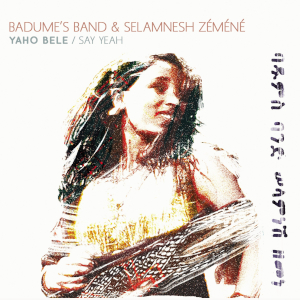
Badume's Band & Selamnesh Zéméné - Yaho Bele / Say Yeah

First published in Songlines Magazine issue 171, October 2021.

Badume's Band & Selamnesh Zéméné
Yaho Bele / Say Yeah
Innacor Records (46 mins)

Badume’s Band are one of the mainstays of European Ethio-jazz, with over a decade of experience as the go-to backing band for Swinging Addis legends such as Mahmoud Ahmed and Alemayehu Eshèté. Now celebrating their 15th anniversary, the band (in a slimmed-down trio formation) release their long-awaited third album – their first since 2011 and their second spotlighting singer Selamnesh Zéméné.

Unlike the pop star Ethio-jazzers, Selamnesh is from the tradition of the azmari, wandering bards that sing history and political commentary under layers of comedy and poetics. Azmari music has a unique sound, based on the Ethiopian pentatonic kignit scales and distinctive kebero drum rhythms. On Yaho Bele, Badume’s Band give the azmari repertoire a rocky punch without losing any of its unmistakable flavour.

It’s in the slower, bluesier pieces where the whole group shine the most, such as on ‘Ye Ambassel Mare’, where distorted guitar solos over a sparse groove and hints of extended jazz chords while Selamnesh’s powerful voice stretches high above it all. In fact, this new, smaller set-up of Badume’s Band actually allows everyone the space to flourish, still creating rich backdrops for vocal fireworks without it feeling crowded.

Azmari songs with a rock swagger and an Ethio-jazz swing – it certainly is an exciting combination.

Friday, 5 March 2021

Various Artists - Making Tracks: 2019 Live Tour

First published in Songlines Magazine issue 166, April 2021.

Various Artists
Making Tracks: 2019 Live Tour
Making Tracks (91 mins)

In rural Powys in early autumn 2019, Making Tracks gathered eight of the most exciting young roots musicians from across Europe and beyond for two weeks of exploration, expert mentorship and collaboration. The fruits of this residency were then showcased on a UK tour, which was recorded (and now, released) for posterity.

The sheer quality of musicianship on display is immense. All eight musicians give featured solo performances as well as showing off intercultural experiments developed during the residency, and there are no stand-outs because each artist brings something special. They excel in this all-acoustic setting, and their month of living and working together shines through in the ease of musical communication: pairings such as Kenyan nyatiti (lyre) and Hindustani santoor (zither) or Turkish kemençe (spike fiddle) and Estonian parmupill (jaw harp) feel as natural as they are unexpected. Neither are the performances hampered by the live setting, as the recordings and production are equally superb.

Making Tracks is all about promoting emerging artists and providing them with everything they need to break through. 2019’s fellows – Louise Bichan, Rapasa Otieno, Arsen Petrosyan, Katariin Raska, Luna Silva, Kaviraj Singh, Melisa Yildirim, Barbora Xu – all deserve wider attention. This album is a great place to start.

Friday, 29 January 2021

Ozferti - Solarius Gamma

First published in Songlines Magazine issue 165, March 2021.

Ozferti
Solarius Gamma
Nubia Nova Records (41 min)

Florian Doucet is a producer, guitarist and graphic designer formerly of Afro-Colombian party starters La Chiva Gantiva, but his masked alter-ego Ozferti is more than that. According to his manifesto, ‘I am Ozferti. I am an explorer, a beatmaker, a scavenger, a guitarist. I wear the Mask.

This album is framed as the first of many explorations into the fictitious world of Nubia Nova and the galaxy of Solarius Gamma. As you might expect, sci-fi and fantasy are big influences at work here. Musically, it’s an adventure into all sorts of electronica, suffused with Ethiopian influences courtesy of many guest musicians and singers (including the wonderful azmari Eténèsh Wassié) recorded and produced on-the-ground in Addis Ababa.

The more adventurous this music is, the better it gets. There are really exciting moments when we’re flying wildly to the edges of the universe, but more often than not, it feels as though Doucet is holding back. Even though he brings in everything from dubstep, psytrance, techno, disco, glitch and lo-fi hip-hop, it still comes across as though no boundaries are being pushed. Solarius Gamma is high-concept and suitably cosmic, but it seems to miss the mark more often than it hits.

Friday, 18 December 2020

Tune In - Atlas

First published in Songlines Magazine issue 164, January/February 2021.

Tune In
Atlas
Tune In Crew (29 mins)

French production duo (and brothers) Harry and Xavier Veynand have chosen an appropriate title for their first album: it feels like a good chunk of the world’s music is represented across its eight fully-instrumental tracks.

In just the opener, ‘Stella Marina’, one can discern elements of reggae, salsa, Afrobeat, Ethiojazz and something of a Manu Chao-meets-Amadou & Mariam vibe, all within a nest of cool funk. The rest of the album carries on in a similar fashion. Among lots of dub and synthedelic grooves there are blues licks, Indian and Arabic rhythms, chicha, mambo, Beatlesy raga-rock, and much more besides. A recurring focus is on assouf, the guitar sound pioneered by Tinariwen; Tune In’s version works well paired with the dub production, but lacks the desert isolation that makes the style so intoxicating in Tuareg hands.

There are lots of good ideas here, but perhaps there are just too many. Fitting it all into less than half an hour gives the effect of being bombarded by global influences in a way that can get a bit exhausting after a while. A debut of enjoyable tracks, but best appreciated in small doses.

Wednesday, 21 October 2020

L’Atelier des Artistes en Exil - WOMEX 20 Professional Excellence Award

First published online as part of the WOMEX – World Music Expo 2020 Awards announcement.


The mission statement for l’Atelier des Artistes en Exil – the Agency of Artists in Exile – contains a particularly powerful phrase: ‘being a refugee is not a profession.’ People in exile are not defined by their exile. When people leave their homes to flee instability, war or persecution, they do not leave their humanity behind, nor their experiences, nor their skills. When artists leave their homes, they remain artists.

A grassroots initiative right in the heart of Paris, l’Atelier supports artists that have been exiled from homelands as distant as Syria, Venezuela, DR Congo or Kazakhstan. The shape that this support takes is wide-ranging and invaluable, whether it is providing one-on-one advice regarding funding applications or CVs; facilitating workshops, training courses or meetings with industry professionals; or just as simple as giving a space in which to work in peace. Volunteers at l’Atelier offer everything from French tuition to legal advice to acting lessons.

Although the organisation has only run since 2017, the blossoms of their work are many and beautiful. Just a handful of l’Atelier’s 200-plus artists showcase at its annual festival, Visions d’Exil, but still their outputs span the worlds of theatre, dance, calligraphy, films, comedy, storytelling, graphic and performance arts, literature and music, all exploring the lived realities of exile from many different perspectives.

In honour of their role in giving artists in exile the tools and the space to reaffirm their humanity powerfully in their own way and their own words, we are delighted that L’Atelier des Artistes en Exil will receive the WOMEX 20 Professional Excellence Award.


Photo: Just some of the members of l’Atelier des Artistes en Exil, by Sara Farid.

Friday, 24 July 2020

Gnawa Youmala - Dounya

First published in Songlines Magazine issue 160, August/September 2020.

Gnawa Youmala
Dounya
Global Sonics (50 mins)

Gnawa Youmala are a multinational, multigenerational Paris-based six-piece, and with this debut album, they reshape Moroccan Gnawa music with their own refreshing twist.

Where the Sufi ceremony of the Gnawa is often loud and intense, Gnawa Youmala turn it into something light and airy, without actually changing all that much. Alongside the traditional guimbri (bass lute) and qaraqab (metal castinets), the group add violin and banjo, which fill the upper register of the music and add a uplifting element, helped along by colourful percussion and the ensemble’s all-acoustic nature. Across ten tracks, the group also bring in influences from Berber and Arabic music and further afield into reggae and jazz, but it never strays too far from the source to raise any confusion of what is most important here. For all their innovation, Gnawa Youmala lose none of the enchanting depth that makes Gnawa so powerful.

Featuring alumni from Global Gnawa and legendary Moroccan outfit Nass El Ghiwane, Gnawa Youmala have pedigree when it comes to creating feel-good, lightly poppy music from traditional sources. This is an impressive debut, respectful of the roots while being an easy, breezy listen.

Touki - Right of Passage

First published in Songlines Magazine issue 160, August/September 2020.

Touki (Amadou Diagne & Cory Seznec)
Right of Passage
Captain Pouch Records (47 mins)

Franco-American guitar and banjo player Cory Seznec and Senegalese guitarist-turned-kora player Amadou Diagne first met while busking on the streets of Bath – a musical rapport came easily and, over the next decade or so, blossomed into a fully-fledged collaboration and now a debut album recorded at the renowned Real World Studios.

This set is full of easy Americana and Wolof vibes, taking blues from both sides of the Atlantic as starting points for extended tours around the music of both regions. Layers of strings build up rippling, twinkling patterns, out of which blossom forth Diagne’s light, high-pitched voice, or maybe Seznec’s throaty fretless gourd banjo or palmwine guitar. Guests including Ethiopian masenko player Endris Hassen and accordionist Michael Ward-Bergeman broaden the scope further and add different textures without sounding out-of-place.

It is clear that Diagne and Seznec click musically, but it also feels as though their repertoire lacks risks and the fireworks that can happen as a result. Right of Passage goes along smoothly with several cool moments, but it stops short of having a ‘wow’ factor that would put it above the rest.

Friday, 6 March 2020

Super Parquet - Super Parquet

First published in Songlines Magazine issue 156, April 2020.

Super Parquet
Super Parquet
Route 164/Pagans (46 mins)

Super Parquet were first profiled in Songlines two years ago (in #134); now they’re finally here with a debut album to follow their 2015 EP. They’re part of the new school of French folk that are taking things into exciting – and sometimes strange, barely-recognisable – places. Their roots are in the old music of Auvergne but, in Super Parquet’s hands, it becomes an entirely different monster. The acoustic instruments are there – cabrette (bagpipe), banjo, the boîte à bourdon (a self-invented drone-only hurdy-gurdy) – and there are samples from folk song recordings, but all of it is refracted within dark, dirty electronica.

EDM and trip-hop are taken to surreal edges with never-ending loops, unrelenting dissonances and inexorable drones, all with a whole load of acidic noise. Each part shifts and evolves gradually, creating Steve Reich phasing that plays tricks on the mind’s ear. Everyone seems to play in their own time signature, weaving together sonic tapestry while the irresistible drone carries on and on. All the while, no track drifts so far off-piste as to negate the folk at its very core.

It’s overwhelming. It’s claustrophobic. It does weird things to your brain and I love it. This long-awaited debut is not an easy listen, but it’s an incredible experience.

Friday, 5 April 2019

Essential 10: Ethiopian Albums

First published in Songlines Magazine issue 147, May 2019.

Mahmoud Ahmed
Éthiopiques, Vol. 7: Erè Mèla (Buda Musique, 1999)
Erè Mèla Mèla, the 1975 classic by singer Mahmoud Ahmed, is a masterwork of psychedelic soul with shades of James Brown and a bagload of groove. It was the first album of Ethiopian music that producer Francis Falceto ever heard, kick-starting the epic journey that would lead to the creation of Éthiopiques.

Mulatu Astatke
Mulatu of Ethiopia (Strut Records, 2017)
This Strut release is a remaster of the 1972 album that solidified the vibraphonist and electric piano player’s unique sound. Recorded in New York with a band of American and Puerto Rican musicians, this was the first time that Mulatu’s music fully solidified into the distinctive blend of post-bop jazz, Afro-Latin percussion and Ethiopian melodic modes that became known as Ethiojazz.

Aster Aweke
Aster (Triple Earth, 1989)
Aster Aweke was the first big Ethiopian star of the world music era. Her self-titled international debut may suffer a bit from overly cheesy production, but the compositions are solid Afropop and the sheer power of her voice is undeniable. There’s also a handful of simple voice-and-krar (lyre) pieces that are just delightful.

Emahoy Tsegué-Maryam Guèbrou
Éthiopiques, Vol. 21: Ethiopia Song (Buda Musique, 2006)
Emahoy Tsegué-Maryam Guèbrou is a musician like no other and her music is entirely unparalleled. Once an aspiring and promising concert pianist, God’s will intervened and she became a nun. Music never left her, though, and she instead created her own style. Her compositions for solo piano draw on Orthodox hymns and the melodies of the krar and begana lyres, but their lilting and uplifting textures bring to mind the watercolour tones of Debussy or Chopin.

Shewandagne Hailu
Sitotash (Nahom Records, 2013)
The sounds drifting out of the cafés, bars and taxis in Ethiopia are not those of Ethiojazz or traditional songs of the azmari bards – instead, what you’ll hear is out-and-out pop. Shewandagne Hailu is one of the biggest pop stars of recent years; his music is a mix of reggae and R&B with typical boy-band fare, but it all has an unmistakably Ethiopian feel.


Gétatchèw Mèkurya, The Ex & Guests
Moa Anbessa (Terp Records, 2006)
Gétatchèw Mèkurya developed his tenor sax playing by directly imitating the sound of the masenqo (one-stringed fiddle), and the resulting technique sounds strangely similar to the free jazz of Albert Ayler. When he plays in conjunction with pioneering Dutch post-punks The Ex, that sound becomes positively head-banging.

Mikael Seifu
Zelalem (RVNG Intl., 2016)
Mikael Seifu is a leading light in Ethiopiyawi Electronic, a bubbling underground scene in Addis Ababa (with exclaves in Washington, DC). The style takes electronic music and views it through an Ethiopian lens, creating something that is relevant to the internationally-connected urban youth. The result is downtempo house and trance with a dark and brooding atmosphere, often anchored in samples from masenqo, krar or Ethiojazz classics.

Various artists
Ethiopie: Musiques Vocales et Instrumentales (Ocora, 1994)
Ethiopia is home to over 80 ethnic groups, each with their own distinct musical culture – there’s much more to its folk music than azmaris. This double album of field recordings from the 1960s represents all sorts of traditional music from the length and breadth of the country, from interlocking flute ensembles and thumb pianos to multi-part polyphonic singing and the sounds of a raucous tejbet (honey-wine parlour).

Various artists
Éthiopiques, Vol. 1: Golden Years of Modern Ethiopian Music 1969-1975 (Buda Musique, 1997)
The Éthiopiques series made the world sit up and pay attention to the retro sounds of Ethiopia in its musical golden age – this first volume is the perfect introduction to that scene. This compilation focuses on some of the most exceptional singers of the period such as Mahmoud Ahmed, Gétatchèw Kassa, Sèyfu Yohannès, and everything is imbibed with the smoky atmosphere of Addis Ababa’s coolest nightclubs.

Etenesh Wassie & Mathieu Sourisseau
Yene Alem (Buda Musique, 2018)
Etenesh Wassie is a full-fledged azmari, and her beautiful and haunting traditional songs take on extra dimensions with the contributions of acoustic bass guitarist Mathieu Sourisseau and cellist Julie Läderach. The style moves between classical chamber music, free jazz and abstract soundsculpture, leading to an intense, challenging yet exciting album.

Thursday, 10 May 2018

Etenesh Wassie & Mathieu Sourisseau - Yene Alem

First published in Songlines Magazine issue 138, June 2018.

Etenesh Wassie & Mathieu Sourisseau
Yene Alem
Buda Musique (43 mins)

The collaboration between Ethiopian singer Etenesh Wassie and French bass guitarist Mathieu Sourisseau has already yielded one album back in 2010 and now they’ve brought along cellist Julie Läderach (also French) to join them on their journey.

This is art music, and as such it benefits from concentrated listening. The interplay between voice, cello and bass creates an atmosphere that is stark yet intimate, and always intense. It’s serious stuff, but that’s not to say it’s inward-looking. The soundsculpture of Yene Alem is one that mixes classical and folk music of Europe with avant-garde rock and free jazz and always works in complete sympathy with the age-old qañat scales and melodies of Ethiopia’s azmari bards. The trio get funky when they need to, but they’re not afraid to unsettle your ears, either.

The size and make-up of the ensemble doesn’t really give too much scope for variation in texture - a range of electronic effects on Sourisseau’s acoustic bass notwithstanding – and by the end of the album you may want something a bit different. More contrasts would be welcome, I think, but that shouldn’t take away from the otherwise very nourishing music: this is food for the ears and the mind.

Thursday, 7 December 2017

Introducing Super Parquet

First published in Songlines Magazine issue 134, January/February 2018.


This is the sound of village halls and warehouse raves; rural fêtes and squats; past, present and future.

Super Parquet play folk dance music from the Auvergne region of central France, hallucinated through a lens of distortion, dissonance and dirty electronica. The fusion makes sense considering their line-up: cabrette (bagpipe) player Louis Jacques and banjo player Antoine Cognet both came to French traditional music as children; Simon Drouhin and Julien Baratay, the group’s electronicists, knew nothing of it before the four met. But it works because the two worlds share so much in common. Drouhin recalls the realisation: “Electronic music has the same repetitions, the same drones. We came to the conclusion that it’s the same music!

The Super Parquet M.O. is clear: “Drones and loops, drones and loops, drones and loops…they are the most important things about our sound!” says Jacques. It’s true. While the classic French dances weave in and out, what stands out are the layers upon layers of sound. It’s as much Éliane Radigue as it is EDM. For Cognet, “drones and loops complete each other.” Drones provide a base for loops, and loops add a concept of time to drones: each gives meaning to the other.

The sounds themselves are harsh. Timbres bounce between the ears as whining cabrette grinds against sawtooth synths and twanging banjo spars with retro drum machines. Then there’s the boîte à bourdon, the ‘bumblebee box.’ It’s a hybrid offspring of a hurdy-gurdy and a shruti box that gives a continuous buzzing drone, to be tuned and detuned at will. It provides deep, complex flavours and some perfectly ear-jangling dissonances. Altogether, it creates a spectacular soundscape.

In this way, the band reclaim folk from its critics and its overbearing lovers. For them, traditions are not – and cannot be – stuck in the past, they evolve with the musicians and with society. As Jacques loudly proclaims, “traditional music is always the music of the moment.

But talking this much about the intricacies of the music misses the point, really. “We don’t want the audience to think, we want them to dance!” laughs Jacques. Quite right. When Super Parquet play, it’s all about the atmosphere. It makes you dance, yes, but the thrill comes from the suspense. They’re masters of it. With every layer of pulsating loops and discordant drones, the tension builds and builds. The audience swims in that tension and it becomes a transcendent experience. There’s a reason so many religious ceremonies revolve around repetitive, circular chanting. On top of it all, the traditional tunes and songs of the Auvergne transport that transcended mind to another world altogether, at once past and future, city and countryside. It’s an exhilarating experience, and the band curate it expertly.

They don’t have an album just yet. They’re in the recording studio in 2018, but until then, they do have a substantial 43-minute EP from 2015 to keep you busy. If their recent reception at WOMEX is anything to go by, you can expect to see them at many festivals and concerts over the next few years – we can’t wait for our next trip to the upside-down village of Super Parquet.


Photo: Super Parquet live at WOMEX 17, by Jacob Crawfurd.

Friday, 7 April 2017

Girma Bèyènè & Akalé Wubé - Éthiopiques 30: Mistakes on Purpose

First published in Songlines Magazine issue 127, May 2017.

Girma Bèyènè & Akalé Wubé
Éthiopiques 30: Mistakes on Purpose
Buda Musique (67 mins)

For the better part of 20 years, Buda Musique’s Éthiopiques has been the go-to series for Ethiojazz and traditional music from Ethiopia. You won’t find that here. Éthiopiques 30 covers a wide range of styles, from cheesy country ballads to slinky rock, from smooth and groovy soul to hard funk (and, okay, maybe a little bit of jazz) – all dripping in that classic Ethiopian sound.

Crooner Girma Bèyènè was a star in the ‘Swinging Addis’ period of the 1970s, but recorded very little of his own music – it was his compositions and arrangements that gained more notoriety. After being off-the-radar in the US for 25 years, he slowly made his way back onto the Addis music scene, and in 2015 was invited to play a concert with French collective Akalé Wubé – it was obvious then that a recording was necessary. With artistic direction from Éthiopiques curator Francis Falceto, Bèyènè and Akalé Wubé have recreated and reimagined the songs from the singer’s golden era, along with one Akalé Wubé original, the instrumental ‘For Amha’.

From Bèyènè’s age-worn voice and evocative spoken-word passages adding extra emotional dimensions to his classics to Akalé Wubé’s sometimes-sleek, sometimes-raucous arrangements, there’s only one term for it: this album is immaculately cool.

Monday, 22 June 2015

Electro Bamako - Now

First published in fRoots issue 385, July 2015

Electro Bamako
Now
CSB Productions (50 mins)

Phwoar! Now this is an album.

In the sphere of world electronica, collaborations with South Asian and Middle Eastern artists and musics seem to far outweigh those with West Africans, but when it is done (and done right), it can lead to some stonking tracks. Now is from a trio of a Malian (Paul Sidibe) and two Frenchmen (Damien Traini and Marc Minelli), and their collective name is pretty much apt. Electro Bamako create music that crosses through electronica, funk and underground rock, but always present are the urban Malian grooves that make the project as exciting as it is.

Bringing to the table guitars and production, Minelli has been experimenting with electroMalian music and collaborations for more than a decade now, but with the Electro Bamako trio and this album, he seems to have found the correct combination, and it’s his best yet.

As well as his unmistakably Malian vocals, Sidibe joins the party by adding his kamele ngoni (literally, the ‘young man’s harp’) to the sound. The kamele ngoni’s rattling staccato riffs, together with the karignan (iron scraper), bring the western elements together, uniting them with Wassoulou music – the non-griot style made famous in Europe by Oumou Sangaré.

The real highlight of the album comes at the end: Fentiki Ni Fentan is the last of the album tracks proper (the disc also contains three radio edits), and is really superb – it has a backing worthy of old-school hip-hop and the whole thing rolls around hypnotically, it’s a shame when it comes to a close and signals the end of a brilliant album.