First published in Songlines Magazine issue 204, January 2025.
Peter Somuah
Highlife
ACT Music (45 mins)
In his previous work, Ghanaian trumpeter Peter Somuah has brought flavours of highlife into the idiom of contemporary jazz. With his third album, he switches it up by accentuating the innate jazz in highlife. Here, Somuah is accompanied by his Dutch and Surinamese quintet, together with guest vocal spots from highlife legends including Gyedu-Bley Ambolley and Pat Thomas, who add a political edge to proceedings with lyrics ruminating on the colonial history and legacy of their homeland.
Although the lyrics are pointed, the music itself is loose and laid back, really bringing out highlife’s eponymous feel-good vibes. The recording and production are also nice and clean, and it all adds up to a supremely smooth sound throughout the whole album. Somuah’s passion for both highlife and jazz is obvious in his compositions, arrangements and sparkling solos, which are invariably the highlights of each track.
This blog is a compendium of my music writing throughout the years. I try to post updates about a month after first publication, but I'm often very behind - please bear with me!
Showing posts with label Ghana. Show all posts
Friday, 13 December 2024
Friday, 1 September 2023
Jazz Fusion Review Round-Up
First published in Songlines Magazine issue 191, October 2023.
Nowadays, the line separating jazz from instrumental hip-hop can be incredibly fine, given the amount of influence that has passed back and forth over the past 50 years. Budapest-based trio Jazzbois embrace this permeability with their third album, Higher Dimension Waiting Room (Blunt Shelter Records, 34 mins). Here, the hip-hop and jazz are completely entwined, from the dreamy, lo-fi synths and fluttery piano to the broken beats and funky bass. It’s light and fun with a sci-fi edge, chilled-out but with enough groove to keep you dancing. Special props to Tamás Czirják, whose drumming consistently brings the fireworks.
Production duo Abderraouf B. Grissa & Dan Drohan also sail the jazz-hip-hop continuum with their first collaboration RBGxDD (Uno Loop, 41 mins). Together they make a dance-oriented jazz that isn’t afraid of venturing ‘out there’. Live instruments and samples merge seamlessly, guiding us through different zones – from rolling blues grooves to dubwise spacescapes to Latin psychedelia to a sound effects record – without ever losing the carefully-curated unifying vibe based on those two home styles. This musical journey hits more like an exploratory mixtape than your usual jazz album, and is none the worse for it.
Another album that hops between genres at will is the reissue of Ambiance II Fusion’s 1985 record Come Touch Tomorrow (Freestyle Records, 39 mins). The ensemble revolves around Nigerian-born saxophonist Daoud Abubakar Balewa, whose classic instrumental soul-funk absolutely oozes 80s production, with its heavy reverb, gated snares and ultra-smooth sax. Strangely enough, this album sounds like tracks from several different albums stitched together. Some tracks are live (or live-sounding) and others are studio recordings; some tracks seem to bear little stylistic resemblance to those around them – sometimes there’s reggae, or bossa, or even pure synthwave with no saxophone to be heard. It’s as if the album itself is a little unsure of what it wants to be.
New York-based Greek vibraphonist, electronicist and drummer Christos Rafalides makes an ode to lockdown in Home (Emarel Music, 50 mins), recorded in improvised home studios across the world in the spring of 2021. Each of the seven tracks features a guest musician, and each bring their own slant on Rafalides’ malleable jazz, whether that’s Middle Eastern from outi (Greek oud) player Thomas Konstantinou, light Latin from pianist Giovanni Mirabassi or space-age Caribbean from steelpan player Victor Provost. The latter is a particular highlight, providing a real complement to the vibraphone. Not all the collaborations work as well as that, but Rafalides’ musicianship shines throughout.
But if you only have enough space in your ears for one jazz fusion album this month, make it Peter Somuah’s Letter to the Universe (ACT Music, 41 mins). The young Ghanaian trumpeter’s second album takes a celestial, spiritual approach, creating a cosmic jazz with elements of bebop and post-bop, big band, jazz-rock, highlife and, of course, hip-hop. Miles Davis is an ever-present reference, and there are guest turns from Ghanaian stars such as highlife legend Gyedu-Bley Ambolley and up-and-coming Frafra kologo player and singer Stevo Atambire of Alostmen. From the superb trumpet playing to the intelligent compositions and arrangements, this is a brilliant album – there’s surely more great things to come from Peter Somuah.
Nowadays, the line separating jazz from instrumental hip-hop can be incredibly fine, given the amount of influence that has passed back and forth over the past 50 years. Budapest-based trio Jazzbois embrace this permeability with their third album, Higher Dimension Waiting Room (Blunt Shelter Records, 34 mins). Here, the hip-hop and jazz are completely entwined, from the dreamy, lo-fi synths and fluttery piano to the broken beats and funky bass. It’s light and fun with a sci-fi edge, chilled-out but with enough groove to keep you dancing. Special props to Tamás Czirják, whose drumming consistently brings the fireworks.
Production duo Abderraouf B. Grissa & Dan Drohan also sail the jazz-hip-hop continuum with their first collaboration RBGxDD (Uno Loop, 41 mins). Together they make a dance-oriented jazz that isn’t afraid of venturing ‘out there’. Live instruments and samples merge seamlessly, guiding us through different zones – from rolling blues grooves to dubwise spacescapes to Latin psychedelia to a sound effects record – without ever losing the carefully-curated unifying vibe based on those two home styles. This musical journey hits more like an exploratory mixtape than your usual jazz album, and is none the worse for it.
Another album that hops between genres at will is the reissue of Ambiance II Fusion’s 1985 record Come Touch Tomorrow (Freestyle Records, 39 mins). The ensemble revolves around Nigerian-born saxophonist Daoud Abubakar Balewa, whose classic instrumental soul-funk absolutely oozes 80s production, with its heavy reverb, gated snares and ultra-smooth sax. Strangely enough, this album sounds like tracks from several different albums stitched together. Some tracks are live (or live-sounding) and others are studio recordings; some tracks seem to bear little stylistic resemblance to those around them – sometimes there’s reggae, or bossa, or even pure synthwave with no saxophone to be heard. It’s as if the album itself is a little unsure of what it wants to be.
New York-based Greek vibraphonist, electronicist and drummer Christos Rafalides makes an ode to lockdown in Home (Emarel Music, 50 mins), recorded in improvised home studios across the world in the spring of 2021. Each of the seven tracks features a guest musician, and each bring their own slant on Rafalides’ malleable jazz, whether that’s Middle Eastern from outi (Greek oud) player Thomas Konstantinou, light Latin from pianist Giovanni Mirabassi or space-age Caribbean from steelpan player Victor Provost. The latter is a particular highlight, providing a real complement to the vibraphone. Not all the collaborations work as well as that, but Rafalides’ musicianship shines throughout.
But if you only have enough space in your ears for one jazz fusion album this month, make it Peter Somuah’s Letter to the Universe (ACT Music, 41 mins). The young Ghanaian trumpeter’s second album takes a celestial, spiritual approach, creating a cosmic jazz with elements of bebop and post-bop, big band, jazz-rock, highlife and, of course, hip-hop. Miles Davis is an ever-present reference, and there are guest turns from Ghanaian stars such as highlife legend Gyedu-Bley Ambolley and up-and-coming Frafra kologo player and singer Stevo Atambire of Alostmen. From the superb trumpet playing to the intelligent compositions and arrangements, this is a brilliant album – there’s surely more great things to come from Peter Somuah.
Labels:
Album Review,
Ghana,
Greece,
Hungary,
Nigeria,
Songlines Magazine,
USA
Friday, 18 June 2021
Essential 10: WOMAD 2021
First published in Songlines Magazine issue 169, July 2021.
Horace Andy
Dance Hall Style (Wackie’s, 1982)
Every festival needs a bona fide veteran on its line-up, and prolific Jamaican singer Horace Andy definitely fits that bill. He’s probably best known now for his guest spots with Massive Attack, but it’s in the dub-heavy roots reggae and proto-dancehall of Dance Hall Style – Andy’s eighth album – that his distinctive high-pitched voice shines brightest.
The Dhol Foundation
Drum-Believable (Shakti Records, 2005)
Over the years, some artists have become WOMAD mainstays, and Johnny Kalsi and his group The Dhol Foundation can certainly count themselves among that class. Blasting their giant Punjabi dhol drums through bhangra, rock and electronica, they’re a guaranteed party starter – never more so than with their certified banger ‘After the Rain’ with Irish fiddler Máiréad Nesbitt from their second album Drum-Believable.
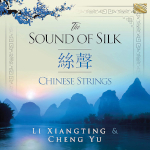
Li Xiangting & Cheng Yu
The Sound of Silk (ARC Music, 2019)
Pipa (four-stringed lute) and guqin (seven-stringed fretless zither) player Cheng Yu is one of the UK’s foremost Chinese musicians – her album of duets with her mentor Li Xiangting got a five-star review in Songlines. Her quartet Silk Breeze recorded a session of beautiful sizhu music for the WOMAD@Home series last summer, playing among the idyllic surrounds of Real World Studios; they’ll surely bring the same serene atmosphere to Charlton Park in July.
Lokkhi Terra meets Dele Sosimi
Cubafrobeat (Funkiwala Records, 2018)
Two for the price of one here: Lokkhi Terra, the London-based South Asian-flavoured Cuban big band, and Dele Sosimi, Afrobeat keys player and member of the legendary Egypt 80, are both on the line-up for WOMAD this year. Their collaborative album linked Yoruba cultures from both sides of the Atlantic to huge success. Fingers crossed for an on-stage reunion?
Mariza
Concerto em Lisboa (EMI Portugal, 2006)
Portuguese fado, with all its melodramatic flair and delicate, emotional moments, is always most powerful when experienced live, and the modern era’s biggest star is no exception. This live album shows Mariza at her best as a performer, accompanied by the Sinfonietta de Lisboa in front of 25,000 people in fado’s hometown. Granted, she’s not bringing the Sinfonietta to WOMAD, but her voice is an orchestra all on its own.
Onipa
We No Be Machine (IK7 Music, 2020)
Headed by Ghanaian-British singer and rapper K.O.G. and Nubiyan Twist guitarist and producer Tom Excell, Onipa use their hip-hop and jazz pedigree to combine vintage highlife grooves, dirty synths and layers of percussion. This is ‘savannah bass’, Onipa’s own exciting Afrofuturist style, and you couldn’t really wish for a more appropriate festival soundtrack – sound of the summer!
Gwenifer Raymond
Strange Lights Over Garth Mountain (Tomkins Square, 2020)
WOMAD has always had a knack for bringing new or lesser-known musicians to the fore, and Gwenifer Raymond may just be your discovery of 2021. Her second album showcases her mastery of the acoustic guitar with a mix of American blues and country roots, folk baroque and subtle influences from India and Wales. Engaging, entrancing and entirely solo – one to watch!
SEED Ensemble
Driftglass (jazz re:freshed, 2019)
Jazz has become a consistent element of the WOMAD line-up in recent editions, and it’s especially prevalent this year. Artists such as Nubiyan Twist, Cinematic Orchestra, The Comet is Coming, Joe Armon-Jones, Sarathy Korwar and Kefaya provide a heterogeneous overview of London’s booming jazz scene and Seed (as they are now known) are sure to be a highlight: their Caribbean and West African-informed 2019 debut earned them a Mercury nomination.
Anoushka Shankar
Reflections (Deutsche Grammophon, 2019)
Shankar’s career has taken so many different directions that you never know quite what she’s going to bring to the stage – the sitarist’s music has encompassed deeply traditional Hindustani classical music as well as Western classical styles, flamenco, jazz, electronica and, most recently, sophisticated and intimate art-pop. This recent self-curated retrospective gives some idea of what to expect from her headline slot this year.
Joseph Tawadros
Betrayal of a Secret Sunflower (JT Records, 2019)
The Egypt-born, Australia-raised and UK-based oud player and composer has graced the stage at WOMADelaide three times and – after a year’s delay – finally makes his UK WOMAD debut. His personality and dress sense are famously extravagant and exquisite, but his most recent album shows that he has no issue making his music serious, subtle, and sublime.
Horace Andy
Dance Hall Style (Wackie’s, 1982)
Every festival needs a bona fide veteran on its line-up, and prolific Jamaican singer Horace Andy definitely fits that bill. He’s probably best known now for his guest spots with Massive Attack, but it’s in the dub-heavy roots reggae and proto-dancehall of Dance Hall Style – Andy’s eighth album – that his distinctive high-pitched voice shines brightest.
The Dhol Foundation
Drum-Believable (Shakti Records, 2005)
Over the years, some artists have become WOMAD mainstays, and Johnny Kalsi and his group The Dhol Foundation can certainly count themselves among that class. Blasting their giant Punjabi dhol drums through bhangra, rock and electronica, they’re a guaranteed party starter – never more so than with their certified banger ‘After the Rain’ with Irish fiddler Máiréad Nesbitt from their second album Drum-Believable.
Li Xiangting & Cheng Yu
The Sound of Silk (ARC Music, 2019)
Pipa (four-stringed lute) and guqin (seven-stringed fretless zither) player Cheng Yu is one of the UK’s foremost Chinese musicians – her album of duets with her mentor Li Xiangting got a five-star review in Songlines. Her quartet Silk Breeze recorded a session of beautiful sizhu music for the WOMAD@Home series last summer, playing among the idyllic surrounds of Real World Studios; they’ll surely bring the same serene atmosphere to Charlton Park in July.
Lokkhi Terra meets Dele Sosimi
Cubafrobeat (Funkiwala Records, 2018)
Two for the price of one here: Lokkhi Terra, the London-based South Asian-flavoured Cuban big band, and Dele Sosimi, Afrobeat keys player and member of the legendary Egypt 80, are both on the line-up for WOMAD this year. Their collaborative album linked Yoruba cultures from both sides of the Atlantic to huge success. Fingers crossed for an on-stage reunion?
Mariza
Concerto em Lisboa (EMI Portugal, 2006)
Portuguese fado, with all its melodramatic flair and delicate, emotional moments, is always most powerful when experienced live, and the modern era’s biggest star is no exception. This live album shows Mariza at her best as a performer, accompanied by the Sinfonietta de Lisboa in front of 25,000 people in fado’s hometown. Granted, she’s not bringing the Sinfonietta to WOMAD, but her voice is an orchestra all on its own.
Onipa
We No Be Machine (IK7 Music, 2020)
Headed by Ghanaian-British singer and rapper K.O.G. and Nubiyan Twist guitarist and producer Tom Excell, Onipa use their hip-hop and jazz pedigree to combine vintage highlife grooves, dirty synths and layers of percussion. This is ‘savannah bass’, Onipa’s own exciting Afrofuturist style, and you couldn’t really wish for a more appropriate festival soundtrack – sound of the summer!
Gwenifer Raymond
Strange Lights Over Garth Mountain (Tomkins Square, 2020)
WOMAD has always had a knack for bringing new or lesser-known musicians to the fore, and Gwenifer Raymond may just be your discovery of 2021. Her second album showcases her mastery of the acoustic guitar with a mix of American blues and country roots, folk baroque and subtle influences from India and Wales. Engaging, entrancing and entirely solo – one to watch!
SEED Ensemble
Driftglass (jazz re:freshed, 2019)
Jazz has become a consistent element of the WOMAD line-up in recent editions, and it’s especially prevalent this year. Artists such as Nubiyan Twist, Cinematic Orchestra, The Comet is Coming, Joe Armon-Jones, Sarathy Korwar and Kefaya provide a heterogeneous overview of London’s booming jazz scene and Seed (as they are now known) are sure to be a highlight: their Caribbean and West African-informed 2019 debut earned them a Mercury nomination.
Anoushka Shankar
Reflections (Deutsche Grammophon, 2019)
Shankar’s career has taken so many different directions that you never know quite what she’s going to bring to the stage – the sitarist’s music has encompassed deeply traditional Hindustani classical music as well as Western classical styles, flamenco, jazz, electronica and, most recently, sophisticated and intimate art-pop. This recent self-curated retrospective gives some idea of what to expect from her headline slot this year.
Joseph Tawadros
Betrayal of a Secret Sunflower (JT Records, 2019)
The Egypt-born, Australia-raised and UK-based oud player and composer has graced the stage at WOMADelaide three times and – after a year’s delay – finally makes his UK WOMAD debut. His personality and dress sense are famously extravagant and exquisite, but his most recent album shows that he has no issue making his music serious, subtle, and sublime.
Friday, 5 March 2021
Alostmen - Kologo
First published in Songlines Magazine issue 166, April 2021.
Alostmen
Kologo
Strut (55 min)
Stevo Atambire is already a big deal in Ghana, a streetboy-turned-pop star whose local releases are full of synths and autotune. With his band Alostmen, and the help of big-name producer Wanlov the Kubalor of FOKN Bois, Atambire goes back to his roots.
Alostmen’s music marries the gritty, bluesy sound of the Frafra kologo (two-string fretless lute) from Ghana’s Upper East Region, with the hip cosmopolitan vibes of the capital Accra. It’s all led by Atambire, who uses his mighty kologo to accompany his griot-like teachings on morality and philosophy, but Wanlov’s production and guest spots from some of Ghana’s biggest names add further vibrant colours to the canvas.
Glossy production and a pile of guests could easily transform the down-to-earth kologo into a totally different monster, but it’s all done with a subtlety that takes nothing away. Even with hip-hop stars such and Yaa Pono and Medikal and highlife legend Gyedu-Blay Ambolley in the credits, the driving force is that deep pentatonic blues and the clacking, loping groove that is unmistakably Frafra. Bass, synth, viols, trombones – the additions only add new flavours, and none of the charm of tradition is lost. That’s the sign of musicians and producer working in mental and musical synchrony. Roots and innovation: this is kologo music for 2021.
Alostmen
Kologo
Strut (55 min)
Stevo Atambire is already a big deal in Ghana, a streetboy-turned-pop star whose local releases are full of synths and autotune. With his band Alostmen, and the help of big-name producer Wanlov the Kubalor of FOKN Bois, Atambire goes back to his roots.
Alostmen’s music marries the gritty, bluesy sound of the Frafra kologo (two-string fretless lute) from Ghana’s Upper East Region, with the hip cosmopolitan vibes of the capital Accra. It’s all led by Atambire, who uses his mighty kologo to accompany his griot-like teachings on morality and philosophy, but Wanlov’s production and guest spots from some of Ghana’s biggest names add further vibrant colours to the canvas.
Glossy production and a pile of guests could easily transform the down-to-earth kologo into a totally different monster, but it’s all done with a subtlety that takes nothing away. Even with hip-hop stars such and Yaa Pono and Medikal and highlife legend Gyedu-Blay Ambolley in the credits, the driving force is that deep pentatonic blues and the clacking, loping groove that is unmistakably Frafra. Bass, synth, viols, trombones – the additions only add new flavours, and none of the charm of tradition is lost. That’s the sign of musicians and producer working in mental and musical synchrony. Roots and innovation: this is kologo music for 2021.
Friday, 14 June 2019
Ebo Taylor, Pat Thomas & Uhuru Yenzu - Hitsville Re-Visited
First published in Songlines Magazine issue 149, July 2019.
Ebo Taylor, Pat Thomas & Uhuru Yenzu
Hitsville Re-Visited
Mr Bongo (28 mins)
The cavalcade of 70s and 80s African album reissues shows no signs of slowing. This one, originally released in 1982, is the work of two pioneers of Ghanaian music, guitarist Ebo Taylor and singer Pat Thomas. It wasn’t the first time they’d worked together; by the time this album came about, they’d already made several albums together which really solidified the genre of highlife funk, a harder-hitting, often minor key take on the lighter highlife style.
Hitsville Re-Visited isn’t that, though. Here, together with Taylor’s band Uhuru Yenzu, they go back to an earlier style from the beginnings of highlife. As such, there’s much less funk and disco here. In fact, the overriding sound that jumps out is that of classic calypso, topped with Thomas’s easy vocals and Taylor’s palmwine-style guitar. A particular highlight throughout are the solos from saxophonists George Amissah and George Abunyewa, who inject an element Caribbean-inspired jazz à la Sonny Rollins’ ‘St Thomas’.
The end result is feel-good and fun but not mind-blowing, and only four tracks leave us with less than half an hour of music. A pleasant listen, but perhaps best as a short diversion among the rest of these artists’ funkier back catalogues.
Ebo Taylor, Pat Thomas & Uhuru Yenzu
Hitsville Re-Visited
Mr Bongo (28 mins)
The cavalcade of 70s and 80s African album reissues shows no signs of slowing. This one, originally released in 1982, is the work of two pioneers of Ghanaian music, guitarist Ebo Taylor and singer Pat Thomas. It wasn’t the first time they’d worked together; by the time this album came about, they’d already made several albums together which really solidified the genre of highlife funk, a harder-hitting, often minor key take on the lighter highlife style.
Hitsville Re-Visited isn’t that, though. Here, together with Taylor’s band Uhuru Yenzu, they go back to an earlier style from the beginnings of highlife. As such, there’s much less funk and disco here. In fact, the overriding sound that jumps out is that of classic calypso, topped with Thomas’s easy vocals and Taylor’s palmwine-style guitar. A particular highlight throughout are the solos from saxophonists George Amissah and George Abunyewa, who inject an element Caribbean-inspired jazz à la Sonny Rollins’ ‘St Thomas’.
The end result is feel-good and fun but not mind-blowing, and only four tracks leave us with less than half an hour of music. A pleasant listen, but perhaps best as a short diversion among the rest of these artists’ funkier back catalogues.
Sunday, 5 May 2019
Rob - Rob
First published in Songlines Magazine issue 148, June 2019.
Rob
Rob
Mr Bongo (37 mins)
The opening track of this album starts with a chant of ‘Funky, funky, funky Rob! Funky, funky, funky Rob, yeah!’ and I’ll tell you what – they’re not wrong.
This album was the 1977 debut by the monosyllabically mononymic Rob, freshly back in his hometown of Accra, Ghana, after honing his skills in Benin as part of the Orchestre Poly-Rythmo de Cotonou. Originally enjoying only a small number of pressings, Rob passed into record collectors’ legend; it was reissued once by Analogue Africa in 2011 in limited numbers, and now Mr Bongo is finally giving it a full-scale international release.
With Rob on organs, synths and vocals and backed by the wah-wah guitars, interlocking percussion and blasting horns of the Mag-2 band (and as those opening lyrics tell you), funk is the main ingredient here. A lot of the music is very much in the James Brown mould, but highlife plays an important role too, and the traditional rhythms of the drums root the sound unmistakably within West Africa.
There’s a range of moods across the album, and although it feels as if the musicians are more comfortable playing for the disco than the lounge, each track is as cool as the next.
Rob
Rob
Mr Bongo (37 mins)
The opening track of this album starts with a chant of ‘Funky, funky, funky Rob! Funky, funky, funky Rob, yeah!’ and I’ll tell you what – they’re not wrong.
This album was the 1977 debut by the monosyllabically mononymic Rob, freshly back in his hometown of Accra, Ghana, after honing his skills in Benin as part of the Orchestre Poly-Rythmo de Cotonou. Originally enjoying only a small number of pressings, Rob passed into record collectors’ legend; it was reissued once by Analogue Africa in 2011 in limited numbers, and now Mr Bongo is finally giving it a full-scale international release.
With Rob on organs, synths and vocals and backed by the wah-wah guitars, interlocking percussion and blasting horns of the Mag-2 band (and as those opening lyrics tell you), funk is the main ingredient here. A lot of the music is very much in the James Brown mould, but highlife plays an important role too, and the traditional rhythms of the drums root the sound unmistakably within West Africa.
There’s a range of moods across the album, and although it feels as if the musicians are more comfortable playing for the disco than the lounge, each track is as cool as the next.
Friday, 6 April 2018
Ebo Taylor - Yen Ara
First published in Songlines Magazine issue 137, May 2018.
Ebo Taylor Yen Ara Mr Bongo (41 mins) Ebo Taylor has been doing his stuff for more than 60 years now, so he knows how to make an album to get you on your feet. With Yen Ara, he continues to bring a unique blend of highlife and Afrobeat, adding handfuls of disco, jazz and reggae into the mix too. Taylor’s hand-picked Saltpond City Band are as tight as anything. It’s all about that rhythm section: guitar, keys, bass and konkoma-style percussion and drums intertwine, weaving a musical weave for the punchy horns and Taylor’s aged vocals to dance across. There’s a real ‘rare groove’ sound to this album – it feels like it might have been dug out from a long-forgotten record crate in Accra. Thanks go in part to the sympathetic production of world music adventurer and Robert Plant guitarist Justin Adams, whose hand is often subtle but not afraid to add some spice when appropriate. Yen Ara lacks some of the innovation that Taylor has been known to provide – the tracks on offer could equally have come from any of his latest few albums. But they were great albums. So don’t expect anything ground-breaking, but if you like Ebo Taylor, you’ll love Yen Ara.
Monday, 16 May 2016
DJ Katapila - Trotro
First published in Songlines Magazine issue 118, June 2016.
DJ Katapila
Trotro
Awesome Tapes From Africa (44 mins)
When Brian Shimkovitz asked Ghanaian DJ Katapila if Awesome Tapes From Africa could rerelease his 2009 tape Trotro, the DJ was surprised – that tape had never been released, but was a hit in the pirated music shops of Kumasi. So here we are.
Katapila makes electronic dance music – various different vibes can be heard here, from acid house and early techno to more modern sounds such as azonto. More subtle influences come from Ghanaian traditional rhythms and international styles such as salsa and zouk. Altogether, the sound is actually rather minimalist, which usually works in its favour. It can sometimes go a bit far, though – some tracks are barely more than a drum-machine loop.
All sounds heard on this record come from Katalipa and his electronic wizardry. But there’s an element that made the album difficult listening for this reviewer: the grating and incessant use of high, pitch-shifted vocal samples. It’s quite interesting for a few pieces, but by the end of the album it becomes very irritating.
In the correct environment – in a club, or as part of a DJ set – any of these tracks would probably go down well, but they don’t stand up as an album for focussed listening.
DJ Katapila
Trotro
Awesome Tapes From Africa (44 mins)
When Brian Shimkovitz asked Ghanaian DJ Katapila if Awesome Tapes From Africa could rerelease his 2009 tape Trotro, the DJ was surprised – that tape had never been released, but was a hit in the pirated music shops of Kumasi. So here we are.
Katapila makes electronic dance music – various different vibes can be heard here, from acid house and early techno to more modern sounds such as azonto. More subtle influences come from Ghanaian traditional rhythms and international styles such as salsa and zouk. Altogether, the sound is actually rather minimalist, which usually works in its favour. It can sometimes go a bit far, though – some tracks are barely more than a drum-machine loop.
All sounds heard on this record come from Katalipa and his electronic wizardry. But there’s an element that made the album difficult listening for this reviewer: the grating and incessant use of high, pitch-shifted vocal samples. It’s quite interesting for a few pieces, but by the end of the album it becomes very irritating.
In the correct environment – in a club, or as part of a DJ set – any of these tracks would probably go down well, but they don’t stand up as an album for focussed listening.
Monday, 16 November 2015
SK Kakraba - Songs of Paapieye
First published in Songlines Magazine issue 113, December 2015.
SK Kakraba
Songs of Paapieye
Awesome Tapes from Africa (33 mins)
SK Kakraba is Ghanaian, living in Los Angeles, and his instrument is the gyil. This pentatonic xylophone of the Lobi people gets its distinctive sound from the spider-web silks stretched over the sound-gourds. This creates a rasping sound and, sonically, it’s not an amazing leap to think of this as an acoustic equivalent of Konono No.1’s electric likembé. The aesthetic of the buzz is found all over the continent, especially in West Africa, but it’s becoming rarer as musicians and producers strive towards the cleanest sound possible. It’s great to hear the buzz celebrated on this album.
This is the very first original album by Awesome Tapes from Africa – unlike the label’s other releases, it is not a reissue of an African cassette, but was recorded especially for this release. Songs of Paapieye consists of six instrumentals, half an hour of solo gyil. It’s the perfect amount of time to be able to meditate on the instrument’s timbre and Kakraba’s mastery of skill.
Together, the layering of harmonics that the buzz allows and the cycles of slightly varying repetition create a hypnotising resonance that gets into your head and lets you to fall into it completely for the duration of the album.
SK Kakraba
Songs of Paapieye
Awesome Tapes from Africa (33 mins)
SK Kakraba is Ghanaian, living in Los Angeles, and his instrument is the gyil. This pentatonic xylophone of the Lobi people gets its distinctive sound from the spider-web silks stretched over the sound-gourds. This creates a rasping sound and, sonically, it’s not an amazing leap to think of this as an acoustic equivalent of Konono No.1’s electric likembé. The aesthetic of the buzz is found all over the continent, especially in West Africa, but it’s becoming rarer as musicians and producers strive towards the cleanest sound possible. It’s great to hear the buzz celebrated on this album.
This is the very first original album by Awesome Tapes from Africa – unlike the label’s other releases, it is not a reissue of an African cassette, but was recorded especially for this release. Songs of Paapieye consists of six instrumentals, half an hour of solo gyil. It’s the perfect amount of time to be able to meditate on the instrument’s timbre and Kakraba’s mastery of skill.
Together, the layering of harmonics that the buzz allows and the cycles of slightly varying repetition create a hypnotising resonance that gets into your head and lets you to fall into it completely for the duration of the album.
Monday, 21 September 2015
Fatau Keita & the Naawuni Bie Band - Selina
First published in fRoots issue 388, October 2015
Fatau Keita & the Naawuni Bie Band
Selina
Goete Institut Ghana (49 mins)
Dagbamba singer Fatau Keita hails from the northern region of Ghana, and together with his eight-strong band Naawuni Bie (meaning ‘God’s Children’ in Dagbani), he creates a music that could best be described as updated highlife with a palmwine edge.
Although the musical basis of this album lies firmly within Ghana, Keita’s Dagbamba culture means his vocal style leans more to the Islamic West – it’s often reminiscent of Baaba Maal and he places highly within his influences singers such as Youssou N’dour, Kante Manfila and Salif Keita.
The best pieces here come about when these two spheres of influence blend most seamlessly. 'Tie Kumm' is your track for this – it’s a stripped-back, dark and hypnotic groove that could probably carry on all day if it weren’t for the fade-out. The last piece, 'Won Boraa' (labelled on the album as a bonus track), is another highlight and a bit of a contrast from the rest of the album: a lovely acoustic palmwine with just guitar, shaker and vocals.
It’s not a perfect album by any means. Most of the tracks are of a rather average quality, and in a few places it sounds as if rather heavy autotuning is used on Keita’s vocals: it’s strange, as his qualities as a singer are obvious, and the use of the autotuner serves no musical purpose.
However, for this reviewer, the album as a whole is ruined by its third track, 'Act as a Woman', which is (as its title would suggest) a rather misogynistic song imploring a woman to know her place. It’s unsavoury and, while it may be more acceptable for the local market, is rather misjudged for an international release. That’s a shame, as it puts a dampener on a mostly enjoyable album which contains a couple of stand-out tracks.
Fatau Keita & the Naawuni Bie Band
Selina
Goete Institut Ghana (49 mins)
Dagbamba singer Fatau Keita hails from the northern region of Ghana, and together with his eight-strong band Naawuni Bie (meaning ‘God’s Children’ in Dagbani), he creates a music that could best be described as updated highlife with a palmwine edge.
Although the musical basis of this album lies firmly within Ghana, Keita’s Dagbamba culture means his vocal style leans more to the Islamic West – it’s often reminiscent of Baaba Maal and he places highly within his influences singers such as Youssou N’dour, Kante Manfila and Salif Keita.
The best pieces here come about when these two spheres of influence blend most seamlessly. 'Tie Kumm' is your track for this – it’s a stripped-back, dark and hypnotic groove that could probably carry on all day if it weren’t for the fade-out. The last piece, 'Won Boraa' (labelled on the album as a bonus track), is another highlight and a bit of a contrast from the rest of the album: a lovely acoustic palmwine with just guitar, shaker and vocals.
It’s not a perfect album by any means. Most of the tracks are of a rather average quality, and in a few places it sounds as if rather heavy autotuning is used on Keita’s vocals: it’s strange, as his qualities as a singer are obvious, and the use of the autotuner serves no musical purpose.
However, for this reviewer, the album as a whole is ruined by its third track, 'Act as a Woman', which is (as its title would suggest) a rather misogynistic song imploring a woman to know her place. It’s unsavoury and, while it may be more acceptable for the local market, is rather misjudged for an international release. That’s a shame, as it puts a dampener on a mostly enjoyable album which contains a couple of stand-out tracks.
Labels:
Album Review,
fRoots,
Ghana
Monday, 22 June 2015
Prince Buju - We Are In The War
First published in fRoots issue 385, July 2015
Prince Buju
We Are In The War
Makkum Records/Red Wig (48 mins)
Prince Buju hails from the North East Region of Ghana and plays the kologo, a two-stringed lute related to the ngoni, and sharing common ancestry with the banjo. This album is entirely solo – and it’s not one of those fancy multi-track one-man-band things, every track is a single-take affair with only Prince Buju and his kologo.
Almost all of this release is taken from Buju’s debut Ghanaian cassette, which was released in 2011 under the title Roots And Culture Music. The only newly-recorded piece here is the title track. This version of the album retains the feeling of a local-market cassette, and not only because of the soft hiss that remains behind most of the tracks: the recent trend for cassettes has brought a refreshing slew of international music that hasn’t been ‘world musicked’ and Buju’s sound is no exception.
Much of the album’s associated literature talks up Buju’s links to King Ayisoba, a fellow Ghanaian kologo player, but Buju’s music feels even more rootsy. It’s great to hear the no-nonsense, bluesy riffs with Buju’s high-pitched yet gritty voice sing about personal and local matters, which all give the record a sense of that allusive, ill-defined but most important ‘authenticity’.
The manner in which the kologo is played means that all the tracks included here from the original cassette remain in one key – it’s a rather insignificant thing, but for someone who is used to albums using a variety of keys (which, when you think about it, is kind of arbitrary) this can grate slightly, with the ear becoming tired. But this is a very small issue. Don’t expect overly much from the production values and this could be an album that you really dig.
Prince Buju
We Are In The War
Makkum Records/Red Wig (48 mins)
Prince Buju hails from the North East Region of Ghana and plays the kologo, a two-stringed lute related to the ngoni, and sharing common ancestry with the banjo. This album is entirely solo – and it’s not one of those fancy multi-track one-man-band things, every track is a single-take affair with only Prince Buju and his kologo.
Almost all of this release is taken from Buju’s debut Ghanaian cassette, which was released in 2011 under the title Roots And Culture Music. The only newly-recorded piece here is the title track. This version of the album retains the feeling of a local-market cassette, and not only because of the soft hiss that remains behind most of the tracks: the recent trend for cassettes has brought a refreshing slew of international music that hasn’t been ‘world musicked’ and Buju’s sound is no exception.
Much of the album’s associated literature talks up Buju’s links to King Ayisoba, a fellow Ghanaian kologo player, but Buju’s music feels even more rootsy. It’s great to hear the no-nonsense, bluesy riffs with Buju’s high-pitched yet gritty voice sing about personal and local matters, which all give the record a sense of that allusive, ill-defined but most important ‘authenticity’.
The manner in which the kologo is played means that all the tracks included here from the original cassette remain in one key – it’s a rather insignificant thing, but for someone who is used to albums using a variety of keys (which, when you think about it, is kind of arbitrary) this can grate slightly, with the ear becoming tired. But this is a very small issue. Don’t expect overly much from the production values and this could be an album that you really dig.
Labels:
Album Review,
fRoots,
Ghana
Monday, 16 March 2015
The Ghana Bigshots - Tu Na Me Nsa
First published in Songlines Magazine issue 107, April/May 2015.
The Ghana Bigshots
Tu Na Me Nsa
Goethe Institut (40 mins)
The Ghana Bigshots were originally founded as the University of Ghana’s house band, and this release is supported by the Goethe Institut with the aim of preserving and continuing live music in Africa. Elsewhere, this could seem a fairly dry and academic venture, but in Ghana with the Bigshots, dry is not an option.
This 17-strong band includes musicians of many styles, but their music flows naturally. A comparison that comes to mind is that of a Ghanaian Orchestra Baobab: although most of their songs have their roots in Ghana’s folk traditions, the Bigshots’ music includes a healthy dose of Cuban son as well as their own country’s highlife. The album also has hints of Afrobeat, rumba lingala and township jive - the latter especially prevalent in the aptly-named highlight ‘Dance Music’. On top of this, the band’s two balafons add an edge to this overall sound, their harsh buzz cutting through the group’s otherwise clean tones.
While the English-language lyrics are not the most profound you’ll ever hear, and the music doesn’t break any major new ground, this is an enjoyable first album, with summery sounds and rhythms made for dancing – you can’t go wrong!
The Ghana Bigshots
Tu Na Me Nsa
Goethe Institut (40 mins)
The Ghana Bigshots were originally founded as the University of Ghana’s house band, and this release is supported by the Goethe Institut with the aim of preserving and continuing live music in Africa. Elsewhere, this could seem a fairly dry and academic venture, but in Ghana with the Bigshots, dry is not an option.
This 17-strong band includes musicians of many styles, but their music flows naturally. A comparison that comes to mind is that of a Ghanaian Orchestra Baobab: although most of their songs have their roots in Ghana’s folk traditions, the Bigshots’ music includes a healthy dose of Cuban son as well as their own country’s highlife. The album also has hints of Afrobeat, rumba lingala and township jive - the latter especially prevalent in the aptly-named highlight ‘Dance Music’. On top of this, the band’s two balafons add an edge to this overall sound, their harsh buzz cutting through the group’s otherwise clean tones.
While the English-language lyrics are not the most profound you’ll ever hear, and the music doesn’t break any major new ground, this is an enjoyable first album, with summery sounds and rhythms made for dancing – you can’t go wrong!
Monday, 20 October 2014
Adjiri Odametey - Dzen
First published in Songlines Magazine issue 104, November/December 2014.
Adjiri Odametey
Dzen
Africmelo Records (53 mins)
There are many projects that aim for a ‘pan-African’ sound; they usually rely on collaboration between different cultures. Not for Adjiri Odametey though – he does it all himself.
Ghanaian-born, Odametey’s instrumental prowess nevertheless extends across the continent, adding to his guitar and cool, deep voice, kora, balafon, mbira and kalimba and everything else on the album. His influences are equally eclectic: there’s glimpses of palmwine, Shona music, reggae, mbalax and bossa, and many tracks bring to mind the Acholi music of Geoffrey Oryema.
There’s something odd about the record, though. The production, while clean, is a bit strange here and there – there’s a distracting and recurring effect that clips Odametey’s words short, but nothing major. Maybe it’s the promotional materials and liner notes, which describe how Odametey uses ‘native African instruments’ to keep in touch with his roots, although how this decidedly pan-African sound helps with that I’m not sure.
Musically, Dzen is pleasant, although the blend of styles leaves a lot of the tracks sounding vaguely similar, meaning the album can feel a bit watered down. But if you enjoy your African music smooth and can ignore slightly awkward liner notes, this is one to try.
Adjiri Odametey
Dzen
Africmelo Records (53 mins)
There are many projects that aim for a ‘pan-African’ sound; they usually rely on collaboration between different cultures. Not for Adjiri Odametey though – he does it all himself.
Ghanaian-born, Odametey’s instrumental prowess nevertheless extends across the continent, adding to his guitar and cool, deep voice, kora, balafon, mbira and kalimba and everything else on the album. His influences are equally eclectic: there’s glimpses of palmwine, Shona music, reggae, mbalax and bossa, and many tracks bring to mind the Acholi music of Geoffrey Oryema.
There’s something odd about the record, though. The production, while clean, is a bit strange here and there – there’s a distracting and recurring effect that clips Odametey’s words short, but nothing major. Maybe it’s the promotional materials and liner notes, which describe how Odametey uses ‘native African instruments’ to keep in touch with his roots, although how this decidedly pan-African sound helps with that I’m not sure.
Musically, Dzen is pleasant, although the blend of styles leaves a lot of the tracks sounding vaguely similar, meaning the album can feel a bit watered down. But if you enjoy your African music smooth and can ignore slightly awkward liner notes, this is one to try.
Subscribe to:
Posts (Atom)