First published in Songlines Magazine issue 169, July 2021.
Horace Andy
Dance Hall Style (Wackie’s, 1982)
Every festival needs a bona fide veteran on its line-up, and prolific Jamaican singer Horace Andy definitely fits that bill. He’s probably best known now for his guest spots with Massive Attack, but it’s in the dub-heavy roots reggae and proto-dancehall of Dance Hall Style – Andy’s eighth album – that his distinctive high-pitched voice shines brightest.
The Dhol Foundation
Drum-Believable (Shakti Records, 2005)
Over the years, some artists have become WOMAD mainstays, and Johnny Kalsi and his group The Dhol Foundation can certainly count themselves among that class. Blasting their giant Punjabi dhol drums through bhangra, rock and electronica, they’re a guaranteed party starter – never more so than with their certified banger ‘After the Rain’ with Irish fiddler Máiréad Nesbitt from their second album Drum-Believable.
Li Xiangting & Cheng Yu
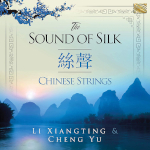
The Sound of Silk (ARC Music, 2019)
Pipa (four-stringed lute) and guqin (seven-stringed fretless zither) player Cheng Yu is one of the UK’s foremost Chinese musicians – her album of duets with her mentor Li Xiangting got a five-star review in Songlines. Her quartet Silk Breeze recorded a session of beautiful sizhu music for the WOMAD@Home series last summer, playing among the idyllic surrounds of Real World Studios; they’ll surely bring the same serene atmosphere to Charlton Park in July.
Lokkhi Terra meets Dele Sosimi
Cubafrobeat (Funkiwala Records, 2018)
Two for the price of one here: Lokkhi Terra, the London-based South Asian-flavoured Cuban big band, and Dele Sosimi, Afrobeat keys player and member of the legendary Egypt 80, are both on the line-up for WOMAD this year. Their collaborative album linked Yoruba cultures from both sides of the Atlantic to huge success. Fingers crossed for an on-stage reunion?
Mariza
Concerto em Lisboa (EMI Portugal, 2006)
Portuguese fado, with all its melodramatic flair and delicate, emotional moments, is always most powerful when experienced live, and the modern era’s biggest star is no exception. This live album shows Mariza at her best as a performer, accompanied by the Sinfonietta de Lisboa in front of 25,000 people in fado’s hometown. Granted, she’s not bringing the Sinfonietta to WOMAD, but her voice is an orchestra all on its own.
Onipa
We No Be Machine (IK7 Music, 2020)
Headed by Ghanaian-British singer and rapper K.O.G. and Nubiyan Twist guitarist and producer Tom Excell, Onipa use their hip-hop and jazz pedigree to combine vintage highlife grooves, dirty synths and layers of percussion. This is ‘savannah bass’, Onipa’s own exciting Afrofuturist style, and you couldn’t really wish for a more appropriate festival soundtrack – sound of the summer!
Gwenifer Raymond
Strange Lights Over Garth Mountain (Tomkins Square, 2020)
WOMAD has always had a knack for bringing new or lesser-known musicians to the fore, and Gwenifer Raymond may just be your discovery of 2021. Her second album showcases her mastery of the acoustic guitar with a mix of American blues and country roots, folk baroque and subtle influences from India and Wales. Engaging, entrancing and entirely solo – one to watch!
SEED Ensemble
Driftglass (jazz re:freshed, 2019)
Jazz has become a consistent element of the WOMAD line-up in recent editions, and it’s especially prevalent this year. Artists such as Nubiyan Twist, Cinematic Orchestra, The Comet is Coming, Joe Armon-Jones, Sarathy Korwar and Kefaya provide a heterogeneous overview of London’s booming jazz scene and Seed (as they are now known) are sure to be a highlight: their Caribbean and West African-informed 2019 debut earned them a Mercury nomination.
Anoushka Shankar
Reflections (Deutsche Grammophon, 2019)
Shankar’s career has taken so many different directions that you never know quite what she’s going to bring to the stage – the sitarist’s music has encompassed deeply traditional Hindustani classical music as well as Western classical styles, flamenco, jazz, electronica and, most recently, sophisticated and intimate art-pop. This recent self-curated retrospective gives some idea of what to expect from her headline slot this year.
Joseph Tawadros
Betrayal of a Secret Sunflower (JT Records, 2019)
The Egypt-born, Australia-raised and UK-based oud player and composer has graced the stage at WOMADelaide three times and – after a year’s delay – finally makes his UK WOMAD debut. His personality and dress sense are famously extravagant and exquisite, but his most recent album shows that he has no issue making his music serious, subtle, and sublime.
This blog is a compendium of my music writing throughout the years. I try to post updates about a month after first publication, but I'm often very behind - please bear with me!
Showing posts with label Egypt. Show all posts
Friday, 18 June 2021
Friday, 9 April 2021
Essential 10: Live Albums
First published in Songlines Magazine issue 167, May 2021.
Nikhil Banerjee
Afternoon Ragas (Raga Records, 1992)
This performance by sitar great Nikhil Banerjee, recorded in a museum in Rotterdam in 1970, is simply supreme. The 10-minute alap on Raga Bhimpalasri that opens the album is surely one of the most transcendent ever put to record. Accompanied by Kanai Dutta on tabla, Banerjee guides us through the serenity and the fireworks of ragas Bhimpilasri and Multani. Forget Rotterdam, this album can take you somewhere else entirely.
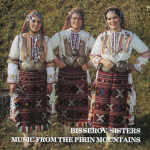
Bisserov Sisters
Music from the Pirin Mountains (PAN Records, 1990)
Recorded in concert at the Paradiso in Amsterdam, the Bisserov Sisters (together with their instrumentalists the Trio Karadzovska) give a whirlwind tour of the many folk styles of the south-western Bulgarian mountain village of Pirin, from the iconic vocal polyphony to all-instrumental dances and lots more in between. Beautifully performed, the resulting 26-track album is interesting and intriguing in equal measure.
Fatoumata Diawara & Roberto Fonseca
At Home: Live in Marciac (Jazz Village, 2015)
Of many attempted African-Latin collaborations, this is among the best. Between Diawara’s breathtaking voice and Fonseca’s nimble Cuban jazz piano, the connection feels completely natural, unforced and personal. Powerful and driving or subtle and sweet, the two masters match each other every step of the way. This recording from the Jazz in Marciac festival remains their only full-length release together.
Oum Kalthoum
Al Atlal (Sono Cairo, 1966)
Oum Kalthoum is one of the world’s bona fide megastars, revered not only in her native Egypt but across the Arab world and far beyond. She was known for her extended live performances, and Al Atlal (The Ruin) consists of a single 48-minute song of melancholy, despair and utter beauty. It is widely considered to be Kalthoum’s greatest achievement, maybe even the greatest Arabic song ever sung.
Ozomatli
Live at the Fillmore (Concord Records, 2005)
How much dancing is your body ready for? Mariachi, cumbia, salsa, norteño, hip-hop, funk, rock, samba and influences from every continent: it’s all here in one band. Ozomatli are one of the greatest of all party bands, known for their on-stage and in-crowd antics as well as their social consciousness. This sweat-soaked CD+DVD set gives a clue as to the dangerously high levels of ecstatic energy they bring.
Radio Tarifa
Fiebre (World Circuit, 2003)
The Iberian Peninsula and North Africa are only 13km apart, but Radio Tarifa’s music makes them feel even closer. Here, Spanish flamenco and Moroccan chaabi become one and the same. This retrospective-in-concert of the group’s first ten years results in a smoldering album that occasionally bursts out into full flamenco flame without ever leaving the souk.
Rachid Taha, Khaled, Faudel
1, 2, 3 Soleils (Barclay France, 1998)
This one-off supergroup show at Paris’ Bercy Stadium by the three biggest voices in rai – the king Khaled, the prince Faudel and the rebel Taha – was always going to be an extravaganza. With a 40-piece orchestra on top of the usual rai ensemble, this 2CD album is cheesy Algerian pop at its best. No wonder they sold out a stadium.
Lobi Traoré
Bamako Nights: Live at Bar Bozo 1995 (Glitterbeat, 2013)
There’s worse places to be than in a small, crowded bar in perhaps the world’s most musical city. Bamako Nights presents one of guitarist Lobi Traoré’s regular all-nighters in the Malian capital’s grungiest bar. Traoré’s electric Bamana blues is sometimes brooding, sometimes roaring, always grooving. And when he goes full-on Hendrix, it seems like Bar Bozo would be the best place on Earth.
Various Artists
Le Festival au Désert (Independent Records, 2003)
The Festival in the Desert is one of those legendary events spoken about in hushed, reverential tones: a stage set up in the village of Essakane in the Sahara desert where local Tuareg musicians rubbed shoulders with Malian giants and international stars, surrounded by camel races and fire dancers. It would sound like fantasy if we didn’t have recorded evidence that it happened.
Various Artists
Music and Rhythm: WOMAD 1982-2007 (WOMAD, 2007)
WOMAD is the standard bearer for world music festivals across the globe, and this 25th anniversary souvenir set tells its story with three CDs and a book. It features rare and wonderful live recordings from throughout the festival’s history, including the very first piece performed at the inaugural event in 1982 – ‘Raindrops Pattering on Banana Leaves’ by the Tianjin Music and Dance Ensemble.
Friday, 6 March 2020
Mazaher - Mazaher
First published in Songlines Magazine issue 156, April 2020.
Mazaher
Mazaher
Abaju! (72 mins)
Zar is a ceremony found in various forms across north-east Africa and beyond that involves communicating and pacifying spirits for mental and physical healing and purification – accompanied, naturally, by music.
Mazaher present the music of zar as it exists in Egypt: a female-dominated rite with hypnotic vocals joined by percussion and drums and underpinned by the low-pitched tamboura lyre, which sounds very reminiscent of the Gnawa guimbri from Morocco. In fact, there are many similarities between the rituals and music of the zar and Gnawa – it can be heard most evidently on the track ‘Amna’.
This album aims to capture the feeling of the ceremony as closely as possible, but nothing can truly replicate it without the sights and smells and 3D loudness, not to mention the changes your body and mind go through across the six or seven hours of the full ritual. Mazaher is an interesting and well-presented introduction to the Egyptian zar from some of its few remaining practitioners. It remains several steps too removed from the real thing to convey the real impact of the ritual, but the music within remains an enjoyable – if perhaps not transcendental – listening experience.
Mazaher
Mazaher
Abaju! (72 mins)
Zar is a ceremony found in various forms across north-east Africa and beyond that involves communicating and pacifying spirits for mental and physical healing and purification – accompanied, naturally, by music.
Mazaher present the music of zar as it exists in Egypt: a female-dominated rite with hypnotic vocals joined by percussion and drums and underpinned by the low-pitched tamboura lyre, which sounds very reminiscent of the Gnawa guimbri from Morocco. In fact, there are many similarities between the rituals and music of the zar and Gnawa – it can be heard most evidently on the track ‘Amna’.
This album aims to capture the feeling of the ceremony as closely as possible, but nothing can truly replicate it without the sights and smells and 3D loudness, not to mention the changes your body and mind go through across the six or seven hours of the full ritual. Mazaher is an interesting and well-presented introduction to the Egyptian zar from some of its few remaining practitioners. It remains several steps too removed from the real thing to convey the real impact of the ritual, but the music within remains an enjoyable – if perhaps not transcendental – listening experience.
Monday, 20 April 2015
Mohamed Abozekry & Heejaz Extended - Ring Road
First published in fRoots issue 383, May 2015
Mohamed Abozekry & Heejaz Extended
Ring Road
Full Rhizome/Jazz Village (75 mins)
Born in Egypt and living in France, the young oud player Mohamed Abozekry is not content to play only the traditional repertoire of his instrument. Instead, with the rest of his quintet Heejaz Extended – saxophones, piano, double bass and hand-percussion – he uses his instrument to initiate a whirlwind of international jazz.
All in all, the ensemble takes as much influence from Indian music as it does Arabic, Abozekry’s oud even resembling a sarod on occasion. There’s also elements from around the world: a couple of pieces are based on Cuban grooves; Ethiopian scales sneak their way into the occasional solo; and a qawwali-esque harmonium illuminates the second track, ‘Messages’.
Through all this, the one thing that remains a constant is the jazz. The styles that come to mind on the album are those of the classic late-50s/early-60s masters. You can hear Miles Davis in the harmonies, Horace Silver in the melodies and a haunting of John Coltrane throughout. Whether in the driving energy of a head or a quiet but tense, ballad-like section, the legacies of the masters come before feel respected and palpable.
Although the album is made up solely of Abozekry’s wonderful compositions and with his name on the front of the cover, it’s not his oud that takes precedence on this album; all the instrumentalists are involved in an equal way. This lets the group rid itself of the often-mishandled ‘fusion’ label and allows the music to be what it is – exciting jazz that is expertly crafted, well-executed and that will take your ears on a trip around the world.
Labels:
Album Review,
Egypt,
fRoots
Sunday, 19 October 2014
Ali Khattab - Sin País
First published in fRoots issue 377, November 2014
Ali Khattab
Sin País Nesma Music (46 mins)
Al-Andalus is a popular theme in the music of Arabic (especially North African) classical musicians. For more than 700 years, much of what is now Spain and Portugal was ruled under various Islamic caliphates, becoming renowned as the cultural centre of the Muslim world and attracting many visitors from the rest of Europe, creating the beginnings of Orientalism.
Ali Khattab is a flamenco guitarist from Egypt, and with Sin País, he aims to recreate the same atmosphere and passion that was experienced by those early Orientalists. Together with his group of Egyptian musicians, Khattab mixes flamenco and Arabic classical music together with a healthy amount of jazz, and it’s a project that produces mixed results. The album has some great tracks on it, but the band often tend to stray into ‘smooth’ territory, which robs the music of some of the excitement that is displayed elsewhere.
The stand-out areas of the album are those built upon the basis of the Egyptian music, with the flamenco and jazz working within the Arabic framework (such as the opener, 'Derviche'), rather than vice versa, which is where the music takes a turn towards the glossy and less interesting ('Alejandra').
This album lays promising groundwork for this fusion between flamenco and Arabic music, but in the end doesn’t quite deliver all it promises. Hopefully, this work can be built upon in further releases and result in some brilliant music. It’s not there yet though.
Labels:
Album Review,
Egypt,
fRoots
Subscribe to:
Posts (Atom)