First published in Songlines Magazine issue 197, May 2024.
Ann O’aro
Bleu
Buda Musique (53 mins)
Ann O’aro’s voice is breathtaking, heartbreaking. Gentle, but with great power behind it that occasionally erupts in a shocking flash… Her music has been a revelation. An enigmatic mix of classical-inspired jazz, chanson and the maloya of her homeland, La Réunion – the latter often present only in the subtleties of the voice and the rhythms of the percussion, but sometimes taking whole songs in its swirl. There is a darkness in the beauty, with unsettling sonic atmospheres reflecting the songs’ disturbing topics. But it is beauty nonetheless.
Bleu is O’aro’s third album; her previous, 2020’s wonderful Longoz, was made with a sparse trio completed by Teddy Doris on trombone and Bino Waro on percussion. The sound is bigger now: O’aro adds piano for the first time, and the trio is expanded to a quartet with the ‘machines’ of Brice Nauroy, which include electronic sounds, effects, drones and elements of musique concrète. Overdubs create trombone choirs and interweaving vocal lines, but the group retains the intimacy of a chamber ensemble. Her accompanists are inspired, but it is the solo songs, with just O’aro and her piano, that are the most affective, the most touching. With Bleu, Ann O’aro continues to go from strength to strength.
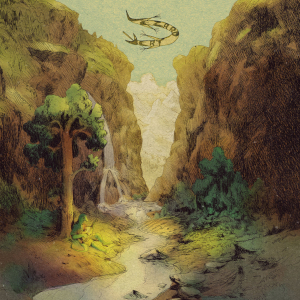
This blog is a compendium of my music writing throughout the years. I try to post updates about a month after first publication, but I'm often very behind - please bear with me!
Showing posts with label La Réunion. Show all posts
Friday, 5 April 2024
Friday, 5 March 2021
Zoun - Lézard Vert
First published in Songlines Magazine issue 166, April 2021.
Zoun
Lézard Vert
Babani Records (41 mins)
Do you ever get the feeling that you’ve put on the wrong album?
Lézard Vert is considered a foundational album in the field of electric maloya – an updated version of the revolutionary music from La Réunion. Originally released in 1983, it brought together four pioneers of the island’s electric sound, led by guitarist and flute player Zoun. And yet, it would be difficult to locate this music as from the Indian Ocean from ear alone. Its connection to maloya is evident only in the very subtlest ways, and as for ‘electric’… well, this album appears to be entirely acoustic. The music here sounds much closer to an instrumental mix of jazz-rock and folk baroque, with influences from flamenco and Indian music, than one deeply rooted in a Réunionese style.
That’s not necessarily a bad thing, of course. The shame is that it hasn’t even aged that well. The performances themselves are fine – Zoun’s lyrical acoustic guitar is particularly pleasant – but the blend of styles does not feel exactly ground-breaking or even exemplary, even for its time. This remastered reissue does a good job of bringing the older recording back to life, and if you like acoustic guitar-based folky jazz, you’ll probably enjoy it. But its connections to electric maloya are perhaps more opaque than expected.
Zoun
Lézard Vert
Babani Records (41 mins)
Do you ever get the feeling that you’ve put on the wrong album?
Lézard Vert is considered a foundational album in the field of electric maloya – an updated version of the revolutionary music from La Réunion. Originally released in 1983, it brought together four pioneers of the island’s electric sound, led by guitarist and flute player Zoun. And yet, it would be difficult to locate this music as from the Indian Ocean from ear alone. Its connection to maloya is evident only in the very subtlest ways, and as for ‘electric’… well, this album appears to be entirely acoustic. The music here sounds much closer to an instrumental mix of jazz-rock and folk baroque, with influences from flamenco and Indian music, than one deeply rooted in a Réunionese style.
That’s not necessarily a bad thing, of course. The shame is that it hasn’t even aged that well. The performances themselves are fine – Zoun’s lyrical acoustic guitar is particularly pleasant – but the blend of styles does not feel exactly ground-breaking or even exemplary, even for its time. This remastered reissue does a good job of bringing the older recording back to life, and if you like acoustic guitar-based folky jazz, you’ll probably enjoy it. But its connections to electric maloya are perhaps more opaque than expected.
Friday, 18 December 2020
Ann O’aro - Longoz
First published in Songlines Magazine issue 164, January/February 2021.
Ann O’aro
Longoz
Cobalt/Buda Musique (59 mins)
A brooding trombone blaring single, mournful tones; then, on top, a voice made of silk and smoke conjures an image of a deserted jazz club in the middle of the Indian Ocean. And what a voice it is. From the first moments of this album’s title-track opener, you can tell you’re about to be stunned.
To describe Ann O’aro’s music as maloya would perhaps be incorrect, but it’s undeniable that La Réunion’s iconic creole style is deeply embedded in its heart. She takes maloya’s bluesiest elements and most passionate rhythms to inform a stark, emotional jazz that also draws on ideas of bal-musette, waltz, sega and zouk. Such intensity is especially impressive when the ensemble only ever expands to a trio of O’aro on vocals, Teddy Doris on trombone and Bino Waro (son of Danyèl) on percussion.
While O’aro’s voice and music are hauntingly beautiful, her lyrics are another matter. Sung mostly in Creole, they reflect and examine her own trauma as a survivor of child abuse and incest. They make for important but difficult listening. Powerful and harrowing, delicate, sad, angry and utterly beguiling – Longoz is an album that will stay in the ears, mind and stereo for a long time.
Ann O’aro
Longoz
Cobalt/Buda Musique (59 mins)
A brooding trombone blaring single, mournful tones; then, on top, a voice made of silk and smoke conjures an image of a deserted jazz club in the middle of the Indian Ocean. And what a voice it is. From the first moments of this album’s title-track opener, you can tell you’re about to be stunned.
To describe Ann O’aro’s music as maloya would perhaps be incorrect, but it’s undeniable that La Réunion’s iconic creole style is deeply embedded in its heart. She takes maloya’s bluesiest elements and most passionate rhythms to inform a stark, emotional jazz that also draws on ideas of bal-musette, waltz, sega and zouk. Such intensity is especially impressive when the ensemble only ever expands to a trio of O’aro on vocals, Teddy Doris on trombone and Bino Waro (son of Danyèl) on percussion.
While O’aro’s voice and music are hauntingly beautiful, her lyrics are another matter. Sung mostly in Creole, they reflect and examine her own trauma as a survivor of child abuse and incest. They make for important but difficult listening. Powerful and harrowing, delicate, sad, angry and utterly beguiling – Longoz is an album that will stay in the ears, mind and stereo for a long time.
Friday, 15 May 2020
Gwendoline Absalon - Vangasay
First published in Songlines Magazine issue 158, June 2020.
Gwendoline Absalon
Vangasay
Ting Bang (48 mins)
A vangasay is a type of mandarin orange from Madagascar and Vietnam popular in the islands across the Indian Ocean in between. It’s sweet and refreshing – the perfect name for Gwendoline Absalon’s second album.
Absalon is one of the young talents creating the contemporary culture of La Réunion. On Vangasay, she takes the music of her island on a tour around the world, accreting the most soulful styles into her global musical creole. On this journey, she takes the sounds of bossa and samba from Brazil, morna from Cape Verde, piano montuno from Cuba, bèlè from Martinique and Bollywood from India and brings them together with those of La Réunion into a breezy, feel-good pop. Top marks to pianist Hervé Calcal, whose arrangements tie all these influences together seamlessly.
The best thing about Absalon’s music, though, is her voice: clear and fragrant, a little jazzy and full of smile. The album is at its most delightful when her voice is given undivided attention, such as in ‘Binda’ or ‘La Diva de la Morna’, her tribute to Cesaria Evora that starts with a whole two minutes of beautiful solo a capella. Vangasay is a sweet treat, a light and airy listen to clear the cobwebs.
Gwendoline Absalon
Vangasay
Ting Bang (48 mins)
A vangasay is a type of mandarin orange from Madagascar and Vietnam popular in the islands across the Indian Ocean in between. It’s sweet and refreshing – the perfect name for Gwendoline Absalon’s second album.
Absalon is one of the young talents creating the contemporary culture of La Réunion. On Vangasay, she takes the music of her island on a tour around the world, accreting the most soulful styles into her global musical creole. On this journey, she takes the sounds of bossa and samba from Brazil, morna from Cape Verde, piano montuno from Cuba, bèlè from Martinique and Bollywood from India and brings them together with those of La Réunion into a breezy, feel-good pop. Top marks to pianist Hervé Calcal, whose arrangements tie all these influences together seamlessly.
The best thing about Absalon’s music, though, is her voice: clear and fragrant, a little jazzy and full of smile. The album is at its most delightful when her voice is given undivided attention, such as in ‘Binda’ or ‘La Diva de la Morna’, her tribute to Cesaria Evora that starts with a whole two minutes of beautiful solo a capella. Vangasay is a sweet treat, a light and airy listen to clear the cobwebs.
Friday, 10 April 2020
Danyèl Waro - Tinn Tout
First published in Songlines Magazine issue 157, May 2020.
Danyèl Waro
Tinn Tout
Buda Musique (73 mins)
Danyèl Waro has spent the past 45 years becoming the international ambassador of maloya, the revolutionary roots music of the Indian Ocean island La Réunion. He also possesses one of the most outstanding voices in African music today, sounding somehow both fragile and powerful in equal measure. On Tinn Tout, he continues to do what he does best: a sparing, traditional version of maloya, with occasional small innovations – a Gnawa rhythm here, a Jaco Pastorius-like melodic bass there – that serve only to heighten the music’s emotional range.
One of those innovations comes on ‘Daniel Singaïny’, which explores maloya's often hidden connection to South Asian music. It starts with a short section of morlon narslon music, a shawm-and-drum style of La Réunion’s Tamil-descended Malbar community. The rest of the song is in Waro’s usual style, but that introduction changes the context in which it is heard; South Asian colours blossom forth. It’s not hard to conceive the massed vocals of maloya as distant cousins of qawwali.
Waro’s voice has a way of hitting the ear that directly touches the soul, and his respect for the past and future of maloya and La Réunion is just as clear and just as earnest – to listen to Tinn Tout is a pleasure and a privilege.
Danyèl Waro
Tinn Tout
Buda Musique (73 mins)
Danyèl Waro has spent the past 45 years becoming the international ambassador of maloya, the revolutionary roots music of the Indian Ocean island La Réunion. He also possesses one of the most outstanding voices in African music today, sounding somehow both fragile and powerful in equal measure. On Tinn Tout, he continues to do what he does best: a sparing, traditional version of maloya, with occasional small innovations – a Gnawa rhythm here, a Jaco Pastorius-like melodic bass there – that serve only to heighten the music’s emotional range.
One of those innovations comes on ‘Daniel Singaïny’, which explores maloya's often hidden connection to South Asian music. It starts with a short section of morlon narslon music, a shawm-and-drum style of La Réunion’s Tamil-descended Malbar community. The rest of the song is in Waro’s usual style, but that introduction changes the context in which it is heard; South Asian colours blossom forth. It’s not hard to conceive the massed vocals of maloya as distant cousins of qawwali.
Waro’s voice has a way of hitting the ear that directly touches the soul, and his respect for the past and future of maloya and La Réunion is just as clear and just as earnest – to listen to Tinn Tout is a pleasure and a privilege.
Subscribe to:
Posts (Atom)


