Showing posts with label India. Show all posts

Friday, 7 March 2025

Jawari - Road Rasa

First published in Songlines Magazine issue 206, April 2025.

Jawari
Road Rasa
Vadi Records (53 mins)

Following up an impressive 2021 solo debut Vignettes, British sitarist Tommy Khosla introduces their ensemble Jawari, together with saxophone, guitars and percussion, completed by poetry from Lagnajita Mukhopadhyay and featuring a cadre of international friends. The collective is ambitious in the number and range of its influences – Road Rasa is a journey through jazz, lo-fi hip-hop, spoken-word, Indian classical, electronica, Latin, soul, Chinese, Japanese, Arabic music… even the track titles themselves are eclectic, using at least seven writing systems across the 16 tracks, by my count. The music is enjoyable; it’s obviously crafted by a bunch of talented and enthusiastic artists, and spans a range of intensities and moods. I do think this first album suffers from the same difficulty as a lot of these ‘all the influences’ projects, in that it’s quite hard to pin down – the eclecticism sometimes obscures what they want their sound to say. This is a promising project, and a tighter focus may take Jawari’s music to the next level in the future.

Friday, 13 December 2024

Various Artists - Making Tracks 2022 (Live)

First published in Songlines Magazine issue 204, January 2025.

Various Artists
Making Tracks 2022 (Live)
Making Tracks (43 mins)

When eight talented and open-minded young musicians from across the world come together to experience each other’s music and discover pathways between them, there’s always going to be some special results. That’s Making Tracks, and every year or two they empower artists through a creative residency and UK tour. This live album features the pick of Making Tracks’ 2022 concerts.

The pieces chosen for this collection tend towards the calm and deliberate, showing the intensity of listening required to succeed in these connections. In fact, it is the duos that are the best bits here, where two musicians dig deep into each other’s and their own traditions: meetings of Hindustani and Scottish voices over a shruti done; contemporary art explorations between oud and violin; Persian classical singing paired with smallpipes, or kora. Making Tracks is all about exciting and unexpected combinations, and each of these tracks represents another intercultural gem.

Friday, 1 March 2024

Arushi Jain - Delight

First published in Songlines Magazine issue 196, April 2024.

Arushi Jain
Delight
Leaving Records (43 mins)

With 2021’s Under the Lilac Sky, Arushi Jain announced herself as a gifted alchemist of electronica and Hindustani music through her mastery of modular synthesizers and classically-trained singing. The concept then was sunsets; now she turns her focus to her personal philosophy of ever-present delight, to be found wherever one seeks it.

This whole album is an exploration of Raga Bageshri, with its implications of love and longing, but the classical element is diffused within flows of downtempo and ambient techno. Jain adds acoustic instruments to her soundscape for the first time – strings, saxophone, flute and marimba all evolve through production to become extensions of the synths. Her voice, too, is warped with a dreamy, reverb-heavy treatment. The distinction between acoustic and electric is never quite clear, the organic and synthetic working together as one organism.

There is a surreal joy inherent in this music, a wonder at all the creative, positive futures we can imagine for ourselves, echoing the ‘utopian scholastic’ aesthetic that will give 90s kids a healthy dose of nostalgia. The optimism is so refreshing! It’s such a feeling of relief. With the world out of balance in so many, seemingly ever-increasing ways, an album that revels in and radiates so much positivity is… well, it’s a delight.

Wednesday, 18 January 2023

Debashish Bhattacharya - The Sound of the Soul

First published on The Quietus.

Debashish Bhattacharya
The Sound of the Soul
Abstract Logix (76 mins)

Debashish Bhattacharya was not the first to bring Hindustani classical music to the slide guitar, but he has certainly brought the field its most recent international recognition – helped by successful collaborations with musicians such as John McLaughlin. The Sound of the Soul is Bhattacharya’s first solo release since his 2017 tribute to Hawaiian guitar master Tau Moe; this time he moves back to the classical frame to celebrate the 100th anniversary of the birth of one of his gurus, sarod pioneer Ustad Ali Akbar Khan. Here, Bhattacharya plays the chaturangui, an instrument of his own design that looks as beautiful as it sounds. A sort-of mix between a hollow-neck lap steel guitar and a hollow-body Gibson, it has a bunch of sympathetic strings that makes it distinctively Indian in its appearance and in the way each note rings out into the ether.

Read the full review over at The Quietus.

Friday, 11 November 2022

Ami Dang - The Living World’s Demands

First published in Songlines Magazine issue 183, December 2022.

Ami Dang
The Living World’s Demands
Phantom Limb (43 mins)

As a first-generation Punjabi-American from Baltimore, Ami Dang uses sitar, voice and electronics to carve a complex identity from sound. She deals with weighty topics through her music and lyrics; on her third album these include abuse, trauma, the fight for abortion rights, suicidal ideation, the pandemic, religion and capitalism, as well as brighter concepts of meditation, joy and peace.

The music itself is made of light dance pop and deeper ambient electronica, with inflections of Hindustani classical in the shape of sitar cascades and English and Punjabi-language singing enlightened with ornamental gamakas. While Dang’s lyrics deal with the pertinent themes of today, her music often harks to the past, whether it’s to 70s psychedelic rock or 2000s Indian-flavour teen pop: sometimes it comes across as classy and retro, sometimes as cheesy and dated. The album’s most interesting and intriguing moments come when the ambient side is allowed to flow most freely, such as in the tracks ‘Bālnā’, ‘Circuit’ and ‘Become’.

It feels as if Dang’s aim with this album is to be at once poppy, experimental and personally political – it’s a tricky combination, and some of those intersections end up a little jarring, with the generally light tone belying its important messages.

Monday, 29 November 2021

Shri Vijaya Vittala: The Musical Pillars of a Medieval Indian Temple

First published on the British Library Sound and Vision blog.


The Shri Vijaya Vittala Temple sits among the breath-taking and sprawling ruins of the ancient city of Hampi, in Karnataka, India. Dedicated to Vittala, a manifestation of the god Vishnu and his avatar Krishna, the temple began construction sometime in the 15th or 16th centuries but was never finished – the city was destroyed in 1565.

Each of the temple’s eight main pillars are surrounded by seven smaller pillars. When these small pillars are struck with the hand or a wooden beater, they ring in a clear, bell-like tone. Not only that, but each pillar in a set is tuned to a different note, meaning that together they sound a scale on which music can be performed.

To read the full blog post and to listen to the recording of the Vittala Temple's musical pillars, head over to the British Library Sound and Vision blog.


Photo: Some of the musical pillars of the Vittala Temple. Photo by Tom Vater’s travel companion Aroon Thaewchatturat.

Friday, 12 November 2021

Parvyn - Sa

First published in Songlines Magazine issue 173, December 2021.

Parvyn
Sa
HopeStreet Recordings (39 mins)

Australian Punjabi singer Parvyn grew up among Sikh devotional music and trained in Hindustani classical music and dance. She began her career on stage with her father Dya Singh’s group, and moved on to be the lead singer of Melbourne’s psychedelic Bollywood big band The Bombay Royale. Now she strikes out on her own with a debut solo album.

Sa follows musical and lyrical ruminations on Parvyn’s past and future through mental health issues, parenthood and immigrant life, the music drawing from two main directions: Indian classical and jazz-angled R&B. Throughout the album, the proportions of these two influences shift one way and the other, but the music is always at its strongest when they balance each other out and Parvyn’s voice blends these two rather different vocal disciplines, such as on ‘Something 29’ and ‘Crossed the Line’. Aside from the intercultural vocal contortions, props also have to be given for some really satisfying production with meaty bass and restrained but effective use of synths and loops.

Sa is the first note of Indian sargam scale, and acts as the root, the beginning and the base: an appropriate name for a debut album that will hopefully stand as a sure footing for future work.

Friday, 8 October 2021

Tommy Khosla - Vignettes

First published in Songlines Magazine issue 172, November 2021.

Tommy Khosla
Vignettes
Vadi Records (40 mins)

Vignettes is a series a small windows into the life, history and identity of its creator, London-based sitar player and producer Tommy Khosla. It is an exploration on the themes of mixed heritage (Khosla has roots in India, France and the UK) and neurodiversity that is filled with equal parts nostalgia and curiosity.

Across a collage of 18 very short tracks, most drifting in at around the one- or two-minute mark, sitar leads the way through lo-fi hip-hop beats, synths that blur between ambient and chillwave, and cameos from instruments such as shakuhachi and cellotar, all played by Khosla themself. Melodies also drift by the way of Hindustani classical music and English folk (with echoes of Sheema Mukherjee with the Imagined Village on tracks such as ‘Flora’). The use of sitar in these contexts has the risk of coming across as very corny, but such pitfalls are avoided with Khosla’s obvious skill at their instrument and their adventurous composition.

It all feels deeply personal, inspired by Khosla’s grandparents’ slideshows of their travels in north India, and littered with frequent snippets of family reminiscences and field recordings. Vignettes has been three years in the making, and is an accomplished debut for Khosla, with an impressive vision and maturity that belies their 22 years.

Friday, 3 September 2021

Arushi Jain - Under the Lilac Sky

First published in Songlines Magazine issue 171, October 2021.

Arushi Jain
Under the Lilac Sky
Leaving Records (49 mins)

Arushi Jain is an Indian-born, classically-trained Hindustani singer. She is also a Brooklyn-based modular synthesizer enthusiast. Using these two powerful and personal instruments, Jain’s Under the Lilac Sky is a beautiful ambient marriage of her two homes.

Just as ragas are entwined with a specific time of day or year, this is an album of sunsets. Everything here is consciously liminal: between day and night; between India, the US and somewhere imaginary; between melody, timbre and texture; between voice and synth. Jain’s music is all of them and none of them.

There are no beats here. The whole album feels like an extended alap. Various organic and electronic voices discover sonic possibilities conjured up by complex drones, and in doing so, build vast mystical scapes. The mood is always calm, although it treads a strange line between comforting and unsettling, always in the most evocative way. Echoes of Sheila Chandra bloom throughout as layers of silken sargam overlap upon low, raspy bass – there is a definite retro vibe but one that is distinctly rooted in the 2020s.

It could all very easily have tipped into the perilous realm of New Age, but instead, Jain has made a very impressive album – the perfect soundtrack to a warm, perfumed breeze at sunset.

Friday, 18 June 2021

Essential 10: WOMAD 2021

First published in Songlines Magazine issue 169, July 2021.

Horace Andy
Dance Hall Style (Wackie’s, 1982)
Every festival needs a bona fide veteran on its line-up, and prolific Jamaican singer Horace Andy definitely fits that bill. He’s probably best known now for his guest spots with Massive Attack, but it’s in the dub-heavy roots reggae and proto-dancehall of Dance Hall Style – Andy’s eighth album – that his distinctive high-pitched voice shines brightest.

The Dhol Foundation
Drum-Believable (Shakti Records, 2005)
Over the years, some artists have become WOMAD mainstays, and Johnny Kalsi and his group The Dhol Foundation can certainly count themselves among that class. Blasting their giant Punjabi dhol drums through bhangra, rock and electronica, they’re a guaranteed party starter – never more so than with their certified banger ‘After the Rain’ with Irish fiddler Máiréad Nesbitt from their second album Drum-Believable.

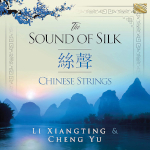
Li Xiangting & Cheng Yu
The Sound of Silk (ARC Music, 2019)
Pipa (four-stringed lute) and guqin (seven-stringed fretless zither) player Cheng Yu is one of the UK’s foremost Chinese musicians – her album of duets with her mentor Li Xiangting got a five-star review in Songlines. Her quartet Silk Breeze recorded a session of beautiful sizhu music for the WOMAD@Home series last summer, playing among the idyllic surrounds of Real World Studios; they’ll surely bring the same serene atmosphere to Charlton Park in July.

Lokkhi Terra meets Dele Sosimi
Cubafrobeat (Funkiwala Records, 2018)
Two for the price of one here: Lokkhi Terra, the London-based South Asian-flavoured Cuban big band, and Dele Sosimi, Afrobeat keys player and member of the legendary Egypt 80, are both on the line-up for WOMAD this year. Their collaborative album linked Yoruba cultures from both sides of the Atlantic to huge success. Fingers crossed for an on-stage reunion?

Mariza
Concerto em Lisboa (EMI Portugal, 2006)
Portuguese fado, with all its melodramatic flair and delicate, emotional moments, is always most powerful when experienced live, and the modern era’s biggest star is no exception. This live album shows Mariza at her best as a performer, accompanied by the Sinfonietta de Lisboa in front of 25,000 people in fado’s hometown. Granted, she’s not bringing the Sinfonietta to WOMAD, but her voice is an orchestra all on its own.


Onipa
We No Be Machine (IK7 Music, 2020)
Headed by Ghanaian-British singer and rapper K.O.G. and Nubiyan Twist guitarist and producer Tom Excell, Onipa use their hip-hop and jazz pedigree to combine vintage highlife grooves, dirty synths and layers of percussion. This is ‘savannah bass’, Onipa’s own exciting Afrofuturist style, and you couldn’t really wish for a more appropriate festival soundtrack – sound of the summer!

Gwenifer Raymond
Strange Lights Over Garth Mountain (Tomkins Square, 2020)
WOMAD has always had a knack for bringing new or lesser-known musicians to the fore, and Gwenifer Raymond may just be your discovery of 2021. Her second album showcases her mastery of the acoustic guitar with a mix of American blues and country roots, folk baroque and subtle influences from India and Wales. Engaging, entrancing and entirely solo – one to watch!

SEED Ensemble
Driftglass (jazz re:freshed, 2019)
Jazz has become a consistent element of the WOMAD line-up in recent editions, and it’s especially prevalent this year. Artists such as Nubiyan Twist, Cinematic Orchestra, The Comet is Coming, Joe Armon-Jones, Sarathy Korwar and Kefaya provide a heterogeneous overview of London’s booming jazz scene and Seed (as they are now known) are sure to be a highlight: their Caribbean and West African-informed 2019 debut earned them a Mercury nomination.

Anoushka Shankar
Reflections (Deutsche Grammophon, 2019)
Shankar’s career has taken so many different directions that you never know quite what she’s going to bring to the stage – the sitarist’s music has encompassed deeply traditional Hindustani classical music as well as Western classical styles, flamenco, jazz, electronica and, most recently, sophisticated and intimate art-pop. This recent self-curated retrospective gives some idea of what to expect from her headline slot this year.

Joseph Tawadros
Betrayal of a Secret Sunflower (JT Records, 2019)
The Egypt-born, Australia-raised and UK-based oud player and composer has graced the stage at WOMADelaide three times and – after a year’s delay – finally makes his UK WOMAD debut. His personality and dress sense are famously extravagant and exquisite, but his most recent album shows that he has no issue making his music serious, subtle, and sublime.

Friday, 9 April 2021

Essential 10: Live Albums

First published in Songlines Magazine issue 167, May 2021.

Nikhil Banerjee
Afternoon Ragas (Raga Records, 1992)
This performance by sitar great Nikhil Banerjee, recorded in a museum in Rotterdam in 1970, is simply supreme. The 10-minute alap on Raga Bhimpalasri that opens the album is surely one of the most transcendent ever put to record. Accompanied by Kanai Dutta on tabla, Banerjee guides us through the serenity and the fireworks of ragas Bhimpilasri and Multani. Forget Rotterdam, this album can take you somewhere else entirely.

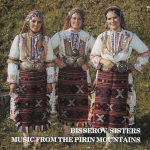
Bisserov Sisters
Music from the Pirin Mountains (PAN Records, 1990)
Recorded in concert at the Paradiso in Amsterdam, the Bisserov Sisters (together with their instrumentalists the Trio Karadzovska) give a whirlwind tour of the many folk styles of the south-western Bulgarian mountain village of Pirin, from the iconic vocal polyphony to all-instrumental dances and lots more in between. Beautifully performed, the resulting 26-track album is interesting and intriguing in equal measure.

Fatoumata Diawara & Roberto Fonseca
At Home: Live in Marciac (Jazz Village, 2015)
Of many attempted African-Latin collaborations, this is among the best. Between Diawara’s breathtaking voice and Fonseca’s nimble Cuban jazz piano, the connection feels completely natural, unforced and personal. Powerful and driving or subtle and sweet, the two masters match each other every step of the way. This recording from the Jazz in Marciac festival remains their only full-length release together.

Oum Kalthoum
Al Atlal (Sono Cairo, 1966)
Oum Kalthoum is one of the world’s bona fide megastars, revered not only in her native Egypt but across the Arab world and far beyond. She was known for her extended live performances, and Al Atlal (The Ruin) consists of a single 48-minute song of melancholy, despair and utter beauty. It is widely considered to be Kalthoum’s greatest achievement, maybe even the greatest Arabic song ever sung.

Ozomatli
Live at the Fillmore (Concord Records, 2005)
How much dancing is your body ready for? Mariachi, cumbia, salsa, norteño, hip-hop, funk, rock, samba and influences from every continent: it’s all here in one band. Ozomatli are one of the greatest of all party bands, known for their on-stage and in-crowd antics as well as their social consciousness. This sweat-soaked CD+DVD set gives a clue as to the dangerously high levels of ecstatic energy they bring.


Radio Tarifa
Fiebre (World Circuit, 2003)
The Iberian Peninsula and North Africa are only 13km apart, but Radio Tarifa’s music makes them feel even closer. Here, Spanish flamenco and Moroccan chaabi become one and the same. This retrospective-in-concert of the group’s first ten years results in a smoldering album that occasionally bursts out into full flamenco flame without ever leaving the souk.

Rachid Taha, Khaled, Faudel
1, 2, 3 Soleils (Barclay France, 1998)
This one-off supergroup show at Paris’ Bercy Stadium by the three biggest voices in rai – the king Khaled, the prince Faudel and the rebel Taha – was always going to be an extravaganza. With a 40-piece orchestra on top of the usual rai ensemble, this 2CD album is cheesy Algerian pop at its best. No wonder they sold out a stadium.

Lobi Traoré
Bamako Nights: Live at Bar Bozo 1995 (Glitterbeat, 2013)
There’s worse places to be than in a small, crowded bar in perhaps the world’s most musical city. Bamako Nights presents one of guitarist Lobi Traoré’s regular all-nighters in the Malian capital’s grungiest bar. Traoré’s electric Bamana blues is sometimes brooding, sometimes roaring, always grooving. And when he goes full-on Hendrix, it seems like Bar Bozo would be the best place on Earth.

Various Artists
Le Festival au Désert (Independent Records, 2003)
The Festival in the Desert is one of those legendary events spoken about in hushed, reverential tones: a stage set up in the village of Essakane in the Sahara desert where local Tuareg musicians rubbed shoulders with Malian giants and international stars, surrounded by camel races and fire dancers. It would sound like fantasy if we didn’t have recorded evidence that it happened.

Various Artists
Music and Rhythm: WOMAD 1982-2007 (WOMAD, 2007)
WOMAD is the standard bearer for world music festivals across the globe, and this 25th anniversary souvenir set tells its story with three CDs and a book. It features rare and wonderful live recordings from throughout the festival’s history, including the very first piece performed at the inaugural event in 1982 – ‘Raindrops Pattering on Banana Leaves’ by the Tianjin Music and Dance Ensemble.

Friday, 5 March 2021

Various Artists - Making Tracks: 2019 Live Tour

First published in Songlines Magazine issue 166, April 2021.

Various Artists
Making Tracks: 2019 Live Tour
Making Tracks (91 mins)

In rural Powys in early autumn 2019, Making Tracks gathered eight of the most exciting young roots musicians from across Europe and beyond for two weeks of exploration, expert mentorship and collaboration. The fruits of this residency were then showcased on a UK tour, which was recorded (and now, released) for posterity.

The sheer quality of musicianship on display is immense. All eight musicians give featured solo performances as well as showing off intercultural experiments developed during the residency, and there are no stand-outs because each artist brings something special. They excel in this all-acoustic setting, and their month of living and working together shines through in the ease of musical communication: pairings such as Kenyan nyatiti (lyre) and Hindustani santoor (zither) or Turkish kemençe (spike fiddle) and Estonian parmupill (jaw harp) feel as natural as they are unexpected. Neither are the performances hampered by the live setting, as the recordings and production are equally superb.

Making Tracks is all about promoting emerging artists and providing them with everything they need to break through. 2019’s fellows – Louise Bichan, Rapasa Otieno, Arsen Petrosyan, Katariin Raska, Luna Silva, Kaviraj Singh, Melisa Yildirim, Barbora Xu – all deserve wider attention. This album is a great place to start.

Friday, 14 June 2019

Essential 10: South Asian Jazz

First published in Songlines Magazine issue 149, July 2019.

Debashish Bhattacharya
Beyond the Ragasphere (Riverboat Records, 2013)
By 2013, Debashish Bhattacharya was already known as a master of the Hindustani classical slide guitar, but with Beyond the Ragasphere, he takes the opportunity to spread his wings. Here, Bhattacharya experiments with flamenco, country and Hawaiian music, but the album is at its best during its frequent excursions into full-on cosmic prog-jazz. Highlights include ‘Kirwani One.5+8.Five’ and the 16-minute odyssey ‘A Mystical Morning’, featuring sampled beats and John McLaughlin on electric guitar.

Soumik Datta & Bernhard Schimpelsberger
Circle of Sound (Baithak, 2012)
Circle of Sound is a close collaboration between British sarod player Soumik Datta and Austrian percussionist Bernhard Schimpelsberger in which less is used to create more: a wildly experimental record playing with many layers of reverb, echo and other effects to create huge soundscapes through and in between the cues from Indian classical and jazz traditions. An intense and cerebral listen.

Jan Garbarek & Fateh Ali Khan
Ragas and Sagas (ECM Records, 1992)
Fateh Ali Khan was one of the foremost performers of khyal in Pakistan before his death in 2017. On this recording for the renowned ECM Records, Khan and his group – including sarangi, harmonium and tabla – are joined by Norwegian saxophonist Jan Garbarek. Garbarek’s contributions are subtle and well-placed, slotting into the light classical idiom and bringing his own sound without imposing or taking anything away from the musical freedom of his hosts.

Arun Ghosh
Northern Namaste (Camoci Records, 2008)
Kolkata-born and Manchester-raised, Arun Ghosh uses his clarinet to explore his identity as a modern British Asian. Northern Namaste is a powerful opening statement as Ghosh’s debut album with some of the most promising young jazz musicians of the time including Corey Mwamba on vibraphone and Idris Rahman on tenor sax. The track ‘Longsight Lagoon’ especially provides a great introduction to Ghosh’s atmospheric and often cinematic sound.

Zakir Hussain / Hariprasad Chaurasia / John McLaughlin / Jan Garbarek
Making Music (ECM Records, 1987)
A truly legendary meeting between four of the greatest in their fields, led by Zakir Hussain on tabla and introducing his long-time musical partners in the acoustic guitar of John McLaughlin, saxophones of Jan Garbarek and the elegantly swooping bansuri flute of Hariprasad Chaurasia. Making Music set a high bar for future collaboration in the sphere of East-meets-West fusion.


Vijay Iyer
Tirtha (ACT Music, 2008)
Vijay Iyer is a true star of contemporary jazz. An American pianist of Tamil descent, his work has encompassed everything from hip-hop to electronica to contemporary classical. Tirtha, Iyer’s 13th album as bandleader, was created alongside Carnatic electric guitarist Prasanna and tabla player Nitin Mitta and explores all three musicians’ connections between jazz, classical and folk styles across continents in a masterwork of non-contrivance.

Red Baraat
Chaal Baby (Sinj Records, 2010)
Jazz takes many forms, and so, of course, does its South Asian offspring. Red Baraat, led by dhol drummer Sunny Jain, mix up some of the world’s most potent party music into one. It’s bhangra and Bollywood as played by a New Orleans brass band, full of funk and with a signature New York flair. Jazz isn’t just something to scratch a beard to; Red Baraat prove it’s also for dancing your head off.

Sarathy Korwar and UPAJ Collective
My East is Your West (Gearbox Records, 2018)
Recorded live at London’s Church of Sound after just 45 minutes of rehearsal, this double album sees drummer Korwar and his cross-cultural ten-piece UPAJ Collective take on the spiritual jazz of the likes of Alice Coltrane and Pharaoh Sanders – who were inspired by Indian music in their own styles. The result is a sophisticated set that isn’t afraid to let loose, go wild and push boundaries.

Lokkhi Terra
Che Guava’s Rickshaw Diaries (Funkiwala Records, 2012)
Each track on this album is based on a Bengali song (mostly folk songs, occasionally cinema hits), which is taken on a wide-ranging journey of globetrotting jazz. Lokkhi Terra’s Bangladeshi-born pianist and artistic director, Kishon Khan, studied under some of the greatest Afro-Cuban musicians and has collaborated widely, so it’s no surprise that the band’s sound encapsulates son, rumba, jazz, reggae, Afrobeat and funk.

Shakti
Best of Shakti (Moment Records, 1994)
Shakti was probably the earliest successful experiment in combining jazz and South Asian music on equal terms, and also brought together the region’s two big classical styles of North Indian Hindustani music and South Indian Karnatic music. Made up of tabla maestro Zakir Hussain, violinist L. Shankar, ghatam (clay pot) master Vikku Vinayakram and (it’s him again) jazz guitarist John McLaughlin, Shakti only recorded three albums but their impact on the worlds of jazz and fusion music is still felt today.

Friday, 12 May 2017

Khamira - Khamira

First published in Songlines Magazine issue 128, June 2017.

Khamira
Khamira
Recordiau Bopa (55 mins)

Khamira is a coming-together of Welsh folk and Hindustani classical styles through the unifying medium of jazz.

Seven musicians are involved: trumpet, piano, bass and drums making up the Welsh contingent, and guitar, sarangi and tabla, the Indian. All are well-versed in jazz; however, on this debut album, Khamira’s various styles peacefully co-exist, rather than fuse. There are portions of jazz followed by sections of Indian music, but they very rarely meld together in any significant way. ‘Dance of Nothingness’ is probably where the styles are most intertwined, and as such, it’s the best track of the bunch. The Welsh element is the most elusive: most of the pieces are based on Welsh folk tunes, but that can only be clearly heard in one track, ‘Y Gwydd’.

There are stand-out moments, to be sure. The duet between Suhail Yusuf Khan’s tender vocals and Tomos Williams’ Miles-style trumpet that is ‘Ffarwel i Gymru/Morey Nain’ is a delight, and there are individual moments of brilliance in the solos across the pieces.

This is a good album with some interesting ideas; a little more musical cohesion wouldn’t go amiss, though.

Sunday, 19 October 2014

Various Artists - The Rough Guide to Bollywood Disco

First published in fRoots issue 377, November 2014


Various Artists
The Rough Guide to Bollywood Disco
World Music Network (2CD, 137 mins)

A fun compilation of music from Indian cinema’s tackiest era. Cheese-lovers only need apply. Tracks range from the awful and embarrassing to the fairly funky. Comes packaged with The Rough Guide to Kishore Kumar as a bonus CD, which is slightly more listenable.

Thursday, 13 December 2012

Obituary: Ravi Shankar (1920-2012)

First published on Musika.uk.com in December 2012.


Sitarist and composer Pandit Ravi Shankar, KBE, died on Tuesday, 11th December 2012, at the Scripps Memorial Hospital in San Diego, USA.

A true innovator of Hindustani classical music, Shankar learnt to play in the Maihar gharana of his guru Ustad Allaudin Khan, which he used to adapt his own style, fusing dhrupad, khyal and thumri genres as well as incorporating elements from the Carnatic (South Indian) style of classical music, one of the first Hindustani musicians to do so.

But Shankar also expanded his repertoire far and beyond the classical music of his training. Being influenced by European classical styles, to which he was exposed during a period in France as a child, he composed ballets, concertos, a symphony and several original soundtracks for film. He also collaborated with Western art musicians and composers such as Yehudi Menuhin, André Previn and Philip Glass.

He was most well-known throughout the world, however, for his introduction of Indian music into the Western popular mind-set through collaborations with rock musicians, most famously George Harrison, to whom he taught the sitar, as well as recording several albums together. His association with Harrison lead to his appearances at festivals such as the Monterey Pop Festival and Woodstock and, famously, on the American TV show the Dick Cavett Show. He also opened the Concert for Bangladesh, organised by Harrison, in jugalbandi (duet) with Ustad Ali Akbar Khan.

Shankar had continued to tour until 2011, and was still performing concerts as recently as last month, his final performance coming on 4th November, near his home in California.

He is survived by his wife, Sukanya and his two daughters, both famous musicians in their own rights, pop-jazz singer Norah Jones and sitarist Anoushka Shankar. His son, Shubhendra ‘Shubho’ Shankar died in 1992.


Photo: Womadelaide 10 Ravi Shankar and Anoushka Shankar (India), by PeterTea. Used under licence CC BY-ND 2.0.