Showing posts with label Algeria. Show all posts

Friday, 7 April 2023

Yalla Miku - Yalla Miku

First published in Songlines Magazine issue 187, May 2023.

Yalla Miku
Yalla Miku
Bongo Joe Records (32 mins)

Bongo Joe is a Geneva-based record label, music shop, café-bar, mission statement and musical philosophy. The new project Yalla Miku is what Bongo Joe would look like if it were also a seven-piece band. With members from Switzerland, Algeria, Morocco and Eritrea, this is the sound of multicultural Geneva.

Influences from rai, Gnawa, Tuareg music and Turkish psychedelia combine inside a cocoon of hip, energetic krautrock and synth pop; Red Sea scales are topped with Maghrebi beats; synths, distorted guitars and theremin conspire with digitally-altered krar, oud, gimbri, bendir and darbuka. Through a tangle of instruments, origins and moving parts, Yalla Miku create a transcontinental sound that coheres well, finding the commonalities in each style and remaining tight in their aims and arrangements.

It’s a successful debut. It absolutely explodes out of the gates with an opening track that demands dance (‘Premier du Matin’), and ends with a gloriously intense near-chaos (‘Suiise’). At its best it is exploratory, engaging and fun. It isn’t always at its best, but it’s usually not far off, and at the end I was sad there wasn’t more – always a good sign. Bongo Joe are a force for good in Geneva and in international music, and Yalla Miku are a great poster child.

Friday, 23 July 2021

Hamdi Benani, Mehdi Haddab & Speed Caravan - Nuba Nova

First published in Songlines Magazine issue 170, August/September 2021.

Hamdi Benani, Mehdi Haddab & Speed Caravan
Nuba Nova
Buda Musique (51 mins)

Medhi Haddab's rai-punk outfit Speed Caravan have somewhat escaped my attention since their brilliant 2008 debut Kalashnik Love, but this album of classical Algerian malouf repertoire with master Hamdi Benani certainly made me prick up my ears. Although renowned as a classical singer and violinist, Benani was always a fearless innovator: the evidence is in the ease at which he twists his two instruments around whatever Speed Caravan throw his way.

The album starts like fairly standard rai fusion, but by the end of the first track it’s already evolved into Maghrebi psytrance led by Haddab’s Frampton-esque oud-vocoder. By then all bets are off. Sometimes there’s a distinctive Tuareg vibe, or a Latin lilt, or a full-on surf-rock growl, but it’s always with an unmistakable Algerian aesthetic, whether in the gasba flutes harking to rai’s origins or even the synths hitting all the tastiest quarter-tones in the maqam. All with that extra bit of punk attitude, of course.

Nuba Nova ended up being Benani’s final project; he died of COVID-19 in September 2020, aged 77. He was respected for pushing the boundaries, and this album does real justice to that legacy – as well as being a proper banger on its own merit.

Friday, 9 April 2021

Essential 10: Live Albums

First published in Songlines Magazine issue 167, May 2021.

Nikhil Banerjee
Afternoon Ragas (Raga Records, 1992)
This performance by sitar great Nikhil Banerjee, recorded in a museum in Rotterdam in 1970, is simply supreme. The 10-minute alap on Raga Bhimpalasri that opens the album is surely one of the most transcendent ever put to record. Accompanied by Kanai Dutta on tabla, Banerjee guides us through the serenity and the fireworks of ragas Bhimpilasri and Multani. Forget Rotterdam, this album can take you somewhere else entirely.

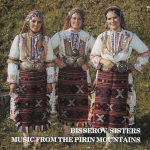
Bisserov Sisters
Music from the Pirin Mountains (PAN Records, 1990)
Recorded in concert at the Paradiso in Amsterdam, the Bisserov Sisters (together with their instrumentalists the Trio Karadzovska) give a whirlwind tour of the many folk styles of the south-western Bulgarian mountain village of Pirin, from the iconic vocal polyphony to all-instrumental dances and lots more in between. Beautifully performed, the resulting 26-track album is interesting and intriguing in equal measure.

Fatoumata Diawara & Roberto Fonseca
At Home: Live in Marciac (Jazz Village, 2015)
Of many attempted African-Latin collaborations, this is among the best. Between Diawara’s breathtaking voice and Fonseca’s nimble Cuban jazz piano, the connection feels completely natural, unforced and personal. Powerful and driving or subtle and sweet, the two masters match each other every step of the way. This recording from the Jazz in Marciac festival remains their only full-length release together.

Oum Kalthoum
Al Atlal (Sono Cairo, 1966)
Oum Kalthoum is one of the world’s bona fide megastars, revered not only in her native Egypt but across the Arab world and far beyond. She was known for her extended live performances, and Al Atlal (The Ruin) consists of a single 48-minute song of melancholy, despair and utter beauty. It is widely considered to be Kalthoum’s greatest achievement, maybe even the greatest Arabic song ever sung.

Ozomatli
Live at the Fillmore (Concord Records, 2005)
How much dancing is your body ready for? Mariachi, cumbia, salsa, norteño, hip-hop, funk, rock, samba and influences from every continent: it’s all here in one band. Ozomatli are one of the greatest of all party bands, known for their on-stage and in-crowd antics as well as their social consciousness. This sweat-soaked CD+DVD set gives a clue as to the dangerously high levels of ecstatic energy they bring.


Radio Tarifa
Fiebre (World Circuit, 2003)
The Iberian Peninsula and North Africa are only 13km apart, but Radio Tarifa’s music makes them feel even closer. Here, Spanish flamenco and Moroccan chaabi become one and the same. This retrospective-in-concert of the group’s first ten years results in a smoldering album that occasionally bursts out into full flamenco flame without ever leaving the souk.

Rachid Taha, Khaled, Faudel
1, 2, 3 Soleils (Barclay France, 1998)
This one-off supergroup show at Paris’ Bercy Stadium by the three biggest voices in rai – the king Khaled, the prince Faudel and the rebel Taha – was always going to be an extravaganza. With a 40-piece orchestra on top of the usual rai ensemble, this 2CD album is cheesy Algerian pop at its best. No wonder they sold out a stadium.

Lobi Traoré
Bamako Nights: Live at Bar Bozo 1995 (Glitterbeat, 2013)
There’s worse places to be than in a small, crowded bar in perhaps the world’s most musical city. Bamako Nights presents one of guitarist Lobi Traoré’s regular all-nighters in the Malian capital’s grungiest bar. Traoré’s electric Bamana blues is sometimes brooding, sometimes roaring, always grooving. And when he goes full-on Hendrix, it seems like Bar Bozo would be the best place on Earth.

Various Artists
Le Festival au Désert (Independent Records, 2003)
The Festival in the Desert is one of those legendary events spoken about in hushed, reverential tones: a stage set up in the village of Essakane in the Sahara desert where local Tuareg musicians rubbed shoulders with Malian giants and international stars, surrounded by camel races and fire dancers. It would sound like fantasy if we didn’t have recorded evidence that it happened.

Various Artists
Music and Rhythm: WOMAD 1982-2007 (WOMAD, 2007)
WOMAD is the standard bearer for world music festivals across the globe, and this 25th anniversary souvenir set tells its story with three CDs and a book. It features rare and wonderful live recordings from throughout the festival’s history, including the very first piece performed at the inaugural event in 1982 – ‘Raindrops Pattering on Banana Leaves’ by the Tianjin Music and Dance Ensemble.

Monday, 16 February 2015

Temenik Electric - Ouesh Hada?

First published in fRoots issue 381, March 2015


Temenik Electric
Ouesh Hada?
Nomad Café Productions (37 mins)

Marseille has long been known as a hotbed of North African culture in France, with many French-Arab subcultures having their genesis in the city. It’s not surprising, then, that a band such as Temenik Electric would flourish in such an environment.

With members from France and across North Africa, Temenik Electric create Maghrebi rock, but go much further than the sounds of pioneer Rachid Taha or more recent groups such as Speed Caravan by using elements of electronica, dub and blues together with many distinct North African styles from Algerian raï to Hassaniya music of the Western Sahara to create an intense but body-moving piece of work.

Although they’re often described as ‘Electric Gnawa’, the music of Ouesh Hada? does not contain too many obvious elements of the Afro-Moroccan style; there are no guimbri lutes, and rarely the sound of the metal castanets, the qaraqab. However, the album’s loping rhythms and extended sections of repetition that put you into a semi-trance before you fully realise what’s happened really does create the essence of gnawa that pervades each track. Despite the use of oud, nay, heavily distorted guitars, all manner of synths, and some deep percussionscapes, the gnawa infusion feels perfectly natural – a testament to the musicians who create such a nuanced style.

Ouesh Hada? is an outstanding album: perfect to rock out to, but also to lose yourself in. Play loud and fall into the groove of Temenik Electric!