First published on The Quietus.
Gonora Sounds
Hard Times Never Kill
The Vital Record / Dust to Digital (54 mins)
There’s a good chance you’ve already seen Daniel Gonora and his son Isaac play before. A video of them busking in Harare has been bouncing around social media since about 2016, usually without credit. Surrounded by an attentive crowd, Daniel, sitting low and with eyes closed from blindness, plays an intricate piece on an electric guitar through a strained amplifier while Isaac, then only twelve years old, shows his energetic mastery of the groove on a beat-up drum set, all rounded off by the infectious refrain of “Go bhora!”. That video blew up, racking up over ten million views. Now, six years later and with a full band and a real drum kit, Gonora Sounds – as they are known – have their first album of spicy and sunny sungura music.
Read the full review over at The Quietus.
This blog is a compendium of my music writing throughout the years. I try to post updates about a month after first publication, but I'm often very behind - please bear with me!
Showing posts with label Zimbabwe. Show all posts
Wednesday, 19 January 2022
Friday, 23 July 2021
Helsinki-Cotonou Ensemble - Helsinki-Cotonou Ensemble
First published in Songlines Magazine issue 170, August/September 2021.
Helsinki-Cotonou Ensemble
Flowfish Records (39 min)
It took the Helsinki-Cotonou Ensemble until their fifth album and tenth year to go eponymous. It takes time to know thyself, after all, and the Ensemble pretty much have that worked out. In that way, this new album (referred to by those in the know as HCE5) is largely more of the same from them: West African-angled soul-jazz, albeit this time with occasional hip-hop courtesy of guest rapper Synik from Zimbabwe.
Made remotely in Finland and Benin, with band members working out how to use recording software on-the-fly, HCE5 nevertheless sounds as cohesive and polished as if the group were all together in the studio. The resulting Afrosoul is smooth and uplifting – real easy morning Radio 2 vibes – that does slip into cheesiness fairly often. It’s best when they give the sound a bit of an edge, such as on ‘Djogbé Ana Zon’, which nods to modern Afropop alongside xylophones and some shrieking jazz solos; it’s a slightly more challenging listen, and all the more rewarding for it.
Appropriately for a self-titled album, the Helsinki-Cotonou Ensemble have solidified the sound that they have been working on for the past decade. They stick to what they know, and they do it well.
Helsinki-Cotonou Ensemble
Flowfish Records (39 min)
It took the Helsinki-Cotonou Ensemble until their fifth album and tenth year to go eponymous. It takes time to know thyself, after all, and the Ensemble pretty much have that worked out. In that way, this new album (referred to by those in the know as HCE5) is largely more of the same from them: West African-angled soul-jazz, albeit this time with occasional hip-hop courtesy of guest rapper Synik from Zimbabwe.
Made remotely in Finland and Benin, with band members working out how to use recording software on-the-fly, HCE5 nevertheless sounds as cohesive and polished as if the group were all together in the studio. The resulting Afrosoul is smooth and uplifting – real easy morning Radio 2 vibes – that does slip into cheesiness fairly often. It’s best when they give the sound a bit of an edge, such as on ‘Djogbé Ana Zon’, which nods to modern Afropop alongside xylophones and some shrieking jazz solos; it’s a slightly more challenging listen, and all the more rewarding for it.
Appropriately for a self-titled album, the Helsinki-Cotonou Ensemble have solidified the sound that they have been working on for the past decade. They stick to what they know, and they do it well.
Friday, 9 April 2021
Paul F. Berliner - The Art of Mbira: Musical Inheritance and Legacy
First published in Songlines Magazine issue 167, May 2021.
Paul F. Berliner
The Art of Mbira: Musical Inheritance and Legacy
The University of Chicago Press (608 pages)
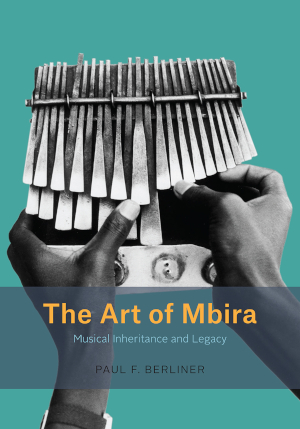
At its heart, this book began in 1971, when Paul Berliner first met mbira player Cosmas Magaya and started a life-long friendship. Such a long-standing relationship gives Berliner and Magaya insights into the mbira that can only have developed through decades of deep thought, matured through constant conversation and mediation. Berliner uses Magaya’s performances to explain the intricacies of mbira playing: how pieces are composed and evolve over time; how the rhythms, harmonies, melodies and texture work together to create a complex and unique musical style; how players vary, improvise, create and recreate mbira pieces and parts; and how the tradition is taught and learnt. Magaya’s presence here is all-encompassing and indelible, arguably deserving a co-author’s credit. His death in July 2020, just months after publication, adds a poignancy to his quote in the book’s introduction: ‘Once we’ve completed this study on behalf of our late mbira-playing comrades – leaving it for others who come behind us – I will know that if I die tomorrow, I can go to my grave satisfied.’
This book really is a monster tome, with over 600 (large) pages and 300 musical examples – and on top of that, there’s a whole website with hundreds of recordings cross-referenced with the text, and an even larger companion book, Mbira’s Restless Dance (912 pages!), with over 500 transcriptions of mbira music. It’s a multimedia magnum opus, and it’s a lot to get through.
The Art of Mbira is a landmark work that will be indispensable for scholars of mbira, Zimbabwean music, music pedagogy, music psychology and for ethnomusicologists and musicologists alike; it will also be a boon to budding mbira players. It’s worth bearing in mind though: this isn’t a book for light reading. It can get very technical and, although Berliner has a knack for evocative description, the academic discussion can be dry verging on impassable. This is an incredible book, and the culmination of two lifetimes of work, but proceed with caution.
Paul F. Berliner
The Art of Mbira: Musical Inheritance and Legacy
The University of Chicago Press (608 pages)
At its heart, this book began in 1971, when Paul Berliner first met mbira player Cosmas Magaya and started a life-long friendship. Such a long-standing relationship gives Berliner and Magaya insights into the mbira that can only have developed through decades of deep thought, matured through constant conversation and mediation. Berliner uses Magaya’s performances to explain the intricacies of mbira playing: how pieces are composed and evolve over time; how the rhythms, harmonies, melodies and texture work together to create a complex and unique musical style; how players vary, improvise, create and recreate mbira pieces and parts; and how the tradition is taught and learnt. Magaya’s presence here is all-encompassing and indelible, arguably deserving a co-author’s credit. His death in July 2020, just months after publication, adds a poignancy to his quote in the book’s introduction: ‘Once we’ve completed this study on behalf of our late mbira-playing comrades – leaving it for others who come behind us – I will know that if I die tomorrow, I can go to my grave satisfied.’
This book really is a monster tome, with over 600 (large) pages and 300 musical examples – and on top of that, there’s a whole website with hundreds of recordings cross-referenced with the text, and an even larger companion book, Mbira’s Restless Dance (912 pages!), with over 500 transcriptions of mbira music. It’s a multimedia magnum opus, and it’s a lot to get through.
The Art of Mbira is a landmark work that will be indispensable for scholars of mbira, Zimbabwean music, music pedagogy, music psychology and for ethnomusicologists and musicologists alike; it will also be a boon to budding mbira players. It’s worth bearing in mind though: this isn’t a book for light reading. It can get very technical and, although Berliner has a knack for evocative description, the academic discussion can be dry verging on impassable. This is an incredible book, and the culmination of two lifetimes of work, but proceed with caution.
Stella Chiweshe - Ambuya!
First published in Songlines Magazine issue 167, May 2021.
Stella Chiweshe
Ambuya!
Piranha Records (55 mins)
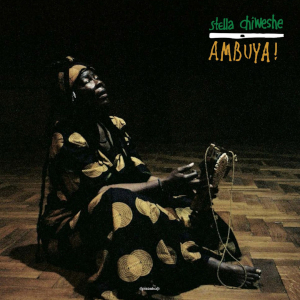
Piranha Records have delved into their archives, looked in the ‘1987’ box and recovered the record that started it all for them: the Queen of Mbira Stella Chiweshe’s – and Piranha’s – very first international release. Now they celebrate the record’s 33⅓ anniversary with a nicely polished remaster.
Ambuya! is a warm set of traditional and composed Shona songs on mbira, two marimbas and hosho (shakers) straight from Zimbabwe, with the bass guitar, drum kit and mixing-deskery of British world-musical japesters 3 Mustaphas 3. There’s a lovely mix of solemnity and bounce through the whole thing, especially in the opener ‘Chachimurenga’ – Chiweshe’s most famous piece home and abroad, an implausibly catchy song about the horrors of war.
This reissue also features four extra tracks, taken from Chiweshe’s 1988 Peel Session. Handily, there are no duplications with the original tracks, and the sound is consistent enough with the rest of the album so as not to feel tacked on. Maybe some of the more gung-ho production effects haven’t aged as well as the album’s other elements over more than three decades, but all in all, it’s a lovely album and a welcome reissue of an early-days world music classic.
Stella Chiweshe
Ambuya!
Piranha Records (55 mins)
Piranha Records have delved into their archives, looked in the ‘1987’ box and recovered the record that started it all for them: the Queen of Mbira Stella Chiweshe’s – and Piranha’s – very first international release. Now they celebrate the record’s 33⅓ anniversary with a nicely polished remaster.
Ambuya! is a warm set of traditional and composed Shona songs on mbira, two marimbas and hosho (shakers) straight from Zimbabwe, with the bass guitar, drum kit and mixing-deskery of British world-musical japesters 3 Mustaphas 3. There’s a lovely mix of solemnity and bounce through the whole thing, especially in the opener ‘Chachimurenga’ – Chiweshe’s most famous piece home and abroad, an implausibly catchy song about the horrors of war.
This reissue also features four extra tracks, taken from Chiweshe’s 1988 Peel Session. Handily, there are no duplications with the original tracks, and the sound is consistent enough with the rest of the album so as not to feel tacked on. Maybe some of the more gung-ho production effects haven’t aged as well as the album’s other elements over more than three decades, but all in all, it’s a lovely album and a welcome reissue of an early-days world music classic.
Friday, 5 March 2021
Breaking the Teeth of the Lion: Stella Chiweshe
First published in Songlines Magazine issue 166, April 2021.
Stella Chiweshe is 74 years old. She’s travelled the world, starred in films, been a cultural ambassador for Zimbabwe, and much more besides. She follows the voices of spirits and she defied social taboo and colonial laws to become one of the first female professional mbira players. She has a lot of stories to tell.
A typically magical story is the first time she performed with European musicians – members of the British group 3 Mustaphas 3 – while recording in Berlin. The Mustaphas were understandably nervous ahead of their first encounter with Chiweshe. But she wasn’t worried. She’d met them before. “Yes, it was my first time meeting them physically,” she grins, “but in my sleep, when I was dreaming, I had played with them for a long time before. When we finally met, it was like flipping a switch. They got the music right in a very short time. They were all so surprised, but I was just laughing!”
Those recordings became the album Ambuya?, released on Piranha Records in 1987. Now, 33⅓ years later, Piranha have issued the album as a shiny new remaster, giving Chiweshe – and us – a great opportunity to look back on her legacy, and to explore ways to make sure it lives on. Ambuya? marked firsts on many fronts – her first album, first international release, the first time recording her signature sound of mbira and two marimbas – but the story of spiritual guidance helping her on the way to becoming the Queen of Mbira is one that occurs again and again throughout her life. To even make it to the Berlin studio was a triumph.
The mbira is a powerful instrument. It is a symbol of the Shona people and an important part of their traditional worship. When played, especially during bira ceremonies, it conjures spirits of the ancestors for possession, intercession and protection. When Chiweshe was first called to the mbira, Zimbabwe was still Rhodesia, and neither the racist settler-colonialist government nor the Christian church could allow such dangerous tools in the hands of the people. The mbira, along with all traditional elements of Shona culture, was banned.
“But if it is something that is in the blood and the veins of the people, it is not possible to completely remove it,” says Chiweshe, the twinkle in her eye almost audible. “We did not stop playing mbira in the communal lands, we didn’t!” Instruments were transported under the cover of darkness and bira were held way out in the countryside, away from the ears of police and clergy. Amid this secretive resistance of cultural continuation, though, Chiweshe still faced additional barriers. The mbira was a man’s domain; the idea of a woman playing the instrument was scandalous.
But Stella Rambisai Chiweshe has always been strong-willed – and she was chosen. The spirit of her sixth-great-grandfather put the mbira in her mind and an ache in her soul. Mbira was all she could think about for two years until she made it her mission to learn when she was 16 years old. It wasn’t easy. Every teacher refused her. When she asked her grandfather why no-one would teach a girl, he told her that no man would want a wife that played mbira. “And you know how I took it? It made me laugh! ‘Really? Is that all?!’ I couldn’t believe it!” To her surprise, her grandfather directed her to her great-uncle. This was her last hope.
“When I got there, it took me three days to ask. I saw him come out, sit down and start to play. I walked towards him as if I was walking on eggs! I went up to him and said, ‘excuse me, can you please show me how to play?’ He looked at me, and his eyes went into my chest where I had pain for two years. His eyes touched my pain. He said ‘sit down, I will teach you how to play,’ and even before I sat down, the pain just vanished. I’d heard a voice talking into my ear, telling me that the remedy was to play mbira. It gave me courage to ignore everyone. I ignored men, I ignored women, I ignored the government, I ignored the church, because I wanted to survive. That’s how I started to play.”
With the mbira in her hands, Chiweshe not only survived, she thrived. After three years of study, she began to play at the forbidden bira ceremonies with the threat of imprisonment if caught. She also performed in secular contexts, forming her own band and recording 20 singles. In 1981, she became a member of the newly-independent Zimbabwe’s National Dance Company, where her skills as an mbira player were celebrated on the world stage rather than hidden out of sight; she even played the titular role in the film Ambuya Nehanda, a medium, martyr and Zimbabwean hero. After moving to Germany in the 1980s, her international career blossomed. She’s released many albums, recorded two Peel Sessions and toured the world, including playing mbira – solo – to more than 10,000 people at WOMAD USA in 1994.
And through all of this success, she has been guided by the voices of her ancestors. The spirits are incredibly significant to Chiweshe. They advise her, inhabit her dreams, give her visions, bring new songs to her fingers and voice and, yes, introduce her to future band members. Once she moved to Germany, she brought the ancestors with her: “Ancestors are spirits, and this is my culture; my culture is in me and my spirits are in me! They are not living people who I have left behind in Zimbabwe. It is a spiritual world, it is everywhere.”
As much as Chiweshe’s music delights her fans, it becomes clear when she speaks that, for her, it is the spirituality of the music that remains of the utmost importance. When she plays her hypnotic, circular patterns, it is to entertain the ancestral spirits as well as to allow these spirits to communicate with her audience. Sometimes, the spirits take charge, altering her mind to create amazing things: “Once I was playing and I started to see the mbira as the head of a lion, the keys were the teeth of the lion. There was no way to escape, so the only thing I could do was to break the teeth of the lion. It happened for a long time that I was fighting with the lion, breaking its teeth. Afterwards, people were looking at me and I was wondering what was happening when I was breaking the teeth!”
The ancestors tether Chiweshe’s work to her roots, and provide a common thread throughout her life: chivanhu, Shona tradition. Whether carrying the ancient traditions in her soul, radically updating and reinventing them on record and on stage or showcasing them abroad, the concept of chivanhu has always been at the core. That’s why Chiweshe’s largest and on-going project is the Chivanhu Centre.
The Chivanhu Centre is Chiweshe’s way of continuing her commitment to Zimbabwe’s traditions and culture while she’s in Germany, and for long after she joins the pantheon of ancestors herself. Laid out like a village among the mountains north of Harare, the Centre will be a place for learning and living the tradition. It will function as both a school and a community; people can come to learn to play mbira or hosho (rattles), or learn to sing or dance – they can even learn how to make traditional beer, doro, a vital component in bira ceremonies. And it’s open for everybody: “All the experience that I get through my travels with music, I would like to share it with the youth, with schoolchildren and with older people, to give back what I have experienced in my lifetime.”
Just as Chiweshe used her music to resist colonial rule as a teenager, the Chivanhu Centre carries on that fight. Shona culture has never fully recovered from those evils. “You know that since we were colonised for 100 years, for all that time our traditional music was oppressed,” she says. “People were not free to sing their traditional songs. Now, this place is somewhere that will help people to bring out what they have.” Rebellion is a lifestyle and Chiweshe knows that celebrating chivanhu as a community is radical.
It’s a big vision, but work is already underway. There are plans to build a borehole, a solar power system, a community hall, a specialised music room, several huts and a garden. Although a crowdfunding campaign fell short of its target at the end of 2020, the project continues undeterred. The Chivanhu Centre will be a beautiful castle and a testament to the life and work of Chiweshe and the Shona people.
When her first album was released in 1987, it was given the title Ambuya?. ‘Ambuya’ is the Shona word for grandmother, and is used as a title of respect for female elders. That original title represented a call to the ancestors, to the powerful women of the Shona people. With its 2021 reissue, the title has changed – it is now Ambuya! No more questions necessary. A studious caretaker of Shona heritage with over 50 years of mastery and innovation on the mbira, Ambuya Stella Chiweshe is the bearer of a great legacy. With the work of Chivanhu Centre, it’s a legacy that will continue for a long time.
Photos from top: Stella Chiweshe, by Camille Bokhobza; Stella Chiweshe and her new car in 1984, unknown.
Stella Chiweshe is 74 years old. She’s travelled the world, starred in films, been a cultural ambassador for Zimbabwe, and much more besides. She follows the voices of spirits and she defied social taboo and colonial laws to become one of the first female professional mbira players. She has a lot of stories to tell.
A typically magical story is the first time she performed with European musicians – members of the British group 3 Mustaphas 3 – while recording in Berlin. The Mustaphas were understandably nervous ahead of their first encounter with Chiweshe. But she wasn’t worried. She’d met them before. “Yes, it was my first time meeting them physically,” she grins, “but in my sleep, when I was dreaming, I had played with them for a long time before. When we finally met, it was like flipping a switch. They got the music right in a very short time. They were all so surprised, but I was just laughing!”
Those recordings became the album Ambuya?, released on Piranha Records in 1987. Now, 33⅓ years later, Piranha have issued the album as a shiny new remaster, giving Chiweshe – and us – a great opportunity to look back on her legacy, and to explore ways to make sure it lives on. Ambuya? marked firsts on many fronts – her first album, first international release, the first time recording her signature sound of mbira and two marimbas – but the story of spiritual guidance helping her on the way to becoming the Queen of Mbira is one that occurs again and again throughout her life. To even make it to the Berlin studio was a triumph.
The mbira is a powerful instrument. It is a symbol of the Shona people and an important part of their traditional worship. When played, especially during bira ceremonies, it conjures spirits of the ancestors for possession, intercession and protection. When Chiweshe was first called to the mbira, Zimbabwe was still Rhodesia, and neither the racist settler-colonialist government nor the Christian church could allow such dangerous tools in the hands of the people. The mbira, along with all traditional elements of Shona culture, was banned.
“But if it is something that is in the blood and the veins of the people, it is not possible to completely remove it,” says Chiweshe, the twinkle in her eye almost audible. “We did not stop playing mbira in the communal lands, we didn’t!” Instruments were transported under the cover of darkness and bira were held way out in the countryside, away from the ears of police and clergy. Amid this secretive resistance of cultural continuation, though, Chiweshe still faced additional barriers. The mbira was a man’s domain; the idea of a woman playing the instrument was scandalous.
But Stella Rambisai Chiweshe has always been strong-willed – and she was chosen. The spirit of her sixth-great-grandfather put the mbira in her mind and an ache in her soul. Mbira was all she could think about for two years until she made it her mission to learn when she was 16 years old. It wasn’t easy. Every teacher refused her. When she asked her grandfather why no-one would teach a girl, he told her that no man would want a wife that played mbira. “And you know how I took it? It made me laugh! ‘Really? Is that all?!’ I couldn’t believe it!” To her surprise, her grandfather directed her to her great-uncle. This was her last hope.
“When I got there, it took me three days to ask. I saw him come out, sit down and start to play. I walked towards him as if I was walking on eggs! I went up to him and said, ‘excuse me, can you please show me how to play?’ He looked at me, and his eyes went into my chest where I had pain for two years. His eyes touched my pain. He said ‘sit down, I will teach you how to play,’ and even before I sat down, the pain just vanished. I’d heard a voice talking into my ear, telling me that the remedy was to play mbira. It gave me courage to ignore everyone. I ignored men, I ignored women, I ignored the government, I ignored the church, because I wanted to survive. That’s how I started to play.”
With the mbira in her hands, Chiweshe not only survived, she thrived. After three years of study, she began to play at the forbidden bira ceremonies with the threat of imprisonment if caught. She also performed in secular contexts, forming her own band and recording 20 singles. In 1981, she became a member of the newly-independent Zimbabwe’s National Dance Company, where her skills as an mbira player were celebrated on the world stage rather than hidden out of sight; she even played the titular role in the film Ambuya Nehanda, a medium, martyr and Zimbabwean hero. After moving to Germany in the 1980s, her international career blossomed. She’s released many albums, recorded two Peel Sessions and toured the world, including playing mbira – solo – to more than 10,000 people at WOMAD USA in 1994.
And through all of this success, she has been guided by the voices of her ancestors. The spirits are incredibly significant to Chiweshe. They advise her, inhabit her dreams, give her visions, bring new songs to her fingers and voice and, yes, introduce her to future band members. Once she moved to Germany, she brought the ancestors with her: “Ancestors are spirits, and this is my culture; my culture is in me and my spirits are in me! They are not living people who I have left behind in Zimbabwe. It is a spiritual world, it is everywhere.”
As much as Chiweshe’s music delights her fans, it becomes clear when she speaks that, for her, it is the spirituality of the music that remains of the utmost importance. When she plays her hypnotic, circular patterns, it is to entertain the ancestral spirits as well as to allow these spirits to communicate with her audience. Sometimes, the spirits take charge, altering her mind to create amazing things: “Once I was playing and I started to see the mbira as the head of a lion, the keys were the teeth of the lion. There was no way to escape, so the only thing I could do was to break the teeth of the lion. It happened for a long time that I was fighting with the lion, breaking its teeth. Afterwards, people were looking at me and I was wondering what was happening when I was breaking the teeth!”
The ancestors tether Chiweshe’s work to her roots, and provide a common thread throughout her life: chivanhu, Shona tradition. Whether carrying the ancient traditions in her soul, radically updating and reinventing them on record and on stage or showcasing them abroad, the concept of chivanhu has always been at the core. That’s why Chiweshe’s largest and on-going project is the Chivanhu Centre.
The Chivanhu Centre is Chiweshe’s way of continuing her commitment to Zimbabwe’s traditions and culture while she’s in Germany, and for long after she joins the pantheon of ancestors herself. Laid out like a village among the mountains north of Harare, the Centre will be a place for learning and living the tradition. It will function as both a school and a community; people can come to learn to play mbira or hosho (rattles), or learn to sing or dance – they can even learn how to make traditional beer, doro, a vital component in bira ceremonies. And it’s open for everybody: “All the experience that I get through my travels with music, I would like to share it with the youth, with schoolchildren and with older people, to give back what I have experienced in my lifetime.”
Just as Chiweshe used her music to resist colonial rule as a teenager, the Chivanhu Centre carries on that fight. Shona culture has never fully recovered from those evils. “You know that since we were colonised for 100 years, for all that time our traditional music was oppressed,” she says. “People were not free to sing their traditional songs. Now, this place is somewhere that will help people to bring out what they have.” Rebellion is a lifestyle and Chiweshe knows that celebrating chivanhu as a community is radical.
It’s a big vision, but work is already underway. There are plans to build a borehole, a solar power system, a community hall, a specialised music room, several huts and a garden. Although a crowdfunding campaign fell short of its target at the end of 2020, the project continues undeterred. The Chivanhu Centre will be a beautiful castle and a testament to the life and work of Chiweshe and the Shona people.
When her first album was released in 1987, it was given the title Ambuya?. ‘Ambuya’ is the Shona word for grandmother, and is used as a title of respect for female elders. That original title represented a call to the ancestors, to the powerful women of the Shona people. With its 2021 reissue, the title has changed – it is now Ambuya! No more questions necessary. A studious caretaker of Shona heritage with over 50 years of mastery and innovation on the mbira, Ambuya Stella Chiweshe is the bearer of a great legacy. With the work of Chivanhu Centre, it’s a legacy that will continue for a long time.
Photos from top: Stella Chiweshe, by Camille Bokhobza; Stella Chiweshe and her new car in 1984, unknown.
Friday, 4 September 2020
The Zonke Family - At the Studio
First published in Songlines Magazine issue 161, October 2020.
The Zonke Family
At the Studio
Lokalophon (39 mins)
The Zonke family hail from Nyampanda, a small border town on the Zimbabwean side of the boundary with Mozambique. They are also the knowledge bearers and masters of the matepe, a large mbira of the Marembe people. Here, three of the family – Anthony Zonke, Crispen Zonke and Chief Boyi Nyamande – share this age-old knowledge with the world.
So often mbira music is mixed with guitars, drum kits and synths, but its true power is most evident when it is allowed to stand alone, as it is here. It’s very refreshing to hear the music presented in this way – just the interlocking lines of the matepe, the polyrhythms of the hosho (rattles) and the overlapping yodels from all three participants. The power remains even when the musicians put down the matepe: ‘Tinotengana Kuipa’ is all ngoma (drums) and voice and is just as enchanting and entrancing.
It’s a sound that reflects back your own headspace. Light and airy, heavy and deep; it all depends on how much you choose to fall into the music. It’s a shame the album is so short. The force of the music is so irresistible that it feels like it could go on unabated for hours and hours on into the infinite.
The Zonke Family
At the Studio
Lokalophon (39 mins)
The Zonke family hail from Nyampanda, a small border town on the Zimbabwean side of the boundary with Mozambique. They are also the knowledge bearers and masters of the matepe, a large mbira of the Marembe people. Here, three of the family – Anthony Zonke, Crispen Zonke and Chief Boyi Nyamande – share this age-old knowledge with the world.
So often mbira music is mixed with guitars, drum kits and synths, but its true power is most evident when it is allowed to stand alone, as it is here. It’s very refreshing to hear the music presented in this way – just the interlocking lines of the matepe, the polyrhythms of the hosho (rattles) and the overlapping yodels from all three participants. The power remains even when the musicians put down the matepe: ‘Tinotengana Kuipa’ is all ngoma (drums) and voice and is just as enchanting and entrancing.
It’s a sound that reflects back your own headspace. Light and airy, heavy and deep; it all depends on how much you choose to fall into the music. It’s a shame the album is so short. The force of the music is so irresistible that it feels like it could go on unabated for hours and hours on into the infinite.
Friday, 1 November 2019
Obituary: Chartwell Dutiro (1957-2019)
First published in Songlines Magazine issue 153, December 2019.
Chartwell Dutiro was a key figure in the repopularisation of the mbira in Zimbabwean society after decades of its proscription by Rhodesian authorities. As a member of Thomas Mapfumo’s iconic chimurenga band Blacks Unlimited, Dutiro originally played saxophone and percussion but pushed for the inclusion of the mbira, an instrument he had played since childhood. It was a revolutionary act. The sound of the mbira would become crucial to the power of chimurenga music.
After leaving the Blacks Unlimited in 1993, he moved to the UK. He gained a degree at SOAS, University of London, where his work was published as a book, Zimbabwean Mbira Music on an International Stage. He went on to teach at SOAS for some years before setting up his own dedicated school, the Mhararano Mbira Academy, and running international mbira gatherings across Europe and North America. All the while, Dutiro continued to perform and record solo and with a number of his own bands, and was featured many times in the pages of Songlines, including a profile right at the beginning in issue #2.
Dutiro died from cancer at his home in Devon on September 22. He had just learnt that he was to be awarded an honorary doctorate from Bath Spa University.
Photo: Chartwell Dutiro (right) performs with Thomas Mapfumo (left) and Blacks Unlimited in New York in 1989, by Banning Eyre.
Chartwell Dutiro was a key figure in the repopularisation of the mbira in Zimbabwean society after decades of its proscription by Rhodesian authorities. As a member of Thomas Mapfumo’s iconic chimurenga band Blacks Unlimited, Dutiro originally played saxophone and percussion but pushed for the inclusion of the mbira, an instrument he had played since childhood. It was a revolutionary act. The sound of the mbira would become crucial to the power of chimurenga music.
After leaving the Blacks Unlimited in 1993, he moved to the UK. He gained a degree at SOAS, University of London, where his work was published as a book, Zimbabwean Mbira Music on an International Stage. He went on to teach at SOAS for some years before setting up his own dedicated school, the Mhararano Mbira Academy, and running international mbira gatherings across Europe and North America. All the while, Dutiro continued to perform and record solo and with a number of his own bands, and was featured many times in the pages of Songlines, including a profile right at the beginning in issue #2.
Dutiro died from cancer at his home in Devon on September 22. He had just learnt that he was to be awarded an honorary doctorate from Bath Spa University.
Photo: Chartwell Dutiro (right) performs with Thomas Mapfumo (left) and Blacks Unlimited in New York in 1989, by Banning Eyre.
Friday, 27 September 2019
My Instrument: Stella Chiweshe and her Mbira Dzavadzimu
First published in Songlines Magazine issue 152, November 2019.
Stella Chiweshe is widely known as the first woman to gain recognition as a master of the most important instrument of Zimbabwe’s Shona people, the mbira dzavadzimu. It is a lamellophone – also called a thumb piano – in which steel keys made from beaten-flat bicycle spokes are mounted to a wooden board and plucked with both thumbs and a forefinger. This technique creates an interlocking pattern through which circular melodies begin to shine through.
The mbira dzavadzimu is, literally, ‘the voice of the ancestors,’ the instrument that works as a go-between for many past generations to speak to the living. It was through this contact that led Chiweshe to the instrument when she was 16 years old. “One day in a ceremony, my mother’s fifth-great-grandfather said through her that four of his greatest grandchildren would play the mbira. I am one of those four,” she told me. “But when he said that, nobody believed we could play. Exactly two years after that ceremony, I started to hear the mbira that was played that day afresh in my head. All the other music that I liked was locked out. I was locked into mbira for two years. I could only hear mbira in my head as if somebody was really playing.” When she first began to learn the ways of the mbira, there were challenges from all sides: the instrument was illegal in then-Rhodesia and her status as a female player was unacceptable in Shona tradition, but when she learnt to play, it became obvious that destiny was being fulfilled.
I met Chiweshe in London after an entrancing concert at the Jazz Cafe. The instrument she’d used on stage didn’t look like I expected. Traditionally, mbira dzavadzimu are housed in a large half-calabash for amplification, and covered in cowry shells (or, more recently, bottle caps) that rattle and add a different dimension, making it sound like the gentle lapping of waves on a shore. But this mbira was different. While it plays in the traditional way – it has 32 keys, tuned in the standard way – its body is much smaller, without any shells to buzz and, crucially, it can be plugged into an amplifier. In other words, it’s perfect to perform abroad. Although the instrument isn’t right for all occasions (“I wouldn’t play this for my elders because they would say it’s naked!”), its spiritual nature is not compromised, according to Chiweshe: “I think every mbira is sacred because their purpose, even if it has three or five or 15 keys, the purpose is still the same.”
This deeper meaning of the mbira dzavadzimu is impossible to weaken for Chiweshe, because it’s part of nature: “Mbira gets in touch with everything, even the birds. Sometimes I go to the forest to play for the trees, sometimes I go to play for the water. Water likes mbira, the birds like mbira, the trees like mbira.” When it’s human ears that she’s reaching, she teaches her audience how to listen correctly. By singling out the sound of one particular key, and listening for that one resonance in the rolling, circular patterns, you allow your mind to receive the meaning of mbira. “If you listen to all notes at the same time, you will get lost. But if you let your ear choose a note that is being played continuously, then everything will fall into place. It puts you in a meditative state. When we are meditating, we are trying to clear all thoughts that are scattered and focus on one thing. Mbira gives the direction by itself.”
The mbira dzavadzimu will always be the instrument of the Shona ancestors, no matter where it’s played or what shape or size it happens to be. In the hands of Stella Chiweshe, its spiritual and meditative powers will continue to reach the ears and souls of listeners across the world.
Photo: Stella Chiweshe and her mbira dzavadzimu, by Ilka Schlockermann.
Stella Chiweshe is widely known as the first woman to gain recognition as a master of the most important instrument of Zimbabwe’s Shona people, the mbira dzavadzimu. It is a lamellophone – also called a thumb piano – in which steel keys made from beaten-flat bicycle spokes are mounted to a wooden board and plucked with both thumbs and a forefinger. This technique creates an interlocking pattern through which circular melodies begin to shine through.
The mbira dzavadzimu is, literally, ‘the voice of the ancestors,’ the instrument that works as a go-between for many past generations to speak to the living. It was through this contact that led Chiweshe to the instrument when she was 16 years old. “One day in a ceremony, my mother’s fifth-great-grandfather said through her that four of his greatest grandchildren would play the mbira. I am one of those four,” she told me. “But when he said that, nobody believed we could play. Exactly two years after that ceremony, I started to hear the mbira that was played that day afresh in my head. All the other music that I liked was locked out. I was locked into mbira for two years. I could only hear mbira in my head as if somebody was really playing.” When she first began to learn the ways of the mbira, there were challenges from all sides: the instrument was illegal in then-Rhodesia and her status as a female player was unacceptable in Shona tradition, but when she learnt to play, it became obvious that destiny was being fulfilled.
I met Chiweshe in London after an entrancing concert at the Jazz Cafe. The instrument she’d used on stage didn’t look like I expected. Traditionally, mbira dzavadzimu are housed in a large half-calabash for amplification, and covered in cowry shells (or, more recently, bottle caps) that rattle and add a different dimension, making it sound like the gentle lapping of waves on a shore. But this mbira was different. While it plays in the traditional way – it has 32 keys, tuned in the standard way – its body is much smaller, without any shells to buzz and, crucially, it can be plugged into an amplifier. In other words, it’s perfect to perform abroad. Although the instrument isn’t right for all occasions (“I wouldn’t play this for my elders because they would say it’s naked!”), its spiritual nature is not compromised, according to Chiweshe: “I think every mbira is sacred because their purpose, even if it has three or five or 15 keys, the purpose is still the same.”
This deeper meaning of the mbira dzavadzimu is impossible to weaken for Chiweshe, because it’s part of nature: “Mbira gets in touch with everything, even the birds. Sometimes I go to the forest to play for the trees, sometimes I go to play for the water. Water likes mbira, the birds like mbira, the trees like mbira.” When it’s human ears that she’s reaching, she teaches her audience how to listen correctly. By singling out the sound of one particular key, and listening for that one resonance in the rolling, circular patterns, you allow your mind to receive the meaning of mbira. “If you listen to all notes at the same time, you will get lost. But if you let your ear choose a note that is being played continuously, then everything will fall into place. It puts you in a meditative state. When we are meditating, we are trying to clear all thoughts that are scattered and focus on one thing. Mbira gives the direction by itself.”
The mbira dzavadzimu will always be the instrument of the Shona ancestors, no matter where it’s played or what shape or size it happens to be. In the hands of Stella Chiweshe, its spiritual and meditative powers will continue to reach the ears and souls of listeners across the world.
Photo: Stella Chiweshe and her mbira dzavadzimu, by Ilka Schlockermann.
Thursday, 6 December 2018
John Falsetto & Mohamed Sarrar - Sounds of Refuge
First published in Songlines Magazine issue 144, January/February 2019.
John Falsetto & Mohamed Sarrar
Sounds of Refuge
Good Chance (33 mins)
John Falsetto and Mohamed Sarrar met as fellow actors in the award-winning play The Jungle. The play tells the stories and journeys of the residents of the Calais refugee camp, and Sounds of Refuge is no different. The album evolved from informal dressing room jams, but it soon took on a life of its own that took it all the way to Abbey Road Studios.
Falsetto and Sarrar are both refugees themselves, from Zimbabwe and Sudan respectively, and Sarrar lived for a time in the Calais Jungle: there is no doubt that these songs come from the heart. Falsetto’s mbira lays the foundation of the album, building layers of bright and clear tones for his and Sarrar’s vocals to lie upon. The sound is rounded off by Sarrar’s djembe and darbuka drums, piano from Duncan Webb and occasional spoken word from Syrian actor Ammar Haj Ahmed.
The result is strongest when the Zimbabwean and Arabic styles come together, especially with Sarrar’s singing, but that doesn’t happen often enough. Instead, most of the album tends towards a very gentle, middle-of-the-road feel, with little to surprise or stand out. The project represented here is definitely interesting and worthy of attention, but the music is lacking in adventure.
John Falsetto & Mohamed Sarrar
Sounds of Refuge
Good Chance (33 mins)
John Falsetto and Mohamed Sarrar met as fellow actors in the award-winning play The Jungle. The play tells the stories and journeys of the residents of the Calais refugee camp, and Sounds of Refuge is no different. The album evolved from informal dressing room jams, but it soon took on a life of its own that took it all the way to Abbey Road Studios.
Falsetto and Sarrar are both refugees themselves, from Zimbabwe and Sudan respectively, and Sarrar lived for a time in the Calais Jungle: there is no doubt that these songs come from the heart. Falsetto’s mbira lays the foundation of the album, building layers of bright and clear tones for his and Sarrar’s vocals to lie upon. The sound is rounded off by Sarrar’s djembe and darbuka drums, piano from Duncan Webb and occasional spoken word from Syrian actor Ammar Haj Ahmed.
The result is strongest when the Zimbabwean and Arabic styles come together, especially with Sarrar’s singing, but that doesn’t happen often enough. Instead, most of the album tends towards a very gentle, middle-of-the-road feel, with little to surprise or stand out. The project represented here is definitely interesting and worthy of attention, but the music is lacking in adventure.
Friday, 12 May 2017
Jennifer W. Kyker - Oliver Mtukudzi: Living Tuku Music in Zimbabwe
First published in Songlines Magazine issue 128, June 2017.
Jennifer W. Kyker
Oliver Mtukudzi: Living Tuku Music in Zimbabwe
Indiana University Press (304 pages)
Oliver Mtukudzi – often known simply as ‘Tuku’ – is a living legend of Zimbabwean music, both within the country and out. His unique mix of traditional Shona styles, soul, jive and South African music consistently defies any other categorisation than simply ‘Tuku music’, and his lyrics have spoken to the hearts of several generations of listeners in Zimbabwe.
With this book, Kyker gives an account of Mtukudzi’s musical life, but to call it a biography would be misleading. While it does take a mostly chronological journey through Tuku’s story, it uses his life and music as a jumping-off point to talk about the role of music across various facets of Zimbabwean social life and history.
The major theme of Living Tuku Music in Zimbabwe is the Shona concept of hunhu – the idea of personal identity based on communality and constant renegotiation, or in Tuku’s words, “being a person among others”. Due to the depth and poetry of Tuku’s music and lyrics, his songs can be interpreted in a multitude of ways, often leading to different groups taking away different messages, even if they are the opposite to Tuku’s stated intent. As such, each chapter focuses on a specific topic (such as politics, HIV/AIDS, the Zimbabwean diaspora), which is then viewed through the dual lens of Mtukudzi’s songs and his audiences’ interpretations of them, demonstrating the hunhu inherent in his music.
As an essentially ethnomusicological text, the theoretical extrapolations and dense technical language may be off-putting for some readers, but there isn’t too much of this to render it completely opaque. Scattered throughout are plentiful lyrics, interviews, photographs and other assorted miscellanea, which provide nice breaks in the wall of words. This is a work that has been in the making for 13 years (including nine years of research), and Kyker has created a thoroughly fascinating book.
Jennifer W. Kyker
Oliver Mtukudzi: Living Tuku Music in Zimbabwe
Indiana University Press (304 pages)
Oliver Mtukudzi – often known simply as ‘Tuku’ – is a living legend of Zimbabwean music, both within the country and out. His unique mix of traditional Shona styles, soul, jive and South African music consistently defies any other categorisation than simply ‘Tuku music’, and his lyrics have spoken to the hearts of several generations of listeners in Zimbabwe.
With this book, Kyker gives an account of Mtukudzi’s musical life, but to call it a biography would be misleading. While it does take a mostly chronological journey through Tuku’s story, it uses his life and music as a jumping-off point to talk about the role of music across various facets of Zimbabwean social life and history.
The major theme of Living Tuku Music in Zimbabwe is the Shona concept of hunhu – the idea of personal identity based on communality and constant renegotiation, or in Tuku’s words, “being a person among others”. Due to the depth and poetry of Tuku’s music and lyrics, his songs can be interpreted in a multitude of ways, often leading to different groups taking away different messages, even if they are the opposite to Tuku’s stated intent. As such, each chapter focuses on a specific topic (such as politics, HIV/AIDS, the Zimbabwean diaspora), which is then viewed through the dual lens of Mtukudzi’s songs and his audiences’ interpretations of them, demonstrating the hunhu inherent in his music.
As an essentially ethnomusicological text, the theoretical extrapolations and dense technical language may be off-putting for some readers, but there isn’t too much of this to render it completely opaque. Scattered throughout are plentiful lyrics, interviews, photographs and other assorted miscellanea, which provide nice breaks in the wall of words. This is a work that has been in the making for 13 years (including nine years of research), and Kyker has created a thoroughly fascinating book.
Subscribe to:
Posts (Atom)