Showing posts with label USA. Show all posts

Friday, 30 August 2024

Atlas Maior - Hadal (Deluxe Edition)

First published in Songlines Magazine issue 201, October 2024.

Atlas Maior
Hadal (Deluxe Edition)
Dead Red Queen Records (38 mins)

This deluxe edition collects Texas-based jazz quartet Atlas Maior’s recorded output from the past four years. It’s an album of two halves – Side A is the band’s 2023 all-instrumental mini-album Hadal, and Side B is two tracks made with Pakistani kafi singer Ali Pervez Mehdi plus two remixes. Side A is the strongest, where the group really show what they’re capable of, the pieces built from the inspired interplay between alto saxophone and oud. There is strong influence from classical and folk traditions from across the Arab world, and there is a hearty debt to free jazz pioneer Ornette Coleman. It’s a great example of exploratory small-band jazz, with exemplary solos. After this glorious journey, Side B falls a bit flat. Mehdi’s Sufi vocals are beautiful, but seem to constrain the free-flow of electric creative energy otherwise present. The remixes are similarly enjoyable while adding little.

Friday, 1 March 2024

Arushi Jain - Delight

First published in Songlines Magazine issue 196, April 2024.

Arushi Jain
Delight
Leaving Records (43 mins)

With 2021’s Under the Lilac Sky, Arushi Jain announced herself as a gifted alchemist of electronica and Hindustani music through her mastery of modular synthesizers and classically-trained singing. The concept then was sunsets; now she turns her focus to her personal philosophy of ever-present delight, to be found wherever one seeks it.

This whole album is an exploration of Raga Bageshri, with its implications of love and longing, but the classical element is diffused within flows of downtempo and ambient techno. Jain adds acoustic instruments to her soundscape for the first time – strings, saxophone, flute and marimba all evolve through production to become extensions of the synths. Her voice, too, is warped with a dreamy, reverb-heavy treatment. The distinction between acoustic and electric is never quite clear, the organic and synthetic working together as one organism.

There is a surreal joy inherent in this music, a wonder at all the creative, positive futures we can imagine for ourselves, echoing the ‘utopian scholastic’ aesthetic that will give 90s kids a healthy dose of nostalgia. The optimism is so refreshing! It’s such a feeling of relief. With the world out of balance in so many, seemingly ever-increasing ways, an album that revels in and radiates so much positivity is… well, it’s a delight.

Mukdad Rothenberg Lankow - Just Leave It All Behind

First published in Songlines Magazine issue 196, April 2024.

Mukdad Rothenberg Lankow
Just Leave It All Behind
Clermont Music (41 mins)

Music doesn’t have to have words in order to say something. Just Leave It All Behind sees three instrumentalists coming together to improvise for peace.

This is the second album from a group collaboration that has been bubbling for years. Each participant is multiply-hyphenate in their work: Wassim Mukdad is a doctor, an oud player and an anti-torture campaigner; David Rothenberg is a professor of philosophy, a clarinettist and an interspecies sound artist; Volker Lankow is a nurse, a percussionist and an aid worker for Médecins sans Frontières. Together, their music-flow touches the worlds of Levantine classical, jazz, acoustic-ambient and even blues.

Although the album is entirely instrumental, its music is inextricably entangled with the importance of human rights and the trio’s yearning for peace – for which this release is as timely as any. In the accompanying notes, the artists say ‘these improvisations represent the belief that art can help us get beyond the darkest impulses of humanity.’ However, the end result feels less provocative than that mission statement implies. The musicians and their abilities combine well – this would undoubtedly be a lovely collaboration to experience live, but in an album setting it somewhat lacks a coherent through-narrative. This set is a clarion call for human good, with multiple beautiful moments, but perhaps not as powerful as its message deserves.

Friday, 6 October 2023

Chief Adjuah - Bark Out Thunder Roar Out Lightning

First published in Songlines Magazine issue 192, November 2023.

Chief Adjuah
Bark Out Thunder Roar Out Lightning
Ropeadope (56 mins)

Chief Xian aTunde Adjuah (formerly Christian Scott) has foregone his usual jazz trumpet, relying instead on his amazing voice and invented instruments to explore his heritage as an Afro-New Orleanian, back through the Afro-Indigenous Maroons and to the ultimate roots, in Africa.

This is an album of two shades, and two complementary vibes. Some of the songs are sounded with voice and percussion only, the most reflective of the traditional Afro-New Orleanian music. These songs resonate with Adjuah’s pride in heritage and lineage, filled with remembrance and joyous reverence of the strength of the elders who came before. Other songs are darker and funkier, their sound based around Chief Adjuah’s Bow, an instrument of his own design that resembles a minimalist electric kora or kamalengoni. These tracks are heavier, channelling centuries of righteous anger against still on-going subjugation. The epitome of these is the title track and centrepiece of the album, a 15-minute Gil Scott-Heron-like poetic meditation on Black liberation and white supremacy.

Bark Out Thunder Roar Out Lightning is a powerful album of African music, culture, language and religion, filtered through generations of ancestral memory, obscured and revived over and over into something that could only come from 21st century New Orleans.

Friday, 1 September 2023

Jazz Fusion Review Round-Up

First published in Songlines Magazine issue 191, October 2023.

Nowadays, the line separating jazz from instrumental hip-hop can be incredibly fine, given the amount of influence that has passed back and forth over the past 50 years. Budapest-based trio Jazzbois embrace this permeability with their third album, Higher Dimension Waiting Room (Blunt Shelter Records, 34 mins). Here, the hip-hop and jazz are completely entwined, from the dreamy, lo-fi synths and fluttery piano to the broken beats and funky bass. It’s light and fun with a sci-fi edge, chilled-out but with enough groove to keep you dancing. Special props to Tamás Czirják, whose drumming consistently brings the fireworks.

Production duo Abderraouf B. Grissa & Dan Drohan also sail the jazz-hip-hop continuum with their first collaboration RBGxDD (Uno Loop, 41 mins). Together they make a dance-oriented jazz that isn’t afraid of venturing ‘out there’. Live instruments and samples merge seamlessly, guiding us through different zones – from rolling blues grooves to dubwise spacescapes to Latin psychedelia to a sound effects record – without ever losing the carefully-curated unifying vibe based on those two home styles. This musical journey hits more like an exploratory mixtape than your usual jazz album, and is none the worse for it.

Another album that hops between genres at will is the reissue of Ambiance II Fusion’s 1985 record Come Touch Tomorrow (Freestyle Records, 39 mins). The ensemble revolves around Nigerian-born saxophonist Daoud Abubakar Balewa, whose classic instrumental soul-funk absolutely oozes 80s production, with its heavy reverb, gated snares and ultra-smooth sax. Strangely enough, this album sounds like tracks from several different albums stitched together. Some tracks are live (or live-sounding) and others are studio recordings; some tracks seem to bear little stylistic resemblance to those around them – sometimes there’s reggae, or bossa, or even pure synthwave with no saxophone to be heard. It’s as if the album itself is a little unsure of what it wants to be.

New York-based Greek vibraphonist, electronicist and drummer Christos Rafalides makes an ode to lockdown in Home (Emarel Music, 50 mins), recorded in improvised home studios across the world in the spring of 2021. Each of the seven tracks features a guest musician, and each bring their own slant on Rafalides’ malleable jazz, whether that’s Middle Eastern from outi (Greek oud) player Thomas Konstantinou, light Latin from pianist Giovanni Mirabassi or space-age Caribbean from steelpan player Victor Provost. The latter is a particular highlight, providing a real complement to the vibraphone. Not all the collaborations work as well as that, but Rafalides’ musicianship shines throughout.

But if you only have enough space in your ears for one jazz fusion album this month, make it Peter Somuah’s Letter to the Universe (ACT Music, 41 mins). The young Ghanaian trumpeter’s second album takes a celestial, spiritual approach, creating a cosmic jazz with elements of bebop and post-bop, big band, jazz-rock, highlife and, of course, hip-hop. Miles Davis is an ever-present reference, and there are guest turns from Ghanaian stars such as highlife legend Gyedu-Bley Ambolley and up-and-coming Frafra kologo player and singer Stevo Atambire of Alostmen. From the superb trumpet playing to the intelligent compositions and arrangements, this is a brilliant album – there’s surely more great things to come from Peter Somuah.

Friday, 21 July 2023

Captain Planet - Sounds Like Home

First published in Songlines Magazine issue 190, August/September 2023.

Captain Planet
Sounds Like Home
Bastard Jazz Recordings (57 mins)

Building on the stylistic journey of his 2020 album NO VISA, American DJ and producer Captain Planet brings retro styles to the fore within a world of electronica. The previous album was a well-rounded, intelligent fusion while still providing a fun dance soundtrack – Sounds Like Home falls flat in comparison.

That’s not to say it’s not technically and musically accomplished. It has Captain Planet’s usual globetrotting, with a large number of guest artists and an even wider array of international (mainly pan-American) influences that are handled competently alongside styles such as light funk, disco, acid jazz, synth pop and synthwave. The problem is, with so much going on, it all starts to blend together into fairly cliché tropical pop. The retro influences are polished to an unnatural shine, and any potentially quirky or challenging edges are sanded smooth. Occasional solos provide the highlights, but these are disappointingly few and far between.

It’s light, loungey dance music. Unfortunately it feels less like the sounds of home and more like the sounds of a hotel bar: pleasant and enjoyable for its vibes as background mood music, but ultimately lacking in nutritional value.

Friday, 16 June 2023

Fred Davis - Cleveland Blues

First published in Songlines Magazine issue 189, July 2023.

Fred Davis
Cleveland Blues
Colemine / Remined Records (32 mins)

Fred ‘Dave’ Davis was a musician in Kansas City, Missouri, but by the late 1960s, hard luck and prison had led him to factory work in Cleveland, Ohio. His colleagues encouraged Davis to get a band together and make some recordings in their boss’s living room, but those demos sat in an attic for more than half a century. Now they’re finally out in the world.

Davis’ music is raw rhythm and blues. He jams out the jump-up urban style with a down-to-earth grit from his harsh, lo-fi electric guitar – but there are also piano boogies and more reflective acoustic blues here too. These are real rough and ready recordings. Davis’ voice is sometimes drowned out by the guitar or drums, there are bum notes and times when the band fall out-of-sync before finding their groove again. But the vibe is perfect: the energy in the room is electric, the musicians are cooking, and Davis’ quality as a singer and guitarist shine through. It’s dirty and chaotic, but it’s the real deal and it’ll make you move in the right way.

Davis was shot and killed in 1988. He never got the limelight in his lifetime, but these rediscovered recordings give the chance for Davis and his rocking blues to get some of the appreciation they deserved.

Friday, 27 January 2023

Hermon Mehari - Asmara

First published in Songlines Magazine issue 185, March 2023.

Hermon Mehari
Asmara
Kosmos (35 mins)

Jazz trumpeter Hermon Mehari is a Kansas City native based in Paris, but his third album is a reflection of his father’s land of Eritrea. Mehari has only visited the country once when he was five years old, but the memories of that time, and the music and culture of his childhood home, infuse this personal and touching work.

The overwhelming vibe of Asmara is one of freshness. It has something of a spring morning to it. Mehari’s trumpet has such an airy tone that I wouldn’t be surprised if it was actually a flugelhorn, and his ensemble specialises in beautifully light washes of sound without forfeiting any passion or musicality – piano and vibraphone player Peter Schlamb gives a particularly superlative performance.

The Eritrean influences can be felt throughout, but they’re subtle, like hazy memories conjured from a pentatonic passage within a flowing solo or a slightly staggered Red Sea rhythm guiding a composition. It’s only during the two guest turns by Eritrean singer Faytinga that those vapours coalesce into sweet raindrops of nostalgia. Don’t be mistaken, Asmara is a jazz record to its core, and a very solid one at that: a thoughtful exploration of roots and diaspora identity.

Friday, 11 November 2022

Ami Dang - The Living World’s Demands

First published in Songlines Magazine issue 183, December 2022.

Ami Dang
The Living World’s Demands
Phantom Limb (43 mins)

As a first-generation Punjabi-American from Baltimore, Ami Dang uses sitar, voice and electronics to carve a complex identity from sound. She deals with weighty topics through her music and lyrics; on her third album these include abuse, trauma, the fight for abortion rights, suicidal ideation, the pandemic, religion and capitalism, as well as brighter concepts of meditation, joy and peace.

The music itself is made of light dance pop and deeper ambient electronica, with inflections of Hindustani classical in the shape of sitar cascades and English and Punjabi-language singing enlightened with ornamental gamakas. While Dang’s lyrics deal with the pertinent themes of today, her music often harks to the past, whether it’s to 70s psychedelic rock or 2000s Indian-flavour teen pop: sometimes it comes across as classy and retro, sometimes as cheesy and dated. The album’s most interesting and intriguing moments come when the ambient side is allowed to flow most freely, such as in the tracks ‘Bālnā’, ‘Circuit’ and ‘Become’.

It feels as if Dang’s aim with this album is to be at once poppy, experimental and personally political – it’s a tricky combination, and some of those intersections end up a little jarring, with the generally light tone belying its important messages.

Monday, 28 February 2022

A Personal Jazz Mystery Solved

First published on the British Library Sound and Vision blog.


I’m a jazz nut. My mental soundtrack is often filled with anonymous changes and walking bass solos. But there is one particular song that has been buzzing around my head for years and years – about a decade, in fact. That song is the version of ‘Popity Pop’, recorded by vocalese trio Lambert, Hendricks and Ross, on their album High Flying from 1961. Specifically, Jon Hendricks’ break-down at about 2 min. 16 sec.:


That break-down is so unexpected, so sweet and so touching; it’s an inspired moment and a great contrast to the frenetic energy of the rest of the song. I couldn’t help but become intrigued by it. It was obviously a quotation from another piece of music… but which one? I had no idea. I asked around, and no-one else seemed to have an idea either. Google was no help. I was certain that the answer must be out there. Where was it?

To read the full blog post and to find out the unexpected place I found my answer, head over to the British Library Sound and Vision blog.

Friday, 3 September 2021

Arushi Jain - Under the Lilac Sky

First published in Songlines Magazine issue 171, October 2021.

Arushi Jain
Under the Lilac Sky
Leaving Records (49 mins)

Arushi Jain is an Indian-born, classically-trained Hindustani singer. She is also a Brooklyn-based modular synthesizer enthusiast. Using these two powerful and personal instruments, Jain’s Under the Lilac Sky is a beautiful ambient marriage of her two homes.

Just as ragas are entwined with a specific time of day or year, this is an album of sunsets. Everything here is consciously liminal: between day and night; between India, the US and somewhere imaginary; between melody, timbre and texture; between voice and synth. Jain’s music is all of them and none of them.

There are no beats here. The whole album feels like an extended alap. Various organic and electronic voices discover sonic possibilities conjured up by complex drones, and in doing so, build vast mystical scapes. The mood is always calm, although it treads a strange line between comforting and unsettling, always in the most evocative way. Echoes of Sheila Chandra bloom throughout as layers of silken sargam overlap upon low, raspy bass – there is a definite retro vibe but one that is distinctly rooted in the 2020s.

It could all very easily have tipped into the perilous realm of New Age, but instead, Jain has made a very impressive album – the perfect soundtrack to a warm, perfumed breeze at sunset.

Friday, 14 May 2021

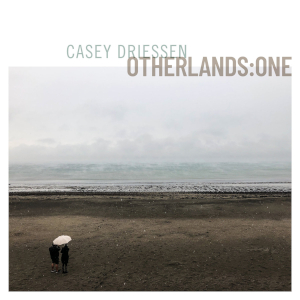
Casey Driessen - Otherlands:ONE

First published in Songlines Magazine issue 168, June 2021.

Casey Driessen
Otherlands:ONE
Red Shoe Records (84 mins)

American fiddler Casey Driessen spent nine months travelling the world, meeting, listening and playing with local musicians until COVID-19 eventually ground everything to a halt. Otherlands:ONE is the result: an album of all-acoustic collaborations with folk musicians from Galicia, Ireland, Scotland, India, Japan and Finland, each recorded on the guests’ home turf.

Although Driessen’s background is in bluegrass, his collaborations here aren’t exactly ‘fusions’ with all the heavy-handedness that term may suggest. It’s a much more sympathetic meeting. Driessen bends his style to that of his hosts, his bluegrass more of a polite suggestion than an imposition.

A lot is explored in the album’s 13 tracks, from the pan-Celtic folk styles of Western Europe to the songs of Baul musicians in Bengal, and even bluegrass itself with mandolinist Taro Inoue in Japan. The sound that binds it all, however, is of musicians really enjoying themselves. You can hear it in the music and the atmosphere, and in the little glimpses of chat we get at the end of each performance – as well as in the perfectly-captured hubbub of a pub session in County Clare.

This is a really lovely album with good vibes aplenty. Hopefully Driessen can get back to globetrotting and collaborating again soon!

Friday, 9 April 2021

Essential 10: Live Albums

First published in Songlines Magazine issue 167, May 2021.

Nikhil Banerjee
Afternoon Ragas (Raga Records, 1992)
This performance by sitar great Nikhil Banerjee, recorded in a museum in Rotterdam in 1970, is simply supreme. The 10-minute alap on Raga Bhimpalasri that opens the album is surely one of the most transcendent ever put to record. Accompanied by Kanai Dutta on tabla, Banerjee guides us through the serenity and the fireworks of ragas Bhimpilasri and Multani. Forget Rotterdam, this album can take you somewhere else entirely.

Bisserov Sisters
Music from the Pirin Mountains (PAN Records, 1990)
Recorded in concert at the Paradiso in Amsterdam, the Bisserov Sisters (together with their instrumentalists the Trio Karadzovska) give a whirlwind tour of the many folk styles of the south-western Bulgarian mountain village of Pirin, from the iconic vocal polyphony to all-instrumental dances and lots more in between. Beautifully performed, the resulting 26-track album is interesting and intriguing in equal measure.

Fatoumata Diawara & Roberto Fonseca
At Home: Live in Marciac (Jazz Village, 2015)
Of many attempted African-Latin collaborations, this is among the best. Between Diawara’s breathtaking voice and Fonseca’s nimble Cuban jazz piano, the connection feels completely natural, unforced and personal. Powerful and driving or subtle and sweet, the two masters match each other every step of the way. This recording from the Jazz in Marciac festival remains their only full-length release together.

Oum Kalthoum
Al Atlal (Sono Cairo, 1966)
Oum Kalthoum is one of the world’s bona fide megastars, revered not only in her native Egypt but across the Arab world and far beyond. She was known for her extended live performances, and Al Atlal (The Ruin) consists of a single 48-minute song of melancholy, despair and utter beauty. It is widely considered to be Kalthoum’s greatest achievement, maybe even the greatest Arabic song ever sung.

Ozomatli
Live at the Fillmore (Concord Records, 2005)
How much dancing is your body ready for? Mariachi, cumbia, salsa, norteño, hip-hop, funk, rock, samba and influences from every continent: it’s all here in one band. Ozomatli are one of the greatest of all party bands, known for their on-stage and in-crowd antics as well as their social consciousness. This sweat-soaked CD+DVD set gives a clue as to the dangerously high levels of ecstatic energy they bring.


Radio Tarifa
Fiebre (World Circuit, 2003)
The Iberian Peninsula and North Africa are only 13km apart, but Radio Tarifa’s music makes them feel even closer. Here, Spanish flamenco and Moroccan chaabi become one and the same. This retrospective-in-concert of the group’s first ten years results in a smoldering album that occasionally bursts out into full flamenco flame without ever leaving the souk.

Rachid Taha, Khaled, Faudel
1, 2, 3 Soleils (Barclay France, 1998)
This one-off supergroup show at Paris’ Bercy Stadium by the three biggest voices in rai – the king Khaled, the prince Faudel and the rebel Taha – was always going to be an extravaganza. With a 40-piece orchestra on top of the usual rai ensemble, this 2CD album is cheesy Algerian pop at its best. No wonder they sold out a stadium.

Lobi Traoré
Bamako Nights: Live at Bar Bozo 1995 (Glitterbeat, 2013)
There’s worse places to be than in a small, crowded bar in perhaps the world’s most musical city. Bamako Nights presents one of guitarist Lobi Traoré’s regular all-nighters in the Malian capital’s grungiest bar. Traoré’s electric Bamana blues is sometimes brooding, sometimes roaring, always grooving. And when he goes full-on Hendrix, it seems like Bar Bozo would be the best place on Earth.

Various Artists
Le Festival au Désert (Independent Records, 2003)
The Festival in the Desert is one of those legendary events spoken about in hushed, reverential tones: a stage set up in the village of Essakane in the Sahara desert where local Tuareg musicians rubbed shoulders with Malian giants and international stars, surrounded by camel races and fire dancers. It would sound like fantasy if we didn’t have recorded evidence that it happened.

Various Artists
Music and Rhythm: WOMAD 1982-2007 (WOMAD, 2007)
WOMAD is the standard bearer for world music festivals across the globe, and this 25th anniversary souvenir set tells its story with three CDs and a book. It features rare and wonderful live recordings from throughout the festival’s history, including the very first piece performed at the inaugural event in 1982 – ‘Raindrops Pattering on Banana Leaves’ by the Tianjin Music and Dance Ensemble.

Tuesday, 16 March 2021

Kiazi Malonga - Tembo Kia Ngoma

First published on The Quietus.

Kiazi Malonga
Tembo Kia Ngoma
Red Tone Records (45 mins)

In the Bantu languages spoken throughout Central, Eastern and Southern Africa, ngoma represents an important part of musical and social culture. The literal translation is usually given as ‘drum’, but it more accurately refers to a unified concept of drum-dance-song-music. You can beat the ngoma, or sing it, or dance it, and in doing so, create ngoma. Ngoma is at once playing, moving and listening – it is by nature reciprocal and collaborative. Tembo Kia Ngoma explores the drum and its wider meanings in sound in an impressive and considered debut from Congolese-American artist Kiazi Malonga.

Read the full review over at The Quietus.

Friday, 9 October 2020

Captain Planet - No Visa

First published in Songlines Magazine issue 162, November 2020.

Captain Planet
No Visa
Bastard Jazz Recordings (48 mins)

Globetrotting producer Captain Planet calls his personal style ‘gumbo funk’ – all manner of flavours brought together and bubbled into one rich and ever-changing vat of deliciousness. For his fifth full-length album, his base layer of funky hip-hop, synthwave, house and reggae is bolstered by a panoply of continent-spanning African sounds, with healthy amounts from South America, the Caribbean and the Middle East too.

No Visa is built up through a typically wide range of samples (balafon, kalimba, washint, highlife guitar, even Libyan pop) and a big bunch of guests (this time including stars such as Alsarah, Shungudzo and Chico Mann among many others) together with synths and beats galore – there’s a lot going on. With all these different elements at play, Captain Planet’s sense of style never sits still throughout the album. Every track sounds unique, but it’s all held together by an undeniable cool, a chill retro vibe that harks to the 80s and 90s without drenching everything in a syrupy nostalgia.

The overall feel of No Visa is utopian: the music of a borderless land where sans-papiers is the natural state of things and everyone is invited to join the party. Captain Planet’s recipe is tried, tested and true – and there’s enough to go around.

Friday, 4 September 2020

Jacob Young / David Rothenberg / Sidiki Camara - They Say Humans Exist

First published in Songlines Magazine issue 161, October 2020.

Jacob Young / David Rothenberg / Sidiki Camara
They Say Humans Exist
Oslo Session Recordings (33 mins)

Three musicians from three continents get together in a studio in the woods outside Oslo for two days of collective improvisation. The sounds that coalesce could be from a different place altogether, an unknown realm.

Jacob Young is a Norwegian guitarist and electronicist best known for his forward-thinking releases on ECM Records; American zoomusicologist, philosopher and author David Rothenberg gets back to his roots as an out-jazz clarinettist; Sidiki Camara, from Mali, is an in-demand percussionist who also contributes balafon, kamalengoni and voice.

The music that the trio make together is, for the most part, calm and meditative; it is the feeling of an ethereal forest as spoken through wind, string and wood. Within that forest lie bluesy licks, unexpected jazz chromatics and West African melodies, as well as many other influences that float on the breeze.

Through improvisation, Young, Rothenberg and Camara maintain their own musical personalities while attaining a universality that joins them together. They Say Humans Exist is an album of atmospheres, but it contains enough spikey edges to never quite dip into New-Age-iness. A more solid sense of direction wouldn’t go amiss, though.

Friday, 24 July 2020

Touki - Right of Passage

First published in Songlines Magazine issue 160, August/September 2020.

Touki (Amadou Diagne & Cory Seznec)
Right of Passage
Captain Pouch Records (47 mins)

Franco-American guitar and banjo player Cory Seznec and Senegalese guitarist-turned-kora player Amadou Diagne first met while busking on the streets of Bath – a musical rapport came easily and, over the next decade or so, blossomed into a fully-fledged collaboration and now a debut album recorded at the renowned Real World Studios.

This set is full of easy Americana and Wolof vibes, taking blues from both sides of the Atlantic as starting points for extended tours around the music of both regions. Layers of strings build up rippling, twinkling patterns, out of which blossom forth Diagne’s light, high-pitched voice, or maybe Seznec’s throaty fretless gourd banjo or palmwine guitar. Guests including Ethiopian masenko player Endris Hassen and accordionist Michael Ward-Bergeman broaden the scope further and add different textures without sounding out-of-place.

It is clear that Diagne and Seznec click musically, but it also feels as though their repertoire lacks risks and the fireworks that can happen as a result. Right of Passage goes along smoothly with several cool moments, but it stops short of having a ‘wow’ factor that would put it above the rest.

Friday, 10 April 2020

My World: David Rothenberg

First published in Songlines Magazine issue 157, May 2020.


Nightingales, cicadas, whales, lyrebirds: the list of David Rothenberg’s collaboratiors makes it obvious that he thinks and feels music in a different way to most. Across his books, albums and films, Rothenberg has examined the sounds of the natural world and their inherent musicality. Although he tackles these projects with an academic eye (he is the Distinguished Professor of Music and Philosophy at the New Jersey Institute of Technology), he does not do so as a stoic, distanced researcher, but as an active and passionate participant. With his clarinet, he creates fascinating inter-species jams that span the realms of jazz, ambient music and electronica, all the while tapping into worlds that are ultimately beyond our understanding.

To understand the sonic beauty of nature, Rothenberg has his own deep relationship to music of human origin. One of his key inspirations as a musician and musical thinker is the output of the iconic jazz and art music label ECM. “What interests me in ECM artists is that everyone is such an individual. Everyone has a unique quality that’s not super-fast or constant, in-your-face showing-off.” For Rothenberg, the profundity of the label’s output is distilled in his first playlist track, Sinikka Langeland’s 2011 piece ‘What is Tomorrow?’. “This to me is like the ultimate ECM track, it has everything and it’s unique,” he says. “Some people say that ECM sounds are kind of blurry, generic, too much reverb – this does not have any of that. It really stands out because it mixes jazz improvisers with folk music. When I lived in Norway after college, I heard her sing and play the kantele, and what was remarkable about that performance was that she cried in the middle of it. She was performing this Finnish folk music that brings you to tears as you play and sing. She has a very special tone of voice, it’s unusual, compelling. In her band, she has these great soloists who don’t solo, it’s this beautiful understated style. You couldn’t find anyone else to play just like that.” As is the ECM speciality, it’s an intense but calm sound full of emotion, and one that is easy to draw comparisons to the transcendental.

Taking that vibe to the next level, another next playlist pick, ‘Prayer and Despair’, was composed by spiritual leader and esotericist GI Gurdjieff. “I learnt about [him] in high school and college, mostly. We were into all this spiritual stuff, we saw Peter Brook’s film Meetings with Remarkable Men, and read Gurdjieff’s autobiography that it was based on. What’s remarkable about him is, who knows what he did? Was he part-explorer, part-charlatan, part-mystic teacher?” As a composer, Gurdjieff’s work was no more ordinary than his teachings. “He wandered around and grabbed bits of the world’s music and put them together. He’d have these ideas and then Thomas de Hartmann wrote them down as Gurdjieff improvised them at the piano. With de Hartmann playing, it’s this beautiful historic sound. This music cuts through towards something really deep. You do not want to play it in the car, you’ll start to space out! There’s something special going on in this music. You can’t quite say what it is, and that’s why I keep coming back to it.”


Just as he undertakes his research with humour and joy, Rothenberg’s playlist isn’t solely populated by the cerebral or ethereal. “I’m not such a serious person, you know!” Which takes us to the 2007 Eurovision Song Contest entry for Israel, Teapacks’ ‘Push the Button’. An unusual pick for an American, perhaps? “This was from the first few years after I met my wife, who’s from Estonia. She’s really excited about the Eurovision Song Contest, which of course I’d never heard of. We were in Estonia when it was on, and this one song really stood out. It didn’t win, but it was by far the best. It doesn’t sound like Eurovision – that’s why it’s good! These guys are rapping in different languages, Arabic, Hebrew, French, and it’s all about nuclear war coming. If you find the video, this guy’s playing a double-necked oud, which I think is pretty funny. It’s just making fun of everything, it’s a very fun song.” Holding space for both the serious and the silly seems like an important quality for Rothenberg, but they don’t necessarily have to be polar opposites. “I guess there is something that holds this in common even with Gurdjieff, in this way of finding what’s most universal about the world’s music and putting it together. Not turning it all into this global pop mush where everyone really wants to sound the same, but something authentic, something that can grab you.”

And when music grabs you, it grabs you – and it can come from some of the most unexpected places, as it did with Chilean rapper Ana Tijoux’s ‘1977’. “I first heard this song on Breaking Bad, probably the only long-running TV show where it’s actually worth watching all the episodes. It’s brilliantly done. It was this scene where they use sped-up time-lapse photography and this weird song comes on. It’s not music I know too much about, but I like the whole mixture of things, cutting and pasting different fragments of all these different styles.” Rothenberg even uses Tijoux’s Spanish-language rap as a teaching aid. “I often teach music classes for undergraduates who don’t specialise in music, and a lot of them want to write papers on how hip-hop has conquered the world and how it brings everyone together, but many of them have no idea that anyone raps in any language but English. It doesn’t even occur to them that it could happen. I’m kind of astonished as to why that is; this dominance of English is not a good thing.”

One thing that English is near-perfect for, though, is telling stories about England. Simon Emmerson’s Imagined Village project updated the meaning of English folk music to represent the country as it exists today, and Billy Bragg’s reworking of the traditional ‘Hard Times of Old England’ sums up that goal for Rothenberg. “That’s just a really great song. It takes a classic old song but turned into what’s going on in modern-day England. What I like about it that is the spirit of it and how it’s put together, and how it gets to an optimistic possibility in the future, like there’s going to be a different England someday. I’m sure that’s a message you definitely need to hear now!”

Although this optimism reflects Rothenberg’s own work and music, for an artist primarily known for his connection with nature, I expected his playlist to feature more tracks of an animalian bent. But, of course, they all are – the unavoidable fact is that we are but animals ourselves. By helping us to remember and embrace this, Rothenberg says that music can help us make a difference: “Every musician should listen to the sounds of nature and all things around us. There’s so much awe and beauty, and the more we value this stuff the more we’ll work to save this natural world that is under siege. I have no illusions that music is going to save the world, but it can do its own little part. Sound is an incredible part of the world around us, and we’re just one of many creatures. That’s why I make music with nightingales.”


Photo: Still from the film Nightingales in Berlin (2019, dir. Ville Tanttu).

Friday, 6 March 2020

Obituary: Bruno Nettl (1930-2020)

First published in Songlines Magazine issue 156, April 2020.

Teacher, mentor, writer and pre-eminent ethnomusicologist

From fleeing the holocaust from Czechoslovakia to the US as a child, to being a founding member of the Society of Ethnomusicology, to being one of that field’s most well-respected figures, Bruno Nettl’s life and work is nothing short of remarkable.

In terms of musical study, Nettl wrote on subjects as diverse as the indigenous traditions of North America and the classical music of Iran, but he is perhaps best known for his studies of the field of ethnomusicology itself. No budding ethnomusicologist can avoid his book The Study of Ethnomusicology, a work he first published in 1983 and updated continuously throughout his life, which lays out the essential thought processes and discussions that scholars should undertake before, during and after their research.

Writing at length about the intricacies and philosophies behind study itself is one of those things that can quickly get very dense and very dry, but Nettl’s particular talent was presenting his thoughts in an in-depth and authoritative way while remaining easily accessible and even down-right entertaining. I don’t think I’ve read another ethnomusicologist who is as comfortable making puns and dad-level jokes as Nettl.

Across any field, and certainly within ethnomusicology, it would be hard to come across a person whose work has consistently defined and redefined the meanings of the discipline throughout such a long career as Bruno Nettl. He will be missed, but his work and words will echo on. A memorial concert will be held for Nettl on May 10 at the University of Illinois in Urbana.


Photo: Bruno Nettl, by L. Brian Stauffer.

Friday, 31 January 2020

Maleem Mahmoud Ghania with Pharaoh Sanders - The Trance of Seven Colors

First published in Songlines Magazine issue 155, March 2020.

Maleem Mahmoud Ghania with Pharaoh Sanders The Trance of Seven Colors Zehra (71 mins)

The mystical Sufi music of the Moroccan Gnawa people has long been a source of fascination for jazz musicians attracted by the intense sounds of the guimbri bass lute and qaraqab metal castanets and the bluesy cries of the singers. Collaborations were never going to be far away.

This reissue of this 1994 album sees avant-garde jazz saxophonist Pharaoh Sanders jamming with legendary Gnawa master Mahmoud Ghania, overseen by producer Bill Laswell. For a meeting of three indisputable leaders in their fields, I came to this album expecting to be blown away. Instead I feel like I’ve been left hanging. Each element is wonderful in its own right: the sound of Ghania and his ensemble is powerful and intoxicating, and Sanders explores the boundaries of saxophone technique. Together, though, it feels as if there is little connection. The styles sit on top of each other without really blending. They don’t clash, but they don’t particularly complement either.

The most effective collaboration on the album is actually on the track ‘Hamdouchi’, where Sanders plays with Aissawa musicians led by Abdelkabir Addabachi. Here, Sanders’ wailing sax integrates with five-piece shawm-and-drum ensemble in the way that it doesn’t with the Gnawa musicians, giving a possible glimpse into what could have been.