First published in Songlines Magazine issue 170, August/September 2021.
Hamdi Benani, Mehdi Haddab & Speed Caravan
Nuba Nova
Buda Musique (51 mins)
Medhi Haddab's rai-punk outfit Speed Caravan have somewhat escaped my attention since their brilliant 2008 debut Kalashnik Love, but this album of classical Algerian malouf repertoire with master Hamdi Benani certainly made me prick up my ears. Although renowned as a classical singer and violinist, Benani was always a fearless innovator: the evidence is in the ease at which he twists his two instruments around whatever Speed Caravan throw his way.
The album starts like fairly standard rai fusion, but by the end of the first track it’s already evolved into Maghrebi psytrance led by Haddab’s Frampton-esque oud-vocoder. By then all bets are off. Sometimes there’s a distinctive Tuareg vibe, or a Latin lilt, or a full-on surf-rock growl, but it’s always with an unmistakable Algerian aesthetic, whether in the gasba flutes harking to rai’s origins or even the synths hitting all the tastiest quarter-tones in the maqam. All with that extra bit of punk attitude, of course.
Nuba Nova ended up being Benani’s final project; he died of COVID-19 in September 2020, aged 77. He was respected for pushing the boundaries, and this album does real justice to that legacy – as well as being a proper banger on its own merit.
This blog is a compendium of my music writing throughout the years. I try to post updates about a month after first publication, but I'm often very behind - please bear with me!
Friday, 23 July 2021
Helsinki-Cotonou Ensemble - Helsinki-Cotonou Ensemble
First published in Songlines Magazine issue 170, August/September 2021.
Helsinki-Cotonou Ensemble
Flowfish Records (39 min)
It took the Helsinki-Cotonou Ensemble until their fifth album and tenth year to go eponymous. It takes time to know thyself, after all, and the Ensemble pretty much have that worked out. In that way, this new album (referred to by those in the know as HCE5) is largely more of the same from them: West African-angled soul-jazz, albeit this time with occasional hip-hop courtesy of guest rapper Synik from Zimbabwe.
Made remotely in Finland and Benin, with band members working out how to use recording software on-the-fly, HCE5 nevertheless sounds as cohesive and polished as if the group were all together in the studio. The resulting Afrosoul is smooth and uplifting – real easy morning Radio 2 vibes – that does slip into cheesiness fairly often. It’s best when they give the sound a bit of an edge, such as on ‘Djogbé Ana Zon’, which nods to modern Afropop alongside xylophones and some shrieking jazz solos; it’s a slightly more challenging listen, and all the more rewarding for it.
Appropriately for a self-titled album, the Helsinki-Cotonou Ensemble have solidified the sound that they have been working on for the past decade. They stick to what they know, and they do it well.
Helsinki-Cotonou Ensemble
Flowfish Records (39 min)
It took the Helsinki-Cotonou Ensemble until their fifth album and tenth year to go eponymous. It takes time to know thyself, after all, and the Ensemble pretty much have that worked out. In that way, this new album (referred to by those in the know as HCE5) is largely more of the same from them: West African-angled soul-jazz, albeit this time with occasional hip-hop courtesy of guest rapper Synik from Zimbabwe.
Made remotely in Finland and Benin, with band members working out how to use recording software on-the-fly, HCE5 nevertheless sounds as cohesive and polished as if the group were all together in the studio. The resulting Afrosoul is smooth and uplifting – real easy morning Radio 2 vibes – that does slip into cheesiness fairly often. It’s best when they give the sound a bit of an edge, such as on ‘Djogbé Ana Zon’, which nods to modern Afropop alongside xylophones and some shrieking jazz solos; it’s a slightly more challenging listen, and all the more rewarding for it.
Appropriately for a self-titled album, the Helsinki-Cotonou Ensemble have solidified the sound that they have been working on for the past decade. They stick to what they know, and they do it well.
Friday, 18 June 2021
Spotlight: WOMAD Charlton Park 2021
First published in Songlines Magazine issue 169, July 2021.
Festivals have always been oases of the weird and the extraordinary among a desert of the mundane. But after a year-and-a-half of nothing but weirdness, the pioneering World of Music, Arts and Dance makes its triumphant return to Wiltshire in July, aiming to bring back a little bit of that normality – while remaining as extraordinary as ever.
It’s an understatement to say that festivals have been hit hard over the last 18 months, and WOMAD have had it even worse than most: they’ve seen eight of their festivals across the world cancelled. “The world needs festivals and people need festivals,” says WOMAD’s director Chris Smith. “To have the possibility of actually putting one on is just incredibly exciting because I think we’ve never been more necessary.” Many festivals have resigned to taking 2021 as another fallow year but WOMAD have said from the very start that they will be going ahead. With a whole pandemic’s worth of best laid plans having gone awry, why so certain? “We always believed it would be possible, we’ve been relentlessly positive about that,” Smith says. “I think positivity is more and more an asset that we’re all going to need going forward. And it’s exhausting, I have to say! But I think it’s working, because we’re nearly there.”
While WOMAD is striving to keep things as close to business-as-usual as possible, there have been some unavoidable changes this year. The biggest and most visible is in its line-up. With travel restrictions uncertain and overseas artists possibly facing lengthy quarantines when visiting, the usual globetrotting will be a bit different: “the special thing is that most – or all – of the artists will be UK-based,” explains Smith. “It’s a real celebration of the diversity of the arts and culture in this country that we’ve produced a top line-up of UK-based artists that meets the creative criteria of WOMAD.” It’s certainly impressive – it’s a typically world-spanning feast with huge names such as Anoushka Shankar and Nitin Sawhney alongside plenty of festival favourites and many exciting new discoveries to be made. And while he stays tight-lipped about specifics, Smith hints that there are artists ready to fly in should their respective countries get the green light to travel in time.
Regarding the on-the-ground experience, WOMAD are hoping that everything will look pretty familiar. There will be more room to manoeuvre, more hand-washing points and the like, but a two-metre social distance won’t be mandatory (or particularly feasible in a field of tents). It’s understandable that some will be more nervous than others about rejoining the crowds, so there will also be a new addition to the arena called The Space, a more open area that will host silent discos and other such distanced activities, leaving room to breathe “for those that haven’t quite adjusted yet to full mosh-pit activity.”
So now it’s summer 2021. You’ve made the banana bread, you’ve done the Zoom pub quizzes and you’ve watched Tiger King way too many times. Now it’s time for something different. Enjoy the normality of a typically world-class, globally-musical, relentlessly positive and real, actual, in-the-flesh WOMAD festival – see you there!
Update: WOMAD 2021 ended up getting cancelled about a week after the publication of this article. Let’s try again in 2022!
Photo: Chris Smith at WOMAD, by Elliot Caunce.
Festivals have always been oases of the weird and the extraordinary among a desert of the mundane. But after a year-and-a-half of nothing but weirdness, the pioneering World of Music, Arts and Dance makes its triumphant return to Wiltshire in July, aiming to bring back a little bit of that normality – while remaining as extraordinary as ever.
It’s an understatement to say that festivals have been hit hard over the last 18 months, and WOMAD have had it even worse than most: they’ve seen eight of their festivals across the world cancelled. “The world needs festivals and people need festivals,” says WOMAD’s director Chris Smith. “To have the possibility of actually putting one on is just incredibly exciting because I think we’ve never been more necessary.” Many festivals have resigned to taking 2021 as another fallow year but WOMAD have said from the very start that they will be going ahead. With a whole pandemic’s worth of best laid plans having gone awry, why so certain? “We always believed it would be possible, we’ve been relentlessly positive about that,” Smith says. “I think positivity is more and more an asset that we’re all going to need going forward. And it’s exhausting, I have to say! But I think it’s working, because we’re nearly there.”
While WOMAD is striving to keep things as close to business-as-usual as possible, there have been some unavoidable changes this year. The biggest and most visible is in its line-up. With travel restrictions uncertain and overseas artists possibly facing lengthy quarantines when visiting, the usual globetrotting will be a bit different: “the special thing is that most – or all – of the artists will be UK-based,” explains Smith. “It’s a real celebration of the diversity of the arts and culture in this country that we’ve produced a top line-up of UK-based artists that meets the creative criteria of WOMAD.” It’s certainly impressive – it’s a typically world-spanning feast with huge names such as Anoushka Shankar and Nitin Sawhney alongside plenty of festival favourites and many exciting new discoveries to be made. And while he stays tight-lipped about specifics, Smith hints that there are artists ready to fly in should their respective countries get the green light to travel in time.
Regarding the on-the-ground experience, WOMAD are hoping that everything will look pretty familiar. There will be more room to manoeuvre, more hand-washing points and the like, but a two-metre social distance won’t be mandatory (or particularly feasible in a field of tents). It’s understandable that some will be more nervous than others about rejoining the crowds, so there will also be a new addition to the arena called The Space, a more open area that will host silent discos and other such distanced activities, leaving room to breathe “for those that haven’t quite adjusted yet to full mosh-pit activity.”
So now it’s summer 2021. You’ve made the banana bread, you’ve done the Zoom pub quizzes and you’ve watched Tiger King way too many times. Now it’s time for something different. Enjoy the normality of a typically world-class, globally-musical, relentlessly positive and real, actual, in-the-flesh WOMAD festival – see you there!
Update: WOMAD 2021 ended up getting cancelled about a week after the publication of this article. Let’s try again in 2022!
Photo: Chris Smith at WOMAD, by Elliot Caunce.
Essential 10: WOMAD 2021
First published in Songlines Magazine issue 169, July 2021.
Horace Andy
Dance Hall Style (Wackie’s, 1982)
Every festival needs a bona fide veteran on its line-up, and prolific Jamaican singer Horace Andy definitely fits that bill. He’s probably best known now for his guest spots with Massive Attack, but it’s in the dub-heavy roots reggae and proto-dancehall of Dance Hall Style – Andy’s eighth album – that his distinctive high-pitched voice shines brightest.
The Dhol Foundation
Drum-Believable (Shakti Records, 2005)
Over the years, some artists have become WOMAD mainstays, and Johnny Kalsi and his group The Dhol Foundation can certainly count themselves among that class. Blasting their giant Punjabi dhol drums through bhangra, rock and electronica, they’re a guaranteed party starter – never more so than with their certified banger ‘After the Rain’ with Irish fiddler Máiréad Nesbitt from their second album Drum-Believable.
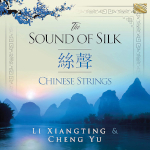
Li Xiangting & Cheng Yu
The Sound of Silk (ARC Music, 2019)
Pipa (four-stringed lute) and guqin (seven-stringed fretless zither) player Cheng Yu is one of the UK’s foremost Chinese musicians – her album of duets with her mentor Li Xiangting got a five-star review in Songlines. Her quartet Silk Breeze recorded a session of beautiful sizhu music for the WOMAD@Home series last summer, playing among the idyllic surrounds of Real World Studios; they’ll surely bring the same serene atmosphere to Charlton Park in July.
Lokkhi Terra meets Dele Sosimi
Cubafrobeat (Funkiwala Records, 2018)
Two for the price of one here: Lokkhi Terra, the London-based South Asian-flavoured Cuban big band, and Dele Sosimi, Afrobeat keys player and member of the legendary Egypt 80, are both on the line-up for WOMAD this year. Their collaborative album linked Yoruba cultures from both sides of the Atlantic to huge success. Fingers crossed for an on-stage reunion?
Mariza
Concerto em Lisboa (EMI Portugal, 2006)
Portuguese fado, with all its melodramatic flair and delicate, emotional moments, is always most powerful when experienced live, and the modern era’s biggest star is no exception. This live album shows Mariza at her best as a performer, accompanied by the Sinfonietta de Lisboa in front of 25,000 people in fado’s hometown. Granted, she’s not bringing the Sinfonietta to WOMAD, but her voice is an orchestra all on its own.
Onipa
We No Be Machine (IK7 Music, 2020)
Headed by Ghanaian-British singer and rapper K.O.G. and Nubiyan Twist guitarist and producer Tom Excell, Onipa use their hip-hop and jazz pedigree to combine vintage highlife grooves, dirty synths and layers of percussion. This is ‘savannah bass’, Onipa’s own exciting Afrofuturist style, and you couldn’t really wish for a more appropriate festival soundtrack – sound of the summer!
Gwenifer Raymond
Strange Lights Over Garth Mountain (Tomkins Square, 2020)
WOMAD has always had a knack for bringing new or lesser-known musicians to the fore, and Gwenifer Raymond may just be your discovery of 2021. Her second album showcases her mastery of the acoustic guitar with a mix of American blues and country roots, folk baroque and subtle influences from India and Wales. Engaging, entrancing and entirely solo – one to watch!
SEED Ensemble
Driftglass (jazz re:freshed, 2019)
Jazz has become a consistent element of the WOMAD line-up in recent editions, and it’s especially prevalent this year. Artists such as Nubiyan Twist, Cinematic Orchestra, The Comet is Coming, Joe Armon-Jones, Sarathy Korwar and Kefaya provide a heterogeneous overview of London’s booming jazz scene and Seed (as they are now known) are sure to be a highlight: their Caribbean and West African-informed 2019 debut earned them a Mercury nomination.
Anoushka Shankar
Reflections (Deutsche Grammophon, 2019)
Shankar’s career has taken so many different directions that you never know quite what she’s going to bring to the stage – the sitarist’s music has encompassed deeply traditional Hindustani classical music as well as Western classical styles, flamenco, jazz, electronica and, most recently, sophisticated and intimate art-pop. This recent self-curated retrospective gives some idea of what to expect from her headline slot this year.
Joseph Tawadros
Betrayal of a Secret Sunflower (JT Records, 2019)
The Egypt-born, Australia-raised and UK-based oud player and composer has graced the stage at WOMADelaide three times and – after a year’s delay – finally makes his UK WOMAD debut. His personality and dress sense are famously extravagant and exquisite, but his most recent album shows that he has no issue making his music serious, subtle, and sublime.
Horace Andy
Dance Hall Style (Wackie’s, 1982)
Every festival needs a bona fide veteran on its line-up, and prolific Jamaican singer Horace Andy definitely fits that bill. He’s probably best known now for his guest spots with Massive Attack, but it’s in the dub-heavy roots reggae and proto-dancehall of Dance Hall Style – Andy’s eighth album – that his distinctive high-pitched voice shines brightest.
The Dhol Foundation
Drum-Believable (Shakti Records, 2005)
Over the years, some artists have become WOMAD mainstays, and Johnny Kalsi and his group The Dhol Foundation can certainly count themselves among that class. Blasting their giant Punjabi dhol drums through bhangra, rock and electronica, they’re a guaranteed party starter – never more so than with their certified banger ‘After the Rain’ with Irish fiddler Máiréad Nesbitt from their second album Drum-Believable.
Li Xiangting & Cheng Yu
The Sound of Silk (ARC Music, 2019)
Pipa (four-stringed lute) and guqin (seven-stringed fretless zither) player Cheng Yu is one of the UK’s foremost Chinese musicians – her album of duets with her mentor Li Xiangting got a five-star review in Songlines. Her quartet Silk Breeze recorded a session of beautiful sizhu music for the WOMAD@Home series last summer, playing among the idyllic surrounds of Real World Studios; they’ll surely bring the same serene atmosphere to Charlton Park in July.
Lokkhi Terra meets Dele Sosimi
Cubafrobeat (Funkiwala Records, 2018)
Two for the price of one here: Lokkhi Terra, the London-based South Asian-flavoured Cuban big band, and Dele Sosimi, Afrobeat keys player and member of the legendary Egypt 80, are both on the line-up for WOMAD this year. Their collaborative album linked Yoruba cultures from both sides of the Atlantic to huge success. Fingers crossed for an on-stage reunion?
Mariza
Concerto em Lisboa (EMI Portugal, 2006)
Portuguese fado, with all its melodramatic flair and delicate, emotional moments, is always most powerful when experienced live, and the modern era’s biggest star is no exception. This live album shows Mariza at her best as a performer, accompanied by the Sinfonietta de Lisboa in front of 25,000 people in fado’s hometown. Granted, she’s not bringing the Sinfonietta to WOMAD, but her voice is an orchestra all on its own.
Onipa
We No Be Machine (IK7 Music, 2020)
Headed by Ghanaian-British singer and rapper K.O.G. and Nubiyan Twist guitarist and producer Tom Excell, Onipa use their hip-hop and jazz pedigree to combine vintage highlife grooves, dirty synths and layers of percussion. This is ‘savannah bass’, Onipa’s own exciting Afrofuturist style, and you couldn’t really wish for a more appropriate festival soundtrack – sound of the summer!
Gwenifer Raymond
Strange Lights Over Garth Mountain (Tomkins Square, 2020)
WOMAD has always had a knack for bringing new or lesser-known musicians to the fore, and Gwenifer Raymond may just be your discovery of 2021. Her second album showcases her mastery of the acoustic guitar with a mix of American blues and country roots, folk baroque and subtle influences from India and Wales. Engaging, entrancing and entirely solo – one to watch!
SEED Ensemble
Driftglass (jazz re:freshed, 2019)
Jazz has become a consistent element of the WOMAD line-up in recent editions, and it’s especially prevalent this year. Artists such as Nubiyan Twist, Cinematic Orchestra, The Comet is Coming, Joe Armon-Jones, Sarathy Korwar and Kefaya provide a heterogeneous overview of London’s booming jazz scene and Seed (as they are now known) are sure to be a highlight: their Caribbean and West African-informed 2019 debut earned them a Mercury nomination.
Anoushka Shankar
Reflections (Deutsche Grammophon, 2019)
Shankar’s career has taken so many different directions that you never know quite what she’s going to bring to the stage – the sitarist’s music has encompassed deeply traditional Hindustani classical music as well as Western classical styles, flamenco, jazz, electronica and, most recently, sophisticated and intimate art-pop. This recent self-curated retrospective gives some idea of what to expect from her headline slot this year.
Joseph Tawadros
Betrayal of a Secret Sunflower (JT Records, 2019)
The Egypt-born, Australia-raised and UK-based oud player and composer has graced the stage at WOMADelaide three times and – after a year’s delay – finally makes his UK WOMAD debut. His personality and dress sense are famously extravagant and exquisite, but his most recent album shows that he has no issue making his music serious, subtle, and sublime.
Hailu Mergia & The Walias Band - Tezeta
First published in Songlines Magazine issue 169, July 2021.
Hailu Mergia & The Walias Band
Tezeta
Awesome Tapes from Africa (37 mins)
The Walias Band are a legendary group. On the frontline of the uniquely Ethiopian brand of jazz and soul during the Swinging Addis period in the 60s and 70s and as the backing band for pretty much all the star vocalists of the time, Walias were very much the sound of the city. The group’s first ‘solo’ album (without a guest singer) didn’t come until 1975 and has long been considered a lost treasure among collectors. After a rare copy was tracked down in the Netherlands, a neat remaster makes Tezeta the sixth album (and a fourth reissue) in the on-going relationship between Awesome Tapes from Africa and Walias’ bandleader Hailu Mergia.
Tezeta consists of instrumental covers of some of the era’s most popular songs – plus traditionals such as the title-track – all led by Mergia’s shimmering electric organ. The music is vintage, warm and nostalgia-filled, perfectly suiting the tape hiss that even the most diligent remastering couldn’t hope to remove. Walias’ pleasantly calm pop and light funk has perhaps been overshadowed by the meaner, meatier developments of subsequent Ethio-jazz, but this album stands as testament to a band that created the defining sound of Ethiopian music’s most revered period.
Hailu Mergia & The Walias Band
Tezeta
Awesome Tapes from Africa (37 mins)
The Walias Band are a legendary group. On the frontline of the uniquely Ethiopian brand of jazz and soul during the Swinging Addis period in the 60s and 70s and as the backing band for pretty much all the star vocalists of the time, Walias were very much the sound of the city. The group’s first ‘solo’ album (without a guest singer) didn’t come until 1975 and has long been considered a lost treasure among collectors. After a rare copy was tracked down in the Netherlands, a neat remaster makes Tezeta the sixth album (and a fourth reissue) in the on-going relationship between Awesome Tapes from Africa and Walias’ bandleader Hailu Mergia.
Tezeta consists of instrumental covers of some of the era’s most popular songs – plus traditionals such as the title-track – all led by Mergia’s shimmering electric organ. The music is vintage, warm and nostalgia-filled, perfectly suiting the tape hiss that even the most diligent remastering couldn’t hope to remove. Walias’ pleasantly calm pop and light funk has perhaps been overshadowed by the meaner, meatier developments of subsequent Ethio-jazz, but this album stands as testament to a band that created the defining sound of Ethiopian music’s most revered period.
Friday, 14 May 2021
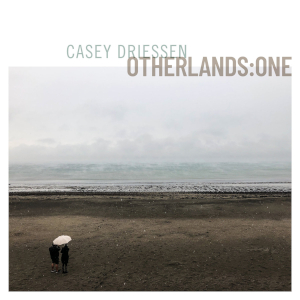
Casey Driessen - Otherlands:ONE
First published in Songlines Magazine issue 168, June 2021.
Casey Driessen
Otherlands:ONE
Red Shoe Records (84 mins)
American fiddler Casey Driessen spent nine months travelling the world, meeting, listening and playing with local musicians until COVID-19 eventually ground everything to a halt. Otherlands:ONE is the result: an album of all-acoustic collaborations with folk musicians from Galicia, Ireland, Scotland, India, Japan and Finland, each recorded on the guests’ home turf.
Although Driessen’s background is in bluegrass, his collaborations here aren’t exactly ‘fusions’ with all the heavy-handedness that term may suggest. It’s a much more sympathetic meeting. Driessen bends his style to that of his hosts, his bluegrass more of a polite suggestion than an imposition.
A lot is explored in the album’s 13 tracks, from the pan-Celtic folk styles of Western Europe to the songs of Baul musicians in Bengal, and even bluegrass itself with mandolinist Taro Inoue in Japan. The sound that binds it all, however, is of musicians really enjoying themselves. You can hear it in the music and the atmosphere, and in the little glimpses of chat we get at the end of each performance – as well as in the perfectly-captured hubbub of a pub session in County Clare.
This is a really lovely album with good vibes aplenty. Hopefully Driessen can get back to globetrotting and collaborating again soon!
Casey Driessen
Otherlands:ONE
Red Shoe Records (84 mins)
American fiddler Casey Driessen spent nine months travelling the world, meeting, listening and playing with local musicians until COVID-19 eventually ground everything to a halt. Otherlands:ONE is the result: an album of all-acoustic collaborations with folk musicians from Galicia, Ireland, Scotland, India, Japan and Finland, each recorded on the guests’ home turf.
Although Driessen’s background is in bluegrass, his collaborations here aren’t exactly ‘fusions’ with all the heavy-handedness that term may suggest. It’s a much more sympathetic meeting. Driessen bends his style to that of his hosts, his bluegrass more of a polite suggestion than an imposition.
A lot is explored in the album’s 13 tracks, from the pan-Celtic folk styles of Western Europe to the songs of Baul musicians in Bengal, and even bluegrass itself with mandolinist Taro Inoue in Japan. The sound that binds it all, however, is of musicians really enjoying themselves. You can hear it in the music and the atmosphere, and in the little glimpses of chat we get at the end of each performance – as well as in the perfectly-captured hubbub of a pub session in County Clare.
This is a really lovely album with good vibes aplenty. Hopefully Driessen can get back to globetrotting and collaborating again soon!
Transglobal Underground and Our European Friends - A Gathering of Strangers 2021
First published in Songlines Magazine issue 168, June 2021.
Transglobal Underground and Our European Friends
A Gathering of Strangers 2021
Mule Satellite (47 mins)
A Gathering of Strangers first saw light in 2010 when it was released by a pan-EU collective headed by dubtronic pioneers Transglobal Underground, under the moniker Urban Native Integrated Traditions of Europe – or UNITE. Now it’s been remastered, remixed and re-released as part of TGU’s ambitious one-album-a-month challenge for 2021.
The project features guests from Bulgaria, Hungary, Poland, the Czech Republic, Ireland and the UK, with stars of folk, hip-hop and electronica all getting involved. This united European front, together with a theme of longing that threads through the whole album, makes this a compelling collection of protest anthems from the resistance, created while Brexit was still the dream of a fringe lunacy.
The strange thing is that a side-by-side comparison with the original isn’t particularly kind on the 2021 edition, soundwise. The 2010 release just feels meatier, its basses more full and its tops more resonant. Add in the fact that the new version has five fewer tracks, it all makes for a rather odd remaster.
Like its source material, A Gathering of Strangers 2021 is still a very good album and a great listen on its own… but it might be best to track down a copy of the original before settling for this update.
Transglobal Underground and Our European Friends
A Gathering of Strangers 2021
Mule Satellite (47 mins)
A Gathering of Strangers first saw light in 2010 when it was released by a pan-EU collective headed by dubtronic pioneers Transglobal Underground, under the moniker Urban Native Integrated Traditions of Europe – or UNITE. Now it’s been remastered, remixed and re-released as part of TGU’s ambitious one-album-a-month challenge for 2021.
The project features guests from Bulgaria, Hungary, Poland, the Czech Republic, Ireland and the UK, with stars of folk, hip-hop and electronica all getting involved. This united European front, together with a theme of longing that threads through the whole album, makes this a compelling collection of protest anthems from the resistance, created while Brexit was still the dream of a fringe lunacy.
The strange thing is that a side-by-side comparison with the original isn’t particularly kind on the 2021 edition, soundwise. The 2010 release just feels meatier, its basses more full and its tops more resonant. Add in the fact that the new version has five fewer tracks, it all makes for a rather odd remaster.
Like its source material, A Gathering of Strangers 2021 is still a very good album and a great listen on its own… but it might be best to track down a copy of the original before settling for this update.
Subscribe to:
Posts (Atom)