First published in Songlines Magazine issue 205, February/March 2025.
Nahawa Doumbia
Vol. 2 (Sakòrò-Mery)
Awesome Tapes from Africa (36 mins)
Awesome Tapes from Africa’s record label started off by reissuing the album Vol. 3 by Malian singer Nahawa Doumbia in 2011, and followed it up in 2019 with Vol. 1. Now, they complete the set by reissuing 1982’s Vol. 2.
This album was originally released just one year after Nahawa’s debut, and very much follows in the same vein. It’s a distillation of the Wassoulou sound, stripped right back to just Nahawa’s voice and the acoustic guitar of her husband, N’gou Bagayoko. This puts the focus directly on the singer, and the sweetness, subtlety and earnestness that permeates each of her lines. The guitar isn’t there to take any limelight, but N’gou does allow himself to decorate the circular accompaniment with delicious flourishes whenever appropriate. It’s a gentler sound than we have come to expect of Wassoulou music – this is music for swaying rather than energetic dancing.
The recordings’ age is obvious from their sound, the remastering process not fully capable of restoring them from an imperfect LP pressing (the masters no longer exist). In the end, though, it is the music and Nahawa’s beautifully controlled voice that matter most. Both shine through and mark Nahawa Doumbia as one of the stars of her style.
This blog is a compendium of my music writing throughout the years. I try to post updates about a month after first publication, but I'm often very behind - please bear with me!
Showing posts with label Mali. Show all posts
Friday, 31 January 2025
Friday, 13 December 2024
Various Artists - Making Tracks 2022 (Live)
First published in Songlines Magazine issue 204, January 2025.
Various Artists
Making Tracks 2022 (Live)
Making Tracks (43 mins)
When eight talented and open-minded young musicians from across the world come together to experience each other’s music and discover pathways between them, there’s always going to be some special results. That’s Making Tracks, and every year or two they empower artists through a creative residency and UK tour. This live album features the pick of Making Tracks’ 2022 concerts.
The pieces chosen for this collection tend towards the calm and deliberate, showing the intensity of listening required to succeed in these connections. In fact, it is the duos that are the best bits here, where two musicians dig deep into each other’s and their own traditions: meetings of Hindustani and Scottish voices over a shruti done; contemporary art explorations between oud and violin; Persian classical singing paired with smallpipes, or kora. Making Tracks is all about exciting and unexpected combinations, and each of these tracks represents another intercultural gem.
Labels:
Album Review,
India,
Iran,
Mali,
Morocco,
Songlines Magazine,
Sweden,
UK
Friday, 19 July 2024
Bassekou Kouyate & Amy Sacko - Djudjon: L’Oiseau de Garana
First published in Songlines Magazine issue 200, August/September 2024.
Bassekou Kouyate & Amy Sacko
Djudjon: L’Oiseau de Garana
One World Records (61 mins)
Bassekou Kouyate & Ngoni Ba have been the world’s ambassadors for Bamana jeli (griot) ngoni music since their first album in 2007. Now on their sixth, they’ve dropped the band name in favour of further highlighting the wonderful jelimuso (and Bassekou’s wife) Amy Sacko. A slightly strange move, as the band are still here and Amy only sings on half the tracks. But never mind. Djudjon is a tribute to Bassekou’s hometown of Garana, Mali, and it shows the group at their most stripped-back: no ostentatious guest musicians, no effects pedals. It grants the listener space to appreciate the interweaving textures of the ensemble, Amy’s powerful and subtle voice, Bassekou’s nimbly virtuosic ngoni – and his occasional, innovative use of a bottleneck blues slide on his lute. Bassekou and Amy aren’t breaking any particularly new ground as they have done in the past, but this is still a lovely, solid set from the first family of Bamana ngoni.
Friday, 15 December 2023
Bounaly - Dimanche à Bamako
First published in Songlines Magazine issue 194, January/February 2024.
Bounaly
Dimanche à Bamako
Sahel Sounds (47 mins)
If that title sounds familiar, it probably is: this album shares its name with Amadou & Mariam’s 2005 masterwork – both albums honour the Malian capital’s famous Sunday displays where weddings, street parties and other celebrations blanket the city with colour, food, extravagant dress and, of course, music.
This is Songhai guitarist Ali ‘Bounaly’ Traoré’s first full-length release, and it was recorded live, right in the middle of a Bamako Sunday. But he isn’t from Bamako; he hails from the north of Mali, from Niafunké, where so many guitar greats have come before him. He is one of the capital’s many internally-displaced northerners, whose numbers have grown dramatically since the outbreak of civil war in 2012. Those people need to party – that’s Bounaly’s job.
His rocked-up, cosmopolitan takamba sends the crowds wild. The group here consists of two vocalists, drum kit and calabash, but it’s that raw and roaring guitar that carries it. Extended, effects-soaked solos, blasted out of a distorted PA and competing with the sounds of cheering fans and playing children – it’s electric in every sense of the word. Hendrix once again casts his long shadow, as does Ali Farka Touré and Bounaly’s uncle Afel Bocoum, ending up with something akin to Songhoy Blues at their most rough and ready.
Friday, 16 December 2022
Tinariwen - Kel Tinariwen
First published in Songlines Magazine issue 184, January/February 2023.
Tinariwen
Kel Tinariwen
Wedge (36 mins)
You know Tinariwen. Hypnotic Tuareg assouf music from bluesy electric guitars, slithering out of amps encrusted with Saharan sand, and accompanied by a gravelly chorus, ululations, djembé and handclaps. Kel Tinariwen isn’t that – at least, not quite. The group were already veterans of their own style by the time of their first international release in 2001, with several tapes floating around Sahelian markets before that. This was their first, recorded in Abidjan in 1991, and now finally dug from the archives and masterfully restored.
Kel Tinariwen is clearly a pop record. Each song is filled with programmed drums, keyboards of the cheesiest variety (including synthesized sitar, choir and xylophone) and very 80s reverb. The bare-bones aesthetic of assouf is replaced with reggae lilts and Latin rhythms. However, aside from an uncharacteristic guitar-less opener (with slightly questionable vocals from producer Keltoum Sennhauser), the classic Tinariwen sound remains unmistakeable, with haunting melodies and some excellent guitar moments.
I can’t argue that these tracks are as musically scintillating as the band’s later recordings, but as a cultural artefact, this album is certainly a fascinating and curious document. And with at least one other Tinariwen ‘pop’ tape bouncing around the internet, perhaps there are more discoveries to be made from this legendary band.
Friday, 22 July 2022
Various Artists - Music from Saharan WhatsApp
First published in Songlines Magazine issue 180, August/September 2022.
Various Artists
Music from Saharan WhatsApp
Sahel Sounds (45 mins)
Sahel Sounds’ ground-breaking 2011 compilation Music from Saharan Cellphones opened the world’s ears to the massive network of democratic digital distribution flowing underneath the popular musical culture of Africa’s Sahel region. A decade later, technology has moved on and so have Sahelian music fans. Over the course of 2020, the label released 11 EPs of music sourced from Whatsapp. Each EP was available for one month only, with all profits going straight to the musicians – Music from Saharan WhatsApp showcases the best of that bunch.
The result is a snapshot of a wide range of tradi-pop styles from across Niger, Mali and Mauritania. All sorts are represented here – traditional lutes are plucked alongside microtonal electric guitars, djembé and calabash beat alongside drum machines. There’s raw Songhai and Tuareg rock, Mauritanian wzn wedding music, Nigerien synth-folk, and even the first Wodaabe guitar band.
All tracks were recorded directly into phones in a variety of locations and scenarios, and the sound is understandably lo-fi. While this adds charm to most tracks, some suffer from it, the digital artefacts and overzealously-applied automatic noise-cancelling getting in the way of the music itself. As with its spiritual predecessor, this compilation gives a great window into the Sahelian music scene as it exists on the ground – but be prepared for some variable sound quality.
Friday, 17 June 2022
Vieux Farka Touré - Les Racines
First published in Songlines Magazine issue 179, July 2022.
Vieux Farka Touré
Les Racines
World Circuit Records (47 mins)
As the son of one of the world’s greatest ever musicians, it’s understandable that Vieux Farka Touré has spent his career making increasingly adventurous albums and collaborations to step out of his father Ali’s shadow. He accomplished that – now he returns to the source. The results are simply outstanding.
The direction of Les Racines (The Roots) is clear from its first few seconds. Twanging Saharan guitar, earthy ngoni, calabash and karinyan (iron scraper) keeping a grooving 6/8 time over one delicious chord – we’re back in deep Songhai territory, and this is Songhai blues at its finest. There are some big-name Malian guests – Amadou Bagayoko on guitar, Cheick Tidiane Seck on organ and Madou Sidiki Diabaté on kora – but there are no frills here. It’s all in service to the roots and it all gravitates around the heady riffs and solos of Vieux’s guitar, spiralling into the past while roaring resolutely in the present.
Vieux has embraced his role as Ali’s musical heir while retaining his own voice – in doing so he’s created a classic. This is an album that may well compel you to scrunch up your face and let forth a guttural blues howl in public – don’t say I didn’t warn you.
Wednesday, 5 May 2021
Khalab & M’berra Ensemble - M’berra
First published on The Quietus.
Khalab & M’berra Ensemble
M’berra
Real World Records (37 mins)
Real World Records’ latest release harks back to the label’s grand tradition of intercultural collaborative fusion as Italian DJ and producer Raffaele Costantino – better known as Khalab – meets and mingles with the musician residents of the M’berra refugee camp in south-eastern Mauritania.
M’berra has existed since the early 1990s, when people fled violence in neighbouring northern Mali. Its population has fluctuated with relative periods of peace and war in the region, but recently there have been as many as 60,000 people living in the desert settlement. Khalab visited M’berra in 2017 to meet its people, record its sounds and, it turns out, to create a 14-strong ensemble of Tuareg and Hassaniyya musicians, playing their own music in their own styles together. Among the musicians are members of groups such as Tartit, Tafalawist and Imarhan Timbuktu – from the population of a refugee camp, a supergroup.
Read the full review over at The Quietus.
Friday, 9 April 2021
Essential 10: Live Albums
First published in Songlines Magazine issue 167, May 2021.
Nikhil Banerjee
Afternoon Ragas (Raga Records, 1992)
This performance by sitar great Nikhil Banerjee, recorded in a museum in Rotterdam in 1970, is simply supreme. The 10-minute alap on Raga Bhimpalasri that opens the album is surely one of the most transcendent ever put to record. Accompanied by Kanai Dutta on tabla, Banerjee guides us through the serenity and the fireworks of ragas Bhimpilasri and Multani. Forget Rotterdam, this album can take you somewhere else entirely.
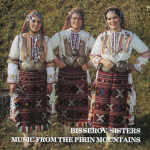
Bisserov Sisters
Music from the Pirin Mountains (PAN Records, 1990)
Recorded in concert at the Paradiso in Amsterdam, the Bisserov Sisters (together with their instrumentalists the Trio Karadzovska) give a whirlwind tour of the many folk styles of the south-western Bulgarian mountain village of Pirin, from the iconic vocal polyphony to all-instrumental dances and lots more in between. Beautifully performed, the resulting 26-track album is interesting and intriguing in equal measure.
Fatoumata Diawara & Roberto Fonseca
At Home: Live in Marciac (Jazz Village, 2015)
Of many attempted African-Latin collaborations, this is among the best. Between Diawara’s breathtaking voice and Fonseca’s nimble Cuban jazz piano, the connection feels completely natural, unforced and personal. Powerful and driving or subtle and sweet, the two masters match each other every step of the way. This recording from the Jazz in Marciac festival remains their only full-length release together.
Oum Kalthoum
Al Atlal (Sono Cairo, 1966)
Oum Kalthoum is one of the world’s bona fide megastars, revered not only in her native Egypt but across the Arab world and far beyond. She was known for her extended live performances, and Al Atlal (The Ruin) consists of a single 48-minute song of melancholy, despair and utter beauty. It is widely considered to be Kalthoum’s greatest achievement, maybe even the greatest Arabic song ever sung.
Ozomatli
Live at the Fillmore (Concord Records, 2005)
How much dancing is your body ready for? Mariachi, cumbia, salsa, norteño, hip-hop, funk, rock, samba and influences from every continent: it’s all here in one band. Ozomatli are one of the greatest of all party bands, known for their on-stage and in-crowd antics as well as their social consciousness. This sweat-soaked CD+DVD set gives a clue as to the dangerously high levels of ecstatic energy they bring.
Radio Tarifa
Fiebre (World Circuit, 2003)
The Iberian Peninsula and North Africa are only 13km apart, but Radio Tarifa’s music makes them feel even closer. Here, Spanish flamenco and Moroccan chaabi become one and the same. This retrospective-in-concert of the group’s first ten years results in a smoldering album that occasionally bursts out into full flamenco flame without ever leaving the souk.
Rachid Taha, Khaled, Faudel
1, 2, 3 Soleils (Barclay France, 1998)
This one-off supergroup show at Paris’ Bercy Stadium by the three biggest voices in rai – the king Khaled, the prince Faudel and the rebel Taha – was always going to be an extravaganza. With a 40-piece orchestra on top of the usual rai ensemble, this 2CD album is cheesy Algerian pop at its best. No wonder they sold out a stadium.
Lobi Traoré
Bamako Nights: Live at Bar Bozo 1995 (Glitterbeat, 2013)
There’s worse places to be than in a small, crowded bar in perhaps the world’s most musical city. Bamako Nights presents one of guitarist Lobi Traoré’s regular all-nighters in the Malian capital’s grungiest bar. Traoré’s electric Bamana blues is sometimes brooding, sometimes roaring, always grooving. And when he goes full-on Hendrix, it seems like Bar Bozo would be the best place on Earth.
Various Artists
Le Festival au Désert (Independent Records, 2003)
The Festival in the Desert is one of those legendary events spoken about in hushed, reverential tones: a stage set up in the village of Essakane in the Sahara desert where local Tuareg musicians rubbed shoulders with Malian giants and international stars, surrounded by camel races and fire dancers. It would sound like fantasy if we didn’t have recorded evidence that it happened.
Various Artists
Music and Rhythm: WOMAD 1982-2007 (WOMAD, 2007)
WOMAD is the standard bearer for world music festivals across the globe, and this 25th anniversary souvenir set tells its story with three CDs and a book. It features rare and wonderful live recordings from throughout the festival’s history, including the very first piece performed at the inaugural event in 1982 – ‘Raindrops Pattering on Banana Leaves’ by the Tianjin Music and Dance Ensemble.
Friday, 4 September 2020
Jacob Young / David Rothenberg / Sidiki Camara - They Say Humans Exist
First published in Songlines Magazine issue 161, October 2020.
Jacob Young / David Rothenberg / Sidiki Camara
They Say Humans Exist
Oslo Session Recordings (33 mins)
Three musicians from three continents get together in a studio in the woods outside Oslo for two days of collective improvisation. The sounds that coalesce could be from a different place altogether, an unknown realm.
Jacob Young is a Norwegian guitarist and electronicist best known for his forward-thinking releases on ECM Records; American zoomusicologist, philosopher and author David Rothenberg gets back to his roots as an out-jazz clarinettist; Sidiki Camara, from Mali, is an in-demand percussionist who also contributes balafon, kamalengoni and voice.
The music that the trio make together is, for the most part, calm and meditative; it is the feeling of an ethereal forest as spoken through wind, string and wood. Within that forest lie bluesy licks, unexpected jazz chromatics and West African melodies, as well as many other influences that float on the breeze.
Through improvisation, Young, Rothenberg and Camara maintain their own musical personalities while attaining a universality that joins them together. They Say Humans Exist is an album of atmospheres, but it contains enough spikey edges to never quite dip into New-Age-iness. A more solid sense of direction wouldn’t go amiss, though.
Friday, 31 January 2020
King’n’Doom - King’n’Doom feat. Cheikh Lô
First published in Songlines Magazine issue 155, March 2020.
King’n’Doom
King’n’Doom feat. Cheikh Lô
Rustical Records (41 mins)
The core of King’n’Doom is Czech production and multi-instrumentalist duo Pavel Šmíd and Martin Piro, but the real heart of this album is its many guest musicians from across West Africa, including, as the title would suggest, Senegalese singer Cheikh Lô (although, confusingly, he only features on three of the 10 tracks…).
The album explodes out of the blocks with ‘Jah’rabi’, a reggae version of the Malian standard ‘Jarabi’ with Lô, Moustafa and Madou Kouyaté on ngonis and Leopold Lô on sabra drums. It’s a good song turned great through the contributions of Vojtěch Svatoš on Hammond organ, ripping up the reggae groove into a dirty blues-funk, and Hawa Kassémady Diabaté of Trio Da Kali, whose soaring voice is nothing short of spine-tingling.
Considering the sheer number of guests on the album – 16 by my count – it has a remarkable cohesion, which is really pleasing to hear, and especially surprising when the musicians were all recorded separately – everywhere from Brno to Bamako to Dakar to a converted caravan at the Colours of Ostrava festival. It doesn’t sound like a European album with a bunch of African influences, either; all the songs sound like they could be a legitimate part of the guest artists’ repertoires, such is the passion and commitment with which they are produced.
Friday, 6 December 2019
Nahawa Doumbia - La Grande Cantatrice Malienne, Vol. 1
First published in Songlines Magazine issue 154, January/February 2020.
Nahawa Doumbia
La Grande Cantatrice Malienne Vol. 1
Awesome Tapes from Africa (33 mins)
Awesome Tapes from Africa began its life as a record label with a reissue of Malian Wassoulou singer Nahawa Doumbia’s third album back in 2011. Now with 30 releases under their belt, the label returns to Nahawa’s catalogue to examine her earliest recordings.
This album was Nahawa’s debut in 1981, released as Mali’s entry into the Africa-wide ‘Discoveries 81’ competition run by Radio France Internationale. Although she later became known for her combination of traditional instruments from southern Mali with heavy bass, electric guitars and synthesizers, this first album is beautifully stripped back.
Featuring only Nahawa backed by her husband N'Gou Bagayoko on acoustic guitar, this album has a real intimate vibe that lets both musicians’ considerable skills shine through. All ears are of course on Nahawa, whose powerful young voice is more than capable of taking the breath away multiple times per song (just listen to the introduction of ‘Djankonia’) but N’Gou’s guitar, in echoing the styles of both the kamelengoni (youth harp) and ngoni (lute), also provides an amazing example of Mali blues.
The recording here isn’t the best – it struggles with Nawaha’s voice on the high notes – but there’s no doubting the music it contains. This album is a fascinating look at a different side of the Wassoulou sound.
Friday, 15 June 2018
Invisible System - Bamako Sessions
First published in Songlines Magazine issue 139, July 2018.
Invisible System
Bamako Sessions
Riverboat Records (52 mins)
Invisible System, aka producer and multi-instrumentalist Dan Harper, is best known for his heavy dub-rock takes on Ethiopian music, drafting in huge names such as Mahmoud Ahmed, Justin Adams and Juldeh Camara.
For this album, Harper used his usual technique: set up a studio, bring in a rotating cast of local musicians to jam, and dub the results. This time though, he’s back in Mali, where he made his first recordings back in 1999. His guests are solid as always – Songhai bluesman Sidi Touré is probably the best-known and provides some cool guitar parts – and kora, balafon and ngoni are all well represented. It’s all instrumental and all improvised.
Malian dubtronic fusions are not exactly new, and Bamako Sessions just isn’t as adventurous as some of Harper’s earlier work, especially 2009’s fantastic Punt. The tracks all sound basically similar and a little repetitive; there’s no psychedelic dub-outs, it’s all rather low-key. There’s nothing bad about it, but there’s nothing exciting either. Invisible System has proved capable of making intense and interesting fusions, so it’s disappointing to hear an average album in a style where other artists have flourished in the past.
Sunday, 29 October 2017
Oumou Sangaré - WOMEX 17 Artist Award
First published in the WOMEX – World Music Expo 2017 delegate guide.
It’s a special artist that can stand out from the crowd in a country with as many musical heroes as Mali. It’s an extra special artist that can be a superstar in both their own culture and around the world. That’s exactly what Oumou Sangaré does. When she performed at WOMEX 1995, we called her ‘one of the few true stars to come out of the world music movement’. More than 20 years later, our movement has had more global stars but Oumou has remained bright among them.
Oumou Sangaré takes a special aura wherever she goes. Even if she’s working silently in a corner, her presence fills the room and everyone seems to orbit around her. She is regal, and when she opens her mouth to sing, everything makes sense. Her voice shimmers and soars above the audience, showering them with emotions and taking on many shapes and colours. One moment delicate and gentle, the next roaring and fizzing with electricity.
Oumou’s grandmother was a famous singer in the Wassoulou region of southern Mali, and that baton passed to Oumou’s mother when she moved to the capital city Bamako. Of course, Oumou was never far behind, kindling her interest: “I was always there with my mother when I was little. I sang at weddings, baptisms, I was learning all the time. That’s when I fell in love with music.” Even though she was small, her voice was big. When she was only six years old, she won a country-wide singing competition in front of 3,000 people in Bamako Stadium, dressing up and performing as her hero Coumba Sidibe.
Her transformation from child singer to next-big-thing did not take long. Her voice made her the main breadwinner of the family by the time she was twelve. After being persuaded to record a tape, it sold more than 250,000 copies, was picked up by World Circuit Records and released worldwide in 1991, catapulting her into international fame – all by the time Oumou was just 22. She has since released four more albums and a critically-acclaimed retrospective. The rest of her time is spent touring the globe, tending to business concerns, organising festivals and undertaking community projects.
Oumou’s music itself is very special. Throughout the years, her sound has encompassed every form of Wassoulou pop, and pushed boundaries too. Her range stretches from down-to-earth styles using only traditional instruments, to fully funked-up renditions with synthesisers, drum kits and full horn and string sections. It’s part of how she has been able to command such huge and diverse fanbases. “We’ve got a culture that is very rich and can adapt to all cultures of the world,” she says, “Mali has a super rhythm, and I have always kept the origins of that rhythm, I always keep the traditional instruments. When I collaborate with people, they will bring their own music. But I never take anything away from my music. Always the kamalengoni (harp), always the karignan (scraper), always the djabara (shaker).”
Oumou’s power comes not just from her amazing music, but the messages she uses it to convey. As a child, watching her mother suffer in a polygamous marriage, surrounded by jealousy and distrust, Oumou vowed to make a change in any way she could. That way was through song: her lyrics are unceasing with their support for women’s rights and fierce criticism of abuses wherever she sees them. Topics she explores include polygamous and forced marriage, the place of women within the home and family, and female sexuality and sensuality. Scandalous stuff in a conservative society, but these points are the core of her work. “I am the most proud that I have been able to denounce injustice, that I have got strong values. I have been able to stand up for Malian women and street children. I am proud to speak on behalf of African women. I take my energy from that.”
At the beginning, she was not universally loved. Older men in particular were annoyed by her; she was upsetting societal rules that had stood for hundreds of years. But the women got it, and agreed, and the young men soon came around too. Now Oumou’s concerts are full of both women and men who love her music and support her message. Although she sings primarily in Bamana, her words reach far beyond Mali. They are heard throughout Africa and the world. Attached to her irresistible voice and supreme musicality, her messages and lyrics have been translated widely. “When I release an album, it is a big occasion for women in Africa. Not just in Mali – the whole of Africa! Of course not just the women are happy, but the men too.” Her ability to touch hearts and minds even surprises herself sometimes: once, arriving at a Mexican airport, she was greeted by a delegation of 400 women. “I said, ‘Why are you here? You don’t know who I am!’, but they all knew my songs and the meanings of my lyrics, and they were very important to them.”
Oumou is tireless in her actions to improve society: she owns the first hotel in Bamako to cater specifically to people from Wassoulou; she runs a farm where she grows her own-brand ‘Oumou Sangaré Rice’; she was even the first to import decent, affordable cars into the country, known as ‘Oum Sang’ cars. All of these have the aim to make life better for Malian people. In 2016, she founded the first international festival in Wassoulou, to promote the region’s music within Mali and abroad.
It is the theme throughout her life: she uses any tools she can – extraordinary music, international connections, business acumen – to improve lives both short- and long-term. To honour her dedication to activism and advocacy for the underprivileged in Mali and beyond, her exciting and innovative developments in Wassoulou music and her longevity as an internationally-beloved star, we present the WOMEX 17 Artist Award to Oumou Sangaré.
Special thanks to Jenny Adlington for translating the interview.
Photo: Oumou Sangaré receives the WOMEX 17 Artist Award, by Yannis Psathas.
Labels:
Article,
Artist Profile,
Mali,
WOMEX
Thursday, 24 August 2017
Oumar Konaté - Live in America
First published in Songlines Magazine issue 131, October 2017.
Oumar Konaté
Live in America
Clermont Music (48 mins)
Over the last few years, Oumar Konaté has been making his own place on the Mali guitar scene, his guitar-bass-drums trio mixing traditional Songhai grooves with raucous Jimi Hendrix-esque solos.
For this album, three performances were recorded from Konaté’s US tour back in 2014. Given the year, it is no surprise that there are no as-yet-unheard tracks; all the pieces included are from his first two albums, 2014’s Addoh and 2016’s Maya Maya. Normally for a live album, that would be no problem, except here, although everything was recorded in-concert, it’s difficult to tell that just by listening. The high-quality recordings and the barely-audible crowd noise remove that electric atmosphere of being at a great concert, and make the album feel more like a set of alternate takes from past work.
Musically, Konaté’s skills as a guitarist are not in doubt, and he pulls off the different styles with ease, but what is lacking is any great originality that would take these particular performances from proficient to exciting. Maybe you had to be there.
It’s probably a better move to check out Konaté’s earlier studio albums and wait for some new material instead.
Friday, 7 April 2017
Various Artists - The Original Sound of Mali
First published in Songlines Magazine issue 127, May 2017.
Various Artists
The Original Sound of Mali
Mr Bongo (79 mins)
The dance band craze of the 1970s saw groups from all over West Africa putting their own spin on Latin music. Mali was no exception, where deep Mande roots blended with twinkling guitars, crunchy synths and punchy horn sections. This compilation explores the best of Malian music from that golden age.
Featuring tracks from the biggest groups of the era, such as the famous rivals of Les Ambassadeurs and the Rail Band, this album also showcases lesser-known bands, including Idrissa Soumaoro et l’Eclipse de l’Ija, whose long-lost recordings never received an official release.
This collection takes in the spectrum of Malian dance band music, from the more traditional, griot-inspired styles as heard on ‘Fadingna Kouma’ by Zani Diabaté’s Super Djata Band, to some straight-outta-Havana salsas like Les Ambassadeurs’ ‘Fatema’. An interesting inclusion is a piece in the wassoulou style (based on traditional hunters’ music) by Alou Fané & Daouda Sangaré. It’s as wonderful as the rest, but lacks the dance band aesthetic and stands out because of that.
Nevertheless, with such a wealth of amazing music from this period in one of the most musically-renowned countries in the world, it’s difficult to go wrong; The Original Sound of Mali certainly doesn’t.
Friday, 27 January 2017
The KutiMangoes - Made in Africa
First published in Songlines Magazine issue 125, March 2017.
The KutiMangoes
Made in Africa
Tramp Records (46 mins)
The KutiMangoes started with a simple musical goal in mind: Fela Kuti meets Charles Mingus. Such giants in their field are inevitably impossible to live up to, but this Danish five-piece certainly give it a good go.
For their second album, the KutiMangoes are joined by a special guest, Burkinabé vocalist Patrick Kabré. With this collaboration comes the addition of many more influences from Mandé styles. As well as recording in the studio in Copenhagen, sessions were also captured on location in Bamako and Ouagadougou – hence the album’s title.
From that process comes a riotous album. It has some really special touches: you can’t go too wrong with an electric trombone solo, as heard on the track ‘This Ship Will Sink’. Another highlight is ‘Hunting’, a piece based on Malian hunters’ music. Featuring guest Diakaridja Mariko, who provides vocals and donso ngoni (hunter’s harp), it builds up a solid groove with some great interplay between sax and Rhodes.
The addition of Mandé music to Afrobeat works well and sets it apart from the crowd, although the jazz element of the group’s style is downplayed a little here, and only particularly evident now and then. But don’t let that stop you dancing!
Damakase - Gunfan Yellem!
First published in Songlines Magazine issue 125, March 2017.
Damakase
Gunfan Yellem!
Captain Pouch Records (33 mins)
‘East meets West’ is a common theme within world music fusions, but it’s rare to hear one like this: Damakase’s sound arrives from the blending of Ethiopian and Malian styles. The heart of the band is the collaboration between masenqo (one-string fiddle) player Endris Hassen and guitar and banjo player Cory Seznec (a Franco-American musician who lived in Ethiopia for several years), and their chemistry shines through.
The track ‘Wassorai Asho Mada’ is where the combination is smoothest and most complete. The groove is Mali blues, the beat is Ethiopian, and Hassen’s masenqo jumps between the two, exploring the realms of its West African cousins such as the soku, without ever leaving Ethiopia behind.
That’s just one example of the group’s intelligent and creative use of instrumentation. They’re everywhere: in the Ethiocentric tracks, gourd lute and ngoni take the place of the traditional krar, and there’s some fun bluegrass interplay between banjo and masenqo elsewhere.
Damakase have hit on a great fusion here, with Ethiopia and Mali both having their own very distinct and popular musicalities. The combination has fruit ripe for picking and the group do a good job with it. One wish for the next album: it would be great to hear some West African musicians involved too.
Monday, 18 April 2016
Oumar Konaté - Maya Maya
First published in Songlines Magazine issue 117, May 2016.
Oumar Konaté
Maya Maya
Clermont Music (CD: 49 mins; Digital: 55 mins)
Hailing from Gao and living in Bamako, Oumar Konaté is part of the new generation – the Young Malian Artists; musicians taking conflict in stride and making music with an international gaze, while never leaving their traditions out-of-reach.
Since his first album, 2014’s Addoh, with its large band and numerous guest musicians, Konaté has concentrated his group down to a trio: himself on guitars and vocals, Cheick Siriman Sissoko on bass and Makan Camara on drums. The album’s liner notes state that the group is “a power trio on the level of Cream or Band of Gypsies”. What a claim. It’s one that’s basically impossible to live up to despite the group’s proficiency, although Hendrix’s legacy can be heard very clearly in Konaté’s solos.
Over the entire album, the Malian-ness (Malinity?) seems to decrease: for the first five or so tracks the sound is very rooted in the Mandé styles, but by the end the tracks are straight-up rock. The two aren’t blended as well as they could be, leading to disappointing ‘what ifs’. A low-level reggae does permeate throughout to good effect, however.
Handy hint: if you buy the album as a digital download, you get two extra tracks.
Monday, 22 June 2015
Electro Bamako - Now
First published in fRoots issue 385, July 2015
Electro Bamako
Now
CSB Productions (50 mins)
Phwoar! Now this is an album.
In the sphere of world electronica, collaborations with South Asian and Middle Eastern artists and musics seem to far outweigh those with West Africans, but when it is done (and done right), it can lead to some stonking tracks. Now is from a trio of a Malian (Paul Sidibe) and two Frenchmen (Damien Traini and Marc Minelli), and their collective name is pretty much apt. Electro Bamako create music that crosses through electronica, funk and underground rock, but always present are the urban Malian grooves that make the project as exciting as it is.
Bringing to the table guitars and production, Minelli has been experimenting with electroMalian music and collaborations for more than a decade now, but with the Electro Bamako trio and this album, he seems to have found the correct combination, and it’s his best yet.
As well as his unmistakably Malian vocals, Sidibe joins the party by adding his kamele ngoni (literally, the ‘young man’s harp’) to the sound. The kamele ngoni’s rattling staccato riffs, together with the karignan (iron scraper), bring the western elements together, uniting them with Wassoulou music – the non-griot style made famous in Europe by Oumou Sangaré.
The real highlight of the album comes at the end: Fentiki Ni Fentan is the last of the album tracks proper (the disc also contains three radio edits), and is really superb – it has a backing worthy of old-school hip-hop and the whole thing rolls around hypnotically, it’s a shame when it comes to a close and signals the end of a brilliant album.
Labels:
Album Review,
France,
fRoots,
Mali
Subscribe to:
Posts (Atom)