Showing posts with label Pakistan. Show all posts

Friday, 30 August 2024

Atlas Maior - Hadal (Deluxe Edition)

First published in Songlines Magazine issue 201, October 2024.

Atlas Maior
Hadal (Deluxe Edition)
Dead Red Queen Records (38 mins)

This deluxe edition collects Texas-based jazz quartet Atlas Maior’s recorded output from the past four years. It’s an album of two halves – Side A is the band’s 2023 all-instrumental mini-album Hadal, and Side B is two tracks made with Pakistani kafi singer Ali Pervez Mehdi plus two remixes. Side A is the strongest, where the group really show what they’re capable of, the pieces built from the inspired interplay between alto saxophone and oud. There is strong influence from classical and folk traditions from across the Arab world, and there is a hearty debt to free jazz pioneer Ornette Coleman. It’s a great example of exploratory small-band jazz, with exemplary solos. After this glorious journey, Side B falls a bit flat. Mehdi’s Sufi vocals are beautiful, but seem to constrain the free-flow of electric creative energy otherwise present. The remixes are similarly enjoyable while adding little.

Monday, 27 September 2021

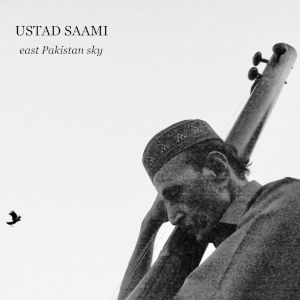
Ustad Saami - East Pakistan Sky

First published on The Quietus.

Ustad Saami
East Pakistan Sky
Glitterbeat Records (36 mins)

Naseeruddin Saami is a master – an ustad – of khayal, a highly-ornamented style of Hindustani classical music. His delicate voice and intricate command of a centuries-old tradition is capable of casting spells. Saami’s style is unique. His personal system divides each octave into forty-nine surti (microtones). For comparison, European music theory divides the octave into twelve, and Hindustani theory has mostly agreed on twenty-two. The core melodic elements of each piece – the raag – only use seven notes, Saami’s forty-nine surti gives him many times more options to inject the slightest nuance into every syllable, introducing changes so small that the conscious brain may not register them, but that are instead felt in the emotions of the listener. Now seventy-seven years old, Saami is still considered the only master of this surti system.

Read the full review over at The Quietus.

Friday, 23 August 2019

Nusrat Fateh Ali Khan & Michael Brook - Night Song

First published in Songlines Magazine issue 151, October 2019.

Nusrat Fateh Ali Khan & Michael Brook
Night Song
Real World Records (48 mins)

Night Song was the second time that Pakistani devotional qawwali singer Nusrat Fateh Ali Khan had worked with Canadian producer Michael Brook. Although their first album Mustt Mustt was a huge hit, it came with a fair slice of controversy for its hack-and-slash remixes of Khan’s deeply religious poetry. Night Song came out six years later, in 1996, with much more careful and collaborative production, but less fanfare. It’s often overlooked in Khan's discography and that's a real shame, so it's great that it’s being reissued as part of Real World Records’ 30th anniversary.

Brook’s production is very sympathetic, adding his own elements of chilled-out electronica, prog rock, dub and West African music around Khan and his musicians. The result is less bombastic than its predecessor, and more subtle. Stand-out tracks such as ‘Sweet Pain’, ‘Lament’ and ‘My Heart, My Life’ work so well because they ebb and flow in the same manner as qawwalis while tuning into a completely different vibe.

To produce Nusrat Fateh Ali Khan is to gild refined gold, but of anyone, Brook probably did it best, and this album is proof of that. Now’s a perfect time to listen to it with fresh ears.

Friday, 14 June 2019

Essential 10: South Asian Jazz

First published in Songlines Magazine issue 149, July 2019.

Debashish Bhattacharya
Beyond the Ragasphere (Riverboat Records, 2013)
By 2013, Debashish Bhattacharya was already known as a master of the Hindustani classical slide guitar, but with Beyond the Ragasphere, he takes the opportunity to spread his wings. Here, Bhattacharya experiments with flamenco, country and Hawaiian music, but the album is at its best during its frequent excursions into full-on cosmic prog-jazz. Highlights include ‘Kirwani One.5+8.Five’ and the 16-minute odyssey ‘A Mystical Morning’, featuring sampled beats and John McLaughlin on electric guitar.

Soumik Datta & Bernhard Schimpelsberger
Circle of Sound (Baithak, 2012)
Circle of Sound is a close collaboration between British sarod player Soumik Datta and Austrian percussionist Bernhard Schimpelsberger in which less is used to create more: a wildly experimental record playing with many layers of reverb, echo and other effects to create huge soundscapes through and in between the cues from Indian classical and jazz traditions. An intense and cerebral listen.

Jan Garbarek & Fateh Ali Khan
Ragas and Sagas (ECM Records, 1992)
Fateh Ali Khan was one of the foremost performers of khyal in Pakistan before his death in 2017. On this recording for the renowned ECM Records, Khan and his group – including sarangi, harmonium and tabla – are joined by Norwegian saxophonist Jan Garbarek. Garbarek’s contributions are subtle and well-placed, slotting into the light classical idiom and bringing his own sound without imposing or taking anything away from the musical freedom of his hosts.

Arun Ghosh
Northern Namaste (Camoci Records, 2008)
Kolkata-born and Manchester-raised, Arun Ghosh uses his clarinet to explore his identity as a modern British Asian. Northern Namaste is a powerful opening statement as Ghosh’s debut album with some of the most promising young jazz musicians of the time including Corey Mwamba on vibraphone and Idris Rahman on tenor sax. The track ‘Longsight Lagoon’ especially provides a great introduction to Ghosh’s atmospheric and often cinematic sound.

Zakir Hussain / Hariprasad Chaurasia / John McLaughlin / Jan Garbarek
Making Music (ECM Records, 1987)
A truly legendary meeting between four of the greatest in their fields, led by Zakir Hussain on tabla and introducing his long-time musical partners in the acoustic guitar of John McLaughlin, saxophones of Jan Garbarek and the elegantly swooping bansuri flute of Hariprasad Chaurasia. Making Music set a high bar for future collaboration in the sphere of East-meets-West fusion.


Vijay Iyer
Tirtha (ACT Music, 2008)
Vijay Iyer is a true star of contemporary jazz. An American pianist of Tamil descent, his work has encompassed everything from hip-hop to electronica to contemporary classical. Tirtha, Iyer’s 13th album as bandleader, was created alongside Carnatic electric guitarist Prasanna and tabla player Nitin Mitta and explores all three musicians’ connections between jazz, classical and folk styles across continents in a masterwork of non-contrivance.

Red Baraat
Chaal Baby (Sinj Records, 2010)
Jazz takes many forms, and so, of course, does its South Asian offspring. Red Baraat, led by dhol drummer Sunny Jain, mix up some of the world’s most potent party music into one. It’s bhangra and Bollywood as played by a New Orleans brass band, full of funk and with a signature New York flair. Jazz isn’t just something to scratch a beard to; Red Baraat prove it’s also for dancing your head off.

Sarathy Korwar and UPAJ Collective
My East is Your West (Gearbox Records, 2018)
Recorded live at London’s Church of Sound after just 45 minutes of rehearsal, this double album sees drummer Korwar and his cross-cultural ten-piece UPAJ Collective take on the spiritual jazz of the likes of Alice Coltrane and Pharaoh Sanders – who were inspired by Indian music in their own styles. The result is a sophisticated set that isn’t afraid to let loose, go wild and push boundaries.

Lokkhi Terra
Che Guava’s Rickshaw Diaries (Funkiwala Records, 2012)
Each track on this album is based on a Bengali song (mostly folk songs, occasionally cinema hits), which is taken on a wide-ranging journey of globetrotting jazz. Lokkhi Terra’s Bangladeshi-born pianist and artistic director, Kishon Khan, studied under some of the greatest Afro-Cuban musicians and has collaborated widely, so it’s no surprise that the band’s sound encapsulates son, rumba, jazz, reggae, Afrobeat and funk.

Shakti
Best of Shakti (Moment Records, 1994)
Shakti was probably the earliest successful experiment in combining jazz and South Asian music on equal terms, and also brought together the region’s two big classical styles of North Indian Hindustani music and South Indian Karnatic music. Made up of tabla maestro Zakir Hussain, violinist L. Shankar, ghatam (clay pot) master Vikku Vinayakram and (it’s him again) jazz guitarist John McLaughlin, Shakti only recorded three albums but their impact on the worlds of jazz and fusion music is still felt today.

Sunday, 5 May 2019

Rizwan-Muazzam Qawwali - Barbican Centre, London

First published in Songlines Magazine issue 148, June 2019.


Rizwan-Muazzam Qawwali
Barbican Centre, London
30th March 2019

When the great qawwal Nusrat Fateh Ali Khan died in 1997, it fell upon his nephews to continue his legacy. Since then, Rizwan and Muazzam Mujahid Ali Khan have secured their status among the most highly respected qawwali musicians on the international scene. That reputation was on show at their recent concert in London. The event was sold out far in advance and the musicians’ reception was incredible. The crowd was raucous, cheering each song as it was announced with wild enthusiasm.

The massed voices of the ten-man qawwali party is one of the world’s most powerful musical spectacles, and it was again tonight. Soaring and roaring above the chorus were the solos of Rizwan and Muazzam themselves, who amazed with feats of breath, tongue and vocal control. There’s no getting away from the fact that this was undoubtedly a concert instead of a traditional mehfil-e-sama. Because the party were on stage, they were very much separated from the audience, leading to a slightly sterile atmosphere at times. No-one in the crowd was transported to spiritual ecstasy or got up to present offerings to the party. It reflected musically, too, with aspects of the arrangements and performance obviously Bollywoodified to some degree.

Nevertheless, the group’s experience allows them to give the audience just what they want, and the crowd duly responded. The concert’s two-and-a-half hours passed in what felt like 30 minutes. It wasn’t the most solemn or devotional occasion, but it was certainly a great night of wonderful music.


Photo: Rizwan-Muazzam Qawwali, by Stuart Bruce