Showing posts with label Ethiopia. Show all posts

Tuesday, 25 February 2025

Press release: Ukandanz - Evil Plan

First written as a press release for the album for Ballantyne Communications.

Ukandanz
Evil Plan
Compagnie 4000 (28 mins)

This ain’t yer same old Ethiojazz. Ukandanz have pioneered the sound of Ethiopian crunch – at once soul and heavy metal, jazz and punk, and indisputably Ethiopian – and they’ve perfected it too. A Lyon-based quartet of complex rhythms, screaming saxophone and distorted bass thrums unite under the honeyed voice Asnaké Gebreyes, stalwart singer of the buzzing Addis Ababa scene that he still calls home. Asnaké’s Amharic-language vocals stir the soulful sweetness of Ethiopia’s classic pop into the band’s beefy, bold and intelligently aggressive style.

It’s a refreshingly unexpected synergy that has gained plaudits ranging from revered Éthiopiques producer Francis Falceto to comedian and music obsessive James Acaster. Channelling musical powerhouses as diverse as Ethiopian singer Tilahoun Gessesse and the legendary Black Sabbath, Ukandanz have been not-so-quietly making waves for the past 15 years – now they pay tribute to these musical heroes without imitation, only surprises.

Ukandanz were founded as a four-piece in the mid-2000s in France by bassist / guitarist Damien Cluzel and saxophonist Lionel Martin. But there was something missing, an essential spark that would transform their sound and take them to the next level. That spark was the golden tones of Addis Ababa soul singer Asnaké Gebreyes, a connection made by Falceto himself. Asnaké had been a staple on the Addis scene since he was 16 – he moved from his small home city of Kibre Mengist to earn his stripes as part of the legendary Police Orchestra alongside future stars Getatchew Mekurya and Hirut Bekele, before breaking out into stardom in his own right in the 1980s and later even contributing to Éthiopiques Vol. 15: Jump to Addis. He was a world away from the Ukandanz style, but his acrobatic, flexible voice was a perfect fit, and the connection was clear: “He didn’t know about rock music, about Sabbath, about Iron Maiden, but he has that same energy! It’s like the traditional musicians: it’s not rock, but they’re really rocking,” says Cluzel. And he’s no stranger to collaboration, having worked with Ethiopian legends Getatchew Mekurya and Mohammed Jimmy Mohammed, as well as Dutch jazz-punk collective The Ex and drum experimentalist Han Benninck. With Asnaké on the team, the four became five in 2010, and they’ve not looked back. The musicians live a continent apart, swapping artistic interrogations back-and-forth via WhatsApp, bashing rough-hewn arrangements into shape before polishing them through live tours and studio jams.


Rather than taking obvious cues from the well-known Ethiopian composer Mulatu Astatke like so many bands before them, they instead look to the country’s most beloved musicians – the soul superstars of the 1960s and 1970s. Icons such as Tilahoun Gessesse, Getatchew Kassa and Muluken Melesse are held up as the pantheon of pop music. But Ukandanz aren’t interested in faithful covers or the meaningless meanderings of Westerners trying to make Ethiopian music. “We don’t imitate and we don’t want to make the folklorical fusion shit. Ethiopians play Ethiopian music better than we can.” So the musicians do what they do best, creating an angular, angry math-punk, building complex polyrhythmic and polymetrical tensions based on jazz and allowing Asnaké to work his magic over the top, the two styles converging in the use of the kiñit – the iconic Ethiopian pentatonic scales that makes the music so distinctive.

Now after 15 years as a five-piece, Ukandanz are looking back to their heroes and sources of inspiration of generations past, and finding in them important meanings for the modern day. This is clearest in their intriguing cover of Black Sabbath’s 1970 protest song ‘War Pigs’. As well as hearing the musical relationship in the pentatonic feel and raw, sometimes mysterious energy, Asnaké particularly connected with the song’s anti-war lyrics, which resonate with Ethiopia’s current situation locked in a civil conflict since 2018. Sabbath’s lyrics are translated into Amharic and sung with a keening, melismatic passion. Such politically-charged statements can be dangerous in today’s Ethiopia, but some songs are too important to keep quiet.

On either side of the Black Sabbath classic are two songs associated with the kings of Ethiopian soul. ‘Yene Felagote’ (My Interest) was made famous by Tilahoun Gessesse, and Asnaké absolutely explodes out of the gates to open the album while Martin’s tenor sax bridges the conceptual gap between rock guitar and the sound of traditional Ethiopia, the masenko fiddle. Getatchew Kassa’s song ‘Lewsedesh Andken’ (One Day I Will Take You) is transformed by layers of cross-rhythms, spiky saxophone and funky organ grooves providing space for Asnaké’s charismatic strut. Both are love songs on their surface, but their lyrics are full of double entendre and semantic obfuscations, hiding multiple layers of deep meaning. This playful and poetic treatment is a powerful form of Ethiopian expression known as semena werk, wax and gold: entertaining words with profound significance at their core. Ukandanz make their music in the same way – complexities, contradictions and confluences interweave into a vibrant and effervescent eruption of unique Ethio-European noise.

Friday, 30 August 2024

Qwanqwa - Qwanqwa Live

First published in Songlines Magazine issue 201, October 2024.

Qwanqwa
Qwanqwa Live
Qwanqwa (73 mins)

For three studio albums, Addis Ababa-based Qwanqwa have explored the range of Ethiopian traditional music, performing pieces from many of the country’s different ethnic groups, shaking things up with elements of Ethiojazz, funk and psychedelia, all played on the traditional krar (lyre), masenko (one-string fiddle) and kebero (drums), and the less-traditional bass krar and five-string violin. Until now, the group’s albums have been mostly instrumental – Qwanqwa Live introduces azmari singer Selamnesh Zemene (lately heard with Badume's Band) as their full-time vocalist. And it’s a revolution. Selamnesh really brings things to the next level, providing a focal point to the instrumentals but fully capable of soaring off into breathtaking melismas at a moment’s notice. Special mention should also be made of globetrotting masenko player Endris Hassen, whose one-string solos conjure up rock and jazz with impeccable subtlety. This live release is pieced together from their 2022 US tour – keep an eye out for future dates.

Atse Tewodros Project - Maqeda

First published in Songlines Magazine issue 201, October 2024.

Atse Tewodros Project
Maqeda
Galileo MC (51 mins)

The Atse Tewodros Project is the brainchild of singer Gabriella Ghermandi, and the project’s second album is a tribute to the women of Ethiopia, including the Queen of Sheba and going all the way back to Dinkinesh (or Lucy), one of the earliest-known hominids. Like its founder, the project is Ethiopian-Italian, featuring a core of Ethiopian traditional instrumentalists bolstered by Italian jazz musicians and occasional Senegalese guests on kora, guitar and sabar. In fact, the group excel when they stick to their two main strengths: trad Ethiopian and jazz. The further they stray from those – for example, with cheesy reggae, body-music or rap breaks – the flatter it falls. The stand-out performance of the album comes from Fabrizio Puglisi, whose Herbie Hancock-style electric piano and synth solos enliven any track they’re featured on, especially the track ‘Dink Hona’, where all the best elements of the group’s collaboration are brought to the fore.

Friday, 1 March 2024

Emahoy Tsege-Mariam Gebru - Souvenirs

First published in Songlines Magazine issue 196, April 2024.

Emahoy Tsege-Mariam Gebru
Souvenirs
Mississippi Records (36 mins)

The world lost a unique composer with the passing of Emahoy Tsege-Mariam Gebru at the age of 99 last year. Her beguiling piano melodies that mix Ethiopian and European classical and religious music marked her as a true original. Now, Souvenirs shows a different side of her music.

This is the first full release of Tsege-Mariam’s vocal music, home recordings of her singing her own songs in Amharic, accompanied by that unmistakable piano. Recorded in Addis Ababa between 1977 and 1985, these are special recordings, and emotional ones too – one need only listen to the opener ‘Clouds Moving on the Sky’ to feel it. We also hear some of her most Ethiopian moments here: ‘Ready to Leave’ is a tizita, a song of wistful yearning and loss, and it’s almost as if the piano takes the role of a giant krar lyre.

These are lovely songs. However, whether it is because of the lyrics-focussed nature of these pieces or the less-optimal quality of the amateur recordings, this set doesn’t quite give the revelatory, otherworldly experience of Tsege-Mariam’s solo piano works. Nevertheless, Souvenirs remains a special, touching album that adds to the beautiful legacy of a much-missed musical genius.

Friday, 16 June 2023

Fendika & K-Sanchis - Gojo

First published in Songlines Magazine issue 189, July 2023.

Fendika & K-Sanchis
Gojo
121234.records (53 mins)

For 14 years, the Fendika ensemble have represented the Addis Ababa azmaribet (traditional Ethiopian music-house) of the same name, serving as its house band, touring internationally and collaborating with experimental collectives such as the Ex and Large Unit. And they’re collaborating again, this time with members of Swiss-based Trio Kazanchis (here renamed K-Sanchis) led by saxophonist Jeroen Visser. The concept is less experimental this time, though, with the intent to channel the spirit of classic Ethio-jazz using mostly traditional instruments in addition to a small horn section.

The arrangements are clean if not particularly earth-shattering, but this album really shines in its frequent solos: instead of short spotlights, the solos here are long, giving the improviser time and space to create and develop ideas into narrative shapes over the rolling accompaniment. There are many great solos throughout Gojo, but the standouts come from Habtamu Yeshambel and his electric masenqo (one-string fiddle) who always brings the heat, whether in a smoulder or in fireworks. Highlights also come where the influences lean slightly further afield – the track ‘Adage’ has a jump blues feel; ‘Restraint’ takes cues from Afrobeat.

While this project isn’t the most original in its scope, the quality of the musicians ensures a playful, classy and enjoyable album.

Friday, 12 May 2023

Obituary: Emahoy Tsege-Mariam Gebru (1923-2023)

First published in Songlines Magazine issue 188, June 2023.


It’s a rare and beautiful thing to experience an artist whose work is utterly their own, that defies easy comparison or categorisation; to listen to music that one can only meaningfully describe using abstract, effusive terms. That is the music that Emahoy Tsege-Mariam Gebru made when she sat down at her piano.

Her music is a unique style of Ethiopian pianism. It contains depths. The elegant cascades of her piano’s keys call forth memories, histories, influences: Beethoven, Debussy, Art Tatum, Satie, Chopin, Scott Joplin, courtly waltzes, Ethiopian Orthodox chants and folk melodies, the dignified hymns of the giant begena lyre, life’s hardships and joys, her beloved family members, her deep spirituality, her compassion. Her pieces don’t flourish in virtuosity, but precision; masterworks of chiaroscuro, they offer comfort, suspense and surprise. Languid rubato and unexpected turnarounds of tonality make her music drift and flow like heavy frankincense smoke, or a tide, or a waterfall. There is no separating composition from performance, as they are both hers alone.

Emahoy Tsege-Mariam’s life story is just as astonishing. Born Yewubdar Gebru into an important political family in Addis Ababa in 1923, she had a whirlwind of an early life, with time as a schoolgirl in Switzerland, a prisoner-of-war in Italy, and a scholar of European classical violin and piano in Egypt. A promising career beckoned, but Yewubdar’s musical life was abruptly halted when Emperor Selassie refused her permission to continue her studies in England. After falling into depression and illness, faith guided her to sneak away to a monastery in the countryside. By the time she was 25, Yewubdar had become a nun of the Ethiopian Orthodox Church, taking the title of Emahoy and changing her name to Tsege-Mariam.


It was after taking the veil that she created her singular musical style and composed most of her 150-plus works. But the music has always been just one thread in her life’s work of charity. Upon witnessing the homelessness of young people studying at her church, she dedicated herself to the poor and needy. Whenever she recorded her compositions and released albums, she made sure that all the proceeds went directly to orphanages. After several years of working for the Orthodox church in Jerusalem, Tsege-Mariam eventually moved to the Holy City for good in 1984. Living a semi-hermetic life in a monastery, she continued to help the poor in Israel and Ethiopia, continuing to practice piano daily.

It was in these later years that her music started to get the reach and attention it deserved, spearheaded by a compilation of her older recordings as Éthiopiques, Vol. 21 in 2006. The album was a revelation, and gained her fans around the world. Her compositions have been used in various film soundtracks, a documentary about her own life is currently in production, and two more albums of her work are set to be released in 2023 – with all proceeds, as ever, to those in need.

Emahoy Tsege-Mariam Gebru died months short of her 100th birthday. In a review of her latest album, Jerusalem, I wrote that ‘Emahoy Tsege-Mariam is a living musical treasure.’ She may no longer be with us, but the treasure of her music will live for a long time to come.


Photo by kind permission of the Emahoy Tsege Mariam Music Foundation.

Entoto Band - Entoto Band

First published in Songlines Magazine issue 188, June 2023.

Entoto Band
Entoto Band
Guitar Globetrotter Recordings (37 mins)

Entoto Band are a Netherlands-based group directed by guitarist Joep Pelt and fronted by Ethiopian singer Helen Mengistu and Eritrean saxophonist and singer Amanyal ‘Million’ Tewelde. Like so many modern Ethio-jazz groups, they are clearly heavily inspired by the classic, timeless Swinging Addis-era sounds, the distinctive pentatonic melody lines and gently loping rhythms. But Entoto Band make those styles their own with thick layers of heavy, dirty funk (powered by Hammond organ and a meaty synth bass) and more subtle references to Cuban music, soul, dub, Afrobeat and even house music, as well as modern Habesha pop.

The use of instrumentation is particularly impressive here. The six-piece group make deft use of multitracking (multiple synth parts at once; Amanyal’s saxophone and synth-aerophone lines becoming a whole horn section) without taking away from any individual’s effort – everyone gets a chance to shine. The rhythm section of synths-drums-percussion is always tight, and always grooves hard, with enough space for the fireworks of whoever is stepping to the plate next.

Entoto Band’s debut record really serves to underline just how epochal original Ethio-jazz scene was, and just how flexible that style can be, that it can still sound so fresh and exciting in so many different contexts while remaining immediately recognisable.

Thursday, 13 April 2023

A Brief History of Ethiojazz for the Musically Curious

First published by Selamta, the Ethiopian Airlines online magazine.


Ethiopia’s music is a deep ocean, full of as many different types of folk, religious, classical and pop music as you can think of, representing more than 80 culture groups. There’s so much beautiful, intriguing and special Ethiopian music to hear… but over the past 25 years, there’s one particular style that has become a global phenomenon: Ethiojazz.

In the mid-1960s, a new musical scene was bubbling up in Ethiopia’s capital, Addis Ababa. After working in state-owned institutional bands during the day, musicians would take their instruments to the nightclubs and bars and play what people really wanted to hear. This was a style that mixed soul, funk, rock ‘n’ roll, gospel and jazz with something unmistakably Ethiopian: it was all based on the qeñet, a system of five-note scales from Ethiopia’s highlands, where each scale has its own personality and emotion. With unique inflections influenced by traditional instruments, melodies using the qeñet have an indefinable Ethiopianness that makes them immediately recognisable.

And so the city grooved to this new pop, full of funky horns, solid rhythms, Amharic lyrics and a distinctive urban-folk tinge. It was fresh, exciting and – importantly – Ethiopian. This was Swinging Addis.

To read the rest of this potted history, head over to the original article at the Selamta website.


Photo: Walias Band.

Friday, 7 April 2023

Emahoy Tsege-Mariam Gebru - Jerusalem

First published in Songlines Magazine issue 187, May 2023.

Emahoy Tsege-Mariam Gebru
Jerusalem
Mississippi Records (35 mins)

Tsege-Mariam Gebru is an emahoy (sister) of the Ethiopian Orthodox Church, living a hermetic life in Jerusalem at 99 years old. She is also the originator of a singular style of piano music. This collection – a set of home tapes and tracks from a long-lost 1972 LP – is the first release of her recordings since Éthiopiques 21 in 2006.

The headliner of the album is the song ’Quand La Mer Furieuse’, which marks the first time that Tsege-Mariam’s singing has been heard on record. While this is a fascinating novelty, it is her solo piano compositions that remain the real showcase of her genius. The impressionisms of Debussy and Satie are obvious parallels; there are connections to Gurdjieffian spiritual pianism, Viennese waltzes and even ragtime. But all comparisons fall short – this music is simply incomparable. The best description is in broad strokes: emotional, simple with deep complexities, gentle with great power like lapping waves and tides. Her compositions cascade and flow through European classical, Orthodox church music and Ethiopian folk, while remaining apart from them all. They are captivating, breathtaking and often tear-inspiring – nowhere moreso than in the newly-recovered pieces ‘Jerusalem’ and ‘The Home of Beethoven’.

Emahoy Tsege-Mariam is a living musical treasure, and these recordings are more precious artefacts in her unique trove.

Thursday, 26 January 2023

Ten Ethiopian Musicians You Need to Listen to Right Now

First published by Selamta, the Ethiopian Airlines online magazine.


If you’ve never listened to Ethiopian music before, you’re in for a treat! Ethiopia has a huge musical culture, with styles spanning traditional music, song and dance from the country’s 80-plus culture groups; achingly beautiful liturgical song of the Orthodox Church dating back to the 6th century; and popular music from retro jazz grooves to the cheesiest pop singers and the hippest underground scenes. But what sets them apart is a unique musical system – a set of distinctive pentatonic (five-note) scales that makes Ethiopian music absolutely unmistakable. Here are ten must-hear artists to kick-start your journey into the wonderful world of Ethiopian music.

…and to read the full list, including Mahmoud Ahmed (pictured above), head over to the original article at the Selamta website.


Photo: Mahmoud Ahmed performing with Badume´s Band at TFF.Rudolstadt 2010, by Schorle. Used under licence CC BY-SA 2.0.

Friday, 3 September 2021

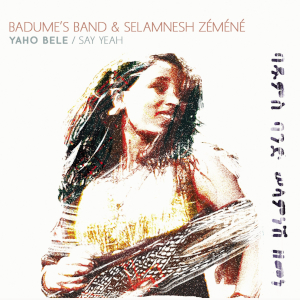
Badume's Band & Selamnesh Zéméné - Yaho Bele / Say Yeah

First published in Songlines Magazine issue 171, October 2021.

Badume's Band & Selamnesh Zéméné
Yaho Bele / Say Yeah
Innacor Records (46 mins)

Badume’s Band are one of the mainstays of European Ethio-jazz, with over a decade of experience as the go-to backing band for Swinging Addis legends such as Mahmoud Ahmed and Alemayehu Eshèté. Now celebrating their 15th anniversary, the band (in a slimmed-down trio formation) release their long-awaited third album – their first since 2011 and their second spotlighting singer Selamnesh Zéméné.

Unlike the pop star Ethio-jazzers, Selamnesh is from the tradition of the azmari, wandering bards that sing history and political commentary under layers of comedy and poetics. Azmari music has a unique sound, based on the Ethiopian pentatonic kignit scales and distinctive kebero drum rhythms. On Yaho Bele, Badume’s Band give the azmari repertoire a rocky punch without losing any of its unmistakable flavour.

It’s in the slower, bluesier pieces where the whole group shine the most, such as on ‘Ye Ambassel Mare’, where distorted guitar solos over a sparse groove and hints of extended jazz chords while Selamnesh’s powerful voice stretches high above it all. In fact, this new, smaller set-up of Badume’s Band actually allows everyone the space to flourish, still creating rich backdrops for vocal fireworks without it feeling crowded.

Azmari songs with a rock swagger and an Ethio-jazz swing – it certainly is an exciting combination.

Friday, 18 June 2021

Hailu Mergia & The Walias Band - Tezeta

First published in Songlines Magazine issue 169, July 2021.

Hailu Mergia & The Walias Band
Tezeta
Awesome Tapes from Africa (37 mins)

The Walias Band are a legendary group. On the frontline of the uniquely Ethiopian brand of jazz and soul during the Swinging Addis period in the 60s and 70s and as the backing band for pretty much all the star vocalists of the time, Walias were very much the sound of the city. The group’s first ‘solo’ album (without a guest singer) didn’t come until 1975 and has long been considered a lost treasure among collectors. After a rare copy was tracked down in the Netherlands, a neat remaster makes Tezeta the sixth album (and a fourth reissue) in the on-going relationship between Awesome Tapes from Africa and Walias’ bandleader Hailu Mergia.

Tezeta consists of instrumental covers of some of the era’s most popular songs – plus traditionals such as the title-track – all led by Mergia’s shimmering electric organ. The music is vintage, warm and nostalgia-filled, perfectly suiting the tape hiss that even the most diligent remastering couldn’t hope to remove. Walias’ pleasantly calm pop and light funk has perhaps been overshadowed by the meaner, meatier developments of subsequent Ethio-jazz, but this album stands as testament to a band that created the defining sound of Ethiopian music’s most revered period.

Friday, 29 January 2021

Azmari - Samā’ī

First published in Songlines Magazine issue 165, March 2021.

Azmari
Samā’ī
Sdban Ultra (44 min)

When Belgian six-piece Azmari get into that Ethio-groove, they go in hard. The immediately distinctive Ethiopian kignit scales possess horn solos and intoxicating basslines, and the Latin percussion, synth journeys and fun time signatures give the group the sound of a dubbed-out hybrid of Mulatu Astatke, Herbie Hancock, Snarky Puppy and Alice Coltrane.

The hype around this debut album has played up the promise of a juicy mix between Ethio-jazz and retro-style Turkish psychedelia. Unfortunately, apart from the occasional bağlama solo or Anatolian-leaning scale, this never really arrives. An unexpected fusion that I wasn’t prepared for, however, was the introduction of Ethio-klezmer. I’m not sure I would have ever thought to combine those two fertile musical cultures, but a pentatonic sax solo full of sobbing klezmer krekhts over an 11/8 groove and a full-on funky bass – as on the track ‘Kamilari’ – certainly converted me.

Samā’ī is a promising debut for Azmari, and it presents their music in a way that begs for a live performance. The musical interactions within the band are tight enough to feel well-honed and loose enough to feel natural and care-free. When tours become a thing again, I’m sure this group will put on a hell of a show; for now, this album is a good place to start.

Ozferti - Solarius Gamma

First published in Songlines Magazine issue 165, March 2021.

Ozferti
Solarius Gamma
Nubia Nova Records (41 min)

Florian Doucet is a producer, guitarist and graphic designer formerly of Afro-Colombian party starters La Chiva Gantiva, but his masked alter-ego Ozferti is more than that. According to his manifesto, ‘I am Ozferti. I am an explorer, a beatmaker, a scavenger, a guitarist. I wear the Mask.’

This album is framed as the first of many explorations into the fictitious world of Nubia Nova and the galaxy of Solarius Gamma. As you might expect, sci-fi and fantasy are big influences at work here. Musically, it’s an adventure into all sorts of electronica, suffused with Ethiopian influences courtesy of many guest musicians and singers (including the wonderful azmari Eténèsh Wassié) recorded and produced on-the-ground in Addis Ababa.

The more adventurous this music is, the better it gets. There are really exciting moments when we’re flying wildly to the edges of the universe, but more often than not, it feels as though Doucet is holding back. Even though he brings in everything from dubstep, psytrance, techno, disco, glitch and lo-fi hip-hop, it still comes across as though no boundaries are being pushed. Solarius Gamma is high-concept and suitably cosmic, but it seems to miss the mark more often than it hits.

Friday, 13 November 2020

Qwanqwa - Volume 3

First published in Songlines Magazine issue 163, December 2020.

Qwanqwa
Volume 3
Qwanqwa (45 mins)

If you’ve been paying attention to Ethiopian tradi-modern music over the past five-odd years, you will have come across the names of Qwanqwa’s musicians. Mesele Asmamaw (krar), Anteneh Teklemariam (bass krar), Endris Hassen (masenqo) and Misale Legasse (kebero) have cropped up as sidemen in so many projects; here, together with Addis-based American violinist Kaethe Hostetter, they all get their own time to shine.

Qwanqwa are, for the most part, an instrumental group. The interplay created between the krars and fiddles mean that they’re adept at playing traditional or contemporary music, and with the help of electronic effects (not to mention Anteneh’s slap bass on the krar) they’re more than capable of making it funky. However, there is a tendency for the group’s textures to feel a bit static after a while, like something is missing – that’s all solved whenever Mesele picks up the microphone and freshens everything up with his voice. It’s a pity that only happens on two tracks.

The shredding krar and dubtronic violin of ‘Sewoch’ are delightful, but it is the epic 18-minute finale, ‘Serg’, a brooding, groove-laden medley of wedding songs, that you want to look out for here. When Qwanqwa strike the right balance, they can be absolutely irresistible.

Friday, 24 July 2020

Pentatonic Pursuits: Afropentatonism

First published in Songlines Magazine issue 160, August/September 2020.


You can make a lot of music with five notes. From East Asia to the Andes, British folk to the blues: pentatonic scales form the bedrock of musical traditions all across the world, each imbued with their own cultural personality. For two guitarists from opposite ends of Africa, five notes are all that are needed to create an all-new pan-African sound that aims to change how music is made across the continent.

Alhousseini Anivolla is a Tuareg guitarist and singer from Niger, best known for his time with pioneering Saharan group Etran Finatawa; Girum Mezmur is the go-to jazz guitarist in Ethiopia and the director of Addis Acoustic Project. Both Tuareg and Ethiopian music are unmistakably distinct and immediately recognisable, but both share the use of pentatonic scales. After a series of chance meetings and revelatory jam sessions, Anivolla and Mezmur unite the styles separated by more than 2,500 miles of desert. With a debut album, Afropentatonism just released, their journey has only just begun.

The roots of the Afropentatonism project go back to 2005, to the Afrika Festival in Hertme, the Netherlands. Anivolla was there with Etran Finatawa and Mezmur was performing with legendary Ethiojazz singer Mahmoud Ahmed. Watching each other play, there was shared amazement: it was the first time either had heard the music of the other and both were struck by the uncanny parallels between them. “We were stunned by the similarity of the cultures,” explains Mezmur. “Like the usage of the pentatonic scale and how similar all that is. We could easily relate to that.”

The excitement of that co-discovery made a long-lasting impact, but it was another 12 years before the two would meet again. At a gig in Addis Ababa in 2017, Anivolla’s trio Anewal invited Mezmur on stage for an impromptu set; afterwards, in a meeting together with mutual friend Sandra van Edig, the foundations of the long-pondered collaboration became a real prospect.

Over the next two years, meetings and discussions took place alongside the unavoidable jam sessions (“Whenever we meet, we just pick up our guitars and start jamming,” says Mezmur) and soon the realisation of even more links. A crystallising moment came as the musicians bonded over the music of Ali Birra, an Oromo musician from the Harar region of Ethiopia. “When he plays acoustic guitar it is so similar to how the Tamashek play acoustic guitar,” says Anivolla. “When we listened to Ali Birra, it was very easy for us to blend our styles.” The project was well and truly underway.

Around the core of the two guitarists, a band was handpicked from the best of musicians from Addis: Habtamu Yeshambel on one-stringed masenqo fiddle, Anteneh Teklemariam on bass krar (lyre), Misale Legesse on percussion and 78-year-old Swinging Addis veteran Ayele Mamo on mandolin. As a six-piece, the road led them to concerts, workshops and residencies in Ethiopia, Niger, Djibouti and Kenya.

Neither guitarist is a stranger to cross-cultural collaboration, each having played with many musicians of many different styles from across the world. Finding common sounds across cultures was also at the heart of Anivolla’s Etran Finatawa, a musical meeting of Tuareg and Wodaabe musicians. But there is something different about playing together as Afropentatonism. “The Tuareg and Wodaabe, we live very close together, our campsites can be right next to each other,” Anivolla describes, “but Tuareg music is much closer to Ethiopian music than Wodaabe music. I feel my own musical heritage when listening to different Ethiopian styles. There is a dance there that is the same dance we do. It’s as if there is one origin, one root with different branches.” Anivolla’s face lights up whenever he talks about playing with Mezmur. It’s obvious that there is something special in this collaboration.

The music they make together is a seamless blend, as heard on the album recorded live during their concert in Nairobi. Rolling rhythms play host to endless, circular riffs that spiral out into passionate solos, or groove-laden sections where multilingual conversations are enacted through reverberating strings. Most of the time it is impossible to pinpoint the fusion – to say which element comes from Ethiopian music and which from Tuareg. Each musician brings the whole force of their tradition behind them, as well as, crucially, a real empathy and understanding of the other’s.

The connection between the two cultures wasn’t just felt by the musicians. A special moment came during their time in Niamey, where Yeshambel became the unexpected star of the show. His masenqo is similar in many ways to the imzad, the Tuareg’s own one-string fiddle, which serves an important role in traditional Tuareg society. “The people in Niamey got crazy about the masenqo!” Annivola chuckles. “They wanted him to play all the time! They were shouting and crying, it was like the sound of the masenqo went directly to the soul of the people.”

In touching the souls, the musicians are also hoping to touch minds. The project’s Afrocentrism runs much deeper than its sound; it is built into the way that the project is run. Often cross-cultural collaborations are curated by world music industry figures to culminate in a record or a big European tour, with the money coming from the West and the music therefore geared towards Western ears. Afropentatonism is pan-African music made for Africans – and with African money.

It is often easier for African artists to gain funding to tour across Europe than it is Africa. A series of crowdfunding campaigns, however, freed the Afropentatonism project of the need to please a single rich donor and opened up more unorthodox performance avenues. “It came in bits and pieces,” says co-creator van Edig, “and we were really proud because over 50% of the funding came from Africa. It was so important that we were creative and that’s how we were able to travel in Africa.” By finding other funding options, Anivolla and Mezmur have brought their cultures to audiences that would otherwise have never had that contact – and in doing so, make music not solely beholden to European tastes.

The hope is that the initial success of the project can inspire a new generation of African musicians to do things their own way, looking beyond the restrictive power structures of Western funding and leading to wider audiences and increased creative freedom. It was a message the musicians stressed during workshops in each country. “This is what we promoted during the tour,” van Edig explains, “encouraging young artists not to wait for big funding, to go and try being creative. It was so authentic because we weren’t coming with big funding.” That the group even existed and could travel to spread this message was proof in itself that another way was possible.

Afropentatonism isn’t just a one-time experiment. The live album is a successful proof-of-concept, evidence that after just a few meetings, the musicians are capable of mining a deep seam of continental connections. With more and more experiences under their belt, the more those connections are explored, and the more the music percolates into one heady, unique sound. More tours are in the works, to other African countries – Sudan, Tanzania and South Africa have been mentioned – as well as Europe, and studio albums will surely follow. Together, Alhousseini Anivolla and Girum Mezmur are bringing people together over thousands of miles, all while forging new African music and new ways of making African music, five notes at a time.


Photo: Girum Mezmur and Alhousseini Anivolla, by Sandra van Edig.

Friday, 15 May 2020

Hailu Mergia - Yene Mircha

First published in Songlines Magazine issue 158, June 2020.

Hailu Mergia
Yene Mircha
Awesome Tapes from Africa (42 mins)

After Awesome Tapes from Africa reissued three of his old tapes to wide acclaim, Ethiopian keys player Hailu Mergia – by then a taxi driver in Washington, DC – made his comeback in 2018 with his first new album for 15 years, Lala Belu. That album was a showcase of classy, intelligent jazz infused with the customary Ethiopian flavour. Yene Mircha does not reach the same heights as its predecessor. It has such a different vibe that it’s actually quite bizarre. While still firmly in the Ethio-jazz mould, this time around it seems to have lost all of the edge that made the last one so exciting.

The first track, ‘Semen Ena Debub’, is smooth, poppy and anodyne, and the rest of the album carries on in much the same vein. A lot of it feels akin to muzak or even, at times, a cheap karaoke backing track. A slight reprieve comes in the form of ‘Bayine Lay Yihedal’, a piece originally written by Asnakech Worku changed up into a swaggering Ethio-dub, but it’s not enough to save the whole set.

To follow an album so good with one like this is astonishing and disappointing. Hopefully it’s just an anomaly and Hailu will be back to his wizarding ways sooner rather than later.

Friday, 10 April 2020

Large Unit Fendika - Ethiobraz

First published in Songlines Magazine issue 157, May 2020.

Large Unit Fendika
Ethiobraz
PNL Records (65 mins)

The traditional Ethiopian musicians of Addis Ababa’s Fendika azmaribet have joined forces with Paal Nilssen-Love’s pan-Scandinavian group Large Unit and members of Dutch punks The Ex to create one almighty 22-piece avant garde Ethio-trad-punk, free jazz, big band noisefest. Now there’s a collection of adjectives that will either get you salivating or reaching for the ear-plugs.

I was all up for it – which is why I was a bit stumped at the quiet opening. It’s not until the middle of the third track that it really kicks up a gear, and even then, it feels as though there is something lacking. Musically, the group works really well. The Zappa-like jazz rock freak-outs and Ethiopian vibes complement each other as well as contrasting, and the best moments come when chaos threatens – but never quite manages – to take over completely. All the elements are there to make it an exciting musical explosion, but the end result falls a bit flat. Even though the album is a live recording from 2018, it lacks that passionate live energy – an important factor when the noise becomes challenging.

Ethiobraz is a successful proof-of-concept and the group tour Europe in June (COVID-19 depending) – maybe two years of percolating will have imbued Large Unit Fendika with that extra added spark.

Friday, 1 November 2019

Haymanot Tesfa - Loosening the Strings

First published in Songlines Magazine issue 153, December 2019.

Haymanot Tesfa
Loosening the Strings
Vacilando ’68 Recordings (53 mins)

When I saw Ethiopian singer and krar player Haymanot Tesfa perform at SOAS last year, it was very disappointing. She did one or two solo pieces that were lovely, but the rest of the concert was in collaboration with improvisatory jazz musicians. It was disjointed and chaotic, and didn’t work at all.

I was very relieved, then, to discover that this album – her debut – is almost completely solo and, as expected, it is beautiful. Her voice flutters around the Ethiopian scales like a small bird or butterfly while the resonant plucked strings of her krar create a steady platform on which her voice can alight from time to time.

It’s not entirely solo, though. Haymanot is joined on half the tracks by Arian Sadr on the tombak (Persian goblet drum). It’s a strange but well-chosen accompaniment; the drum’s warm tones unobtrusive while blending Persian and Ethiopian rhythms with aplomb.

Listening to the gentle yet powerful combination of voice and krar, it’s hard to avoid thoughts of the legendary Asnaketch Worku, but Haymanot’s skill and subtlety of string and song allows her to live up to such weighty comparisons. Luckily the jazz was left in its box this time around.

Friday, 14 June 2019

Various Artists - London to Addis

First published in Songlines Magazine issue 149, July 2019.

Various Artists
London to Addis
No Hats No Hoods Records (61 mins/87 mins via Bandcamp)

This is a simple idea with a great pay-off: record traditional Ethiopian krar (five-stringed lyre), washint (wooden flute), masenko (one-stringed fiddle) and kebero (drums) during one intense week in Addis Ababa, hand those recordings over to a load of big-name grime producers and let them go nuts.

The resulting instrumentals use the samples as springboards for so many different directions. Some tracks retain quite a lot of recognisably Ethiopian qualities, whereas others sound almost completely unrelated. Considering that each track has its own producer with their own way of approaching the material, the whole thing holds together really well as an hour-long set.

The mix of the grime electronics with the unique Ethiopian scales and rhythms actually ends up sounding akin to dark, apocalyptic dubstep. It’s really exciting to hear these pioneers of a distinctly London-rooted genre take on something so far removed and coming up with interesting, unexpected results – a great example is Ignorants’ ‘Uncolonised’, supposedly the very first grime track in 3/4 time.

London to Addis is the first of a whole series of British Council-funded Ethio-grime collaborations, and I can’t wait to hear what else is to come; it would be brilliant to hear MCs get their lips around some of the instrumentals presented here.