Monday, 13 July 2015

Modou Touré & Ramon Goose - The West African Blues Project

First published in Songlines Magazine issue 110, August/September 2015.

Modou Touré & Ramon Goose
The West African Blues Project
ARC Music (48 mins)

The easiest way to describe The West African Blues Project is that it does exactly what it says on the cover. The connections between West African music and the blues have been explored on record many times, although it still manages to produce delicious fruit.

British blues guitarist Ramon Goose has certainly put in his time collaborating with West African musicians, having recently worked in projects alongside Diabel Cissokho, Daby Touré, Noumoucounda Cissoko and Atongo Zimba, as well as many names from the worlds of blues and beyond. Here, Goose is joined by Senegalese rising star Modou Touré, whose capable voice works equally well in the soulful Wolof styles as it does on bluesier pieces such as ‘Casamance River Blues’. The musicians clearly gel very well, and their mutual enjoyment is easy to hear.

Some of the tracks on this album feel a little too slick and produced for this reviewer, with the highlights coming in the form of the rootsier, earthier pieces, where the blues takes centre stage and Modou’s voice is allowed to flow along with it.

This probably isn’t the most effortless of African blues albums, but nevertheless, it’s hard to deny that the blues is rarely this upbeat or uplifting.
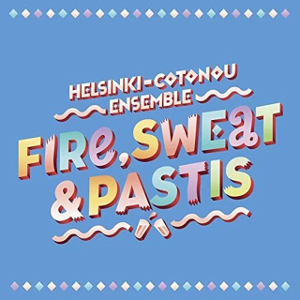
Helsinki-Cotonou Ensemble - Fire, Sweat and Pastis

First published in Songlines Magazine issue 110, August/September 2015.

Helsinki-Cotonou Ensemble
Fire, Sweat and Pastis
No Problem! Music (47 mins)

In a world where collaborations bring together performers from all over the world, a project between Finnish and Beninese musicians still seems an unlikely one. In their second album, though, Helsinki-Cotonou Ensemble have created a sound that feels, for the most part, unforced and free-flowing.

There’s not much in the music that screams ‘Finnish’, but the Nordic musicians do a great job in mixing the styles and rhythms brought by Beninese drummer and singer Noël Saïzonou with funk, soul and jazz.

The album is at its strongest when its sound is most African. The second track, ‘Djigbo’, is a driving Afro-funk featuring a West African horn section, and is probably the best of the set. There are a couple of pieces (including the opener) where the group go oddly indie-rock, creating a blandness that is at odds with the rest of the album. There are also a few places where the music takes a turn into full-on spacy jazz-rock, which is less bland, but still seems to lack the creative energy that is achieved in some of the best tracks here.

In general, Helsinki-Cotonou Ensemble have made a fun record that contains some deep and danceable grooves.

Monday, 22 June 2015

Electro Bamako - Now

First published in fRoots issue 385, July 2015

Electro Bamako
Now
CSB Productions (50 mins)

Phwoar! Now this is an album.

In the sphere of world electronica, collaborations with South Asian and Middle Eastern artists and musics seem to far outweigh those with West Africans, but when it is done (and done right), it can lead to some stonking tracks. Now is from a trio of a Malian (Paul Sidibe) and two Frenchmen (Damien Traini and Marc Minelli), and their collective name is pretty much apt. Electro Bamako create music that crosses through electronica, funk and underground rock, but always present are the urban Malian grooves that make the project as exciting as it is.

Bringing to the table guitars and production, Minelli has been experimenting with electroMalian music and collaborations for more than a decade now, but with the Electro Bamako trio and this album, he seems to have found the correct combination, and it’s his best yet.

As well as his unmistakably Malian vocals, Sidibe joins the party by adding his kamele ngoni (literally, the ‘young man’s harp’) to the sound. The kamele ngoni’s rattling staccato riffs, together with the karignan (iron scraper), bring the western elements together, uniting them with Wassoulou music – the non-griot style made famous in Europe by Oumou Sangaré.

The real highlight of the album comes at the end: Fentiki Ni Fentan is the last of the album tracks proper (the disc also contains three radio edits), and is really superb – it has a backing worthy of old-school hip-hop and the whole thing rolls around hypnotically, it’s a shame when it comes to a close and signals the end of a brilliant album.

Prince Buju - We Are In The War

First published in fRoots issue 385, July 2015

Prince Buju
We Are In The War
Makkum Records/Red Wig (48 mins)

Prince Buju hails from the North East Region of Ghana and plays the kologo, a two-stringed lute related to the ngoni, and sharing common ancestry with the banjo. This album is entirely solo – and it’s not one of those fancy multi-track one-man-band things, every track is a single-take affair with only Prince Buju and his kologo.

Almost all of this release is taken from Buju’s debut Ghanaian cassette, which was released in 2011 under the title Roots And Culture Music. The only newly-recorded piece here is the title track. This version of the album retains the feeling of a local-market cassette, and not only because of the soft hiss that remains behind most of the tracks: the recent trend for cassettes has brought a refreshing slew of international music that hasn’t been ‘world musicked’ and Buju’s sound is no exception.

Much of the album’s associated literature talks up Buju’s links to King Ayisoba, a fellow Ghanaian kologo player, but Buju’s music feels even more rootsy. It’s great to hear the no-nonsense, bluesy riffs with Buju’s high-pitched yet gritty voice sing about personal and local matters, which all give the record a sense of that allusive, ill-defined but most important ‘authenticity’.

The manner in which the kologo is played means that all the tracks included here from the original cassette remain in one key – it’s a rather insignificant thing, but for someone who is used to albums using a variety of keys (which, when you think about it, is kind of arbitrary) this can grate slightly, with the ear becoming tired. But this is a very small issue. Don’t expect overly much from the production values and this could be an album that you really dig.

Monday, 15 June 2015

LaBrassBanda - Europa

First published in Songlines Magazine issue 109, July 2015.

LaBrassBanda
Europa
Sony Music (56 mins)

This is a re-release of the Bavarian brass-band-cum-techno-outfit’s second album, although why a record that has only been out for two years needs a re-release, I’m not quite sure.

The brass side of the group takes the most influence from Bavarian and Balkan styles, with a few hints of New Orleans brass, and although in other albums and live the band explore ska punk, reggae and other genres, here they focus more on the poppy side of techno.

Occasionally, their blend of Europop synths and drum machines with brass can produce good individual tracks, such as the stand-out ‘Frankreich’, but throughout most of the album, the fusion seems pretty unimaginative and not particularly enjoyable, either. At times the music can be literally painful too: don’t listen to the track ’Schweden’ with headphones – the heavily-panned kick drum would make anyone queasy. Frankly, this is a bit of a bizarre re-release of a recent album that isn’t the group’s best. Catch them live instead.

Djeli Moussa Condé - Womama

First published in Songlines Magazine issue 109, July 2015.

Djeli Moussa Condé
Womama
Buda Musique (43 mins)

Hailing from Guinea, living in Paris and with spiritual roots in Mali and Gambia, Djeli Moussa Condé’s experience is one that will be familiar to many West Africans (especially griots) living in France. As such, the music on this, Condé’s second solo release, reflects himself as a citizen of many countries. Condé provides lead vocals, guitar and kora backed by a French band and with several West African guest musicians. European influences sit next to and within the West African styles easily, and the album journeys through reggae, jazz and funk without ever leaving the Mandé influence behind.

The album is strongest during its more Latin phases, such as the tracks ‘La Salsa Africana’ and ‘Palma’ (an ode to the Balearic city), and the disco Afrobeat piece ‘African Bond’ is great fun, managing to be both cheesy and extremely funky at the same time.

There are no weak tracks on this album as such, but there does seem to be a fair bit of filler: pieces that are listenable but essentially unexciting. Nevertheless, this is a good album, and the stand-out tracks are worth wading through some of the less interesting ones.

Monday, 18 May 2015

Kadialy Kouyate & Leonard Jacome - Rhythms of the Atlantic

First published in Songlines Magazine issue 108, June 2015.

Kadialy Kouyate & Leonard Jacome
Rhythms of the Atlantic
Self-released (42 mins)

The premise of this album may seem a little familiar: a cross-cultural harp collaboration between Senegalese kora maestro Kadialy Kouyate and Venezuelan harpist Leonard Jacome. It’s unfortunate but inevitable that any work will now be compared to Catrin Finch & Seckou Keita’s stunning 2013 release Clychau Dibon, but don’t make the mistake of thinking this album will be the-same-but-different.

Whereas the earlier fusion revelled in the ethereal qualities of the instruments, Kouyate and Jacome use theirs to groove. The harp’s lower register provides often funky basslines that, along with the unobtrusive calabash of Mamadou Sarr, give the Mandé griot and Venezuelan Joropo melodies the ground to dance on.

Most of the pieces here are written by Kouyate (save for the cheerful ‘Kora Ralencina’ and the harp solo ‘Solo con mis Cuerdas’, both by Jacome), and it is the Venezuelan’s harp that provides many of the thicker textures and most versatile timbres – at various times sounding like a harpsichord, jazz guitar or glockenspiel – but really, to analyse each musician’s individual role feels a little disingenuous, so tightly do the two string players intertwine.

This is a great and different album – don’t be fooled into making easy comparisons.